The best way to relieve lower back pain at home is to keep moving, use heat to relax tight muscles, and take an over-the-counter NSAID such as ibuprofen or naproxen to ease pain and inflammation.
If lower back pain treatment at home isn’t helping after a few weeks, a licensed doctor can help through online back pain treatment.
Why does lower back pain happen?
Lower back pain often starts when you lift something heavy, bend awkwardly, twist suddenly, or spend too long in one position. These movements can strain the muscles and ligaments that support your spine, leaving your back sore and stiff. Sometimes, a problem with a disc or an irritated nerve causes the pain instead.
About 9 in 10 cases have no serious underlying cause, and most people get better with simple care at home.
Doctors call back pain acute when it lasts up to 4 weeks and chronic when it lasts more than 12 weeks. Here are some common reasons your back hurts.
Strained muscles and ligaments
Muscles help you move your back, while ligaments are bands of tissue that connect bones and keep joints stable. A sudden lift, bend, or twist can overstretch or tear these tissues, causing lower back pain.
A muscle or tendon injury is called a strain, while a stretched or torn ligament is called a sprain. When a muscle is strained, tiny tears can cause swelling and irritation. Nearby muscles may also tighten suddenly to protect the injured area. This is called a muscle spasm.
Together, swelling and muscle tension can make your back feel stiff and painful when you move.
Disc and nerve problems
Discs are soft cushions between the bones of your spine that act as shock absorbers and help your spine bend and move. Sometimes, the soft inside of a disc bulges out through its tough outer layer. This is called a herniated disc. A herniated disc can irritate or press on nearby nerves, causing lower back pain.
A herniated disc may press on the sciatic nerve, which runs from your lower back through your hips and buttocks and down each leg to your foot. When this nerve is irritated, you may feel pain, tingling, numbness, or weakness in your leg, a group of symptoms called sciatica.
Another possible cause is spinal stenosis, which occurs when the space inside your spinal canal narrows and puts pressure on nearby nerves.
How to relieve lower back pain right now
Home remedies for lower back pain work by easing the muscle spasms and inflammation behind most flare-ups, so you can keep moving while the strained tissue heals. The American College of Physicians recommends starting with non-drug treatments, such as heat for new back pain, and adding an NSAID if you need medicine.
Keep moving and avoid bed rest
Gentle movement keeps the strained muscles and joints in your lower back working while they heal, and helps back pain settle faster. Continue your daily activities as much as your pain allows.
Rest when needed during the first few days, but avoid staying in bed for more than a day or two. Gradually increase your activity as you recover, and avoid heavy lifting or twisting your back for the first 6 weeks after the pain begins.
Use heat to relax muscle spasm
Heat can help relieve new lower back pain by increasing blood flow and relaxing tight muscles, reducing spasms and stiffness. For a new back strain, doctors recommend heat as a first-line treatment, and it is often more helpful than ice because much of the pain comes from spasm.
A heat wrap can ease pain and make it easier to move when back pain has lasted less than 3 months. Ice hasn’t been studied as well for back pain, but if a cold pack feels better in the first couple of days, an ice pack can reduce pain and swelling before you switch to heat.
Take an NSAID (nonsteroidal anti-inflammatory drug)
An NSAID is a medicine that reduces pain and swelling. Over-the-counter options include ibuprofen (Advil, Motrin IB) and naproxen (Aleve).
NSAIDs block an enzyme your body uses to make prostaglandins, chemicals that cause pain and inflammation after an injury. By reducing these chemicals, these medicines can ease soreness and inflammation after a muscle strain. However, the relief is usually modest.
A 2020 Cochrane review found they ease lower back pain only slightly better than a placebo (sugar pill) during the first three weeks. A 2016 Cochrane review found that acetaminophen (Tylenol) eases new lower back pain no better than a placebo.
Use the lowest dose that helps for the shortest time. If you still need the medicine after 10 days, talk to a doctor before taking more.
To lower the risk of side effects, ask a doctor or pharmacist before you take an NSAID if you:
- Are 60 or older, because your risk of stomach bleeding is higher
- Have had stomach ulcers or bleeding problems
- Take a blood thinner or a steroid medicine
- Have high blood pressure, heart disease, or kidney disease
- Are pregnant
If you are pregnant, ask your prenatal provider before taking any pain reliever. The FDA advises avoiding NSAIDs from 20 weeks of pregnancy.
Try a pain-relief cream or patch
Pain-relief creams, gels, and patches are applied directly to the sore area. Depending on the ingredient, they can reduce inflammation or change how nerves send pain signals to your brain.
- Diclofenac gel: Reduces pain and inflammation. In the US, over-the-counter diclofenac gel is labeled for arthritis in certain joints, so ask a pharmacist before using it on your back. In Canada, some diclofenac gels are labeled for back muscle strains.
- Capsaicin cream: Works on pain-sensing nerves in your skin to gradually reduce pain. With regular use, those nerves send fewer pain signals from the treated area.
- Lidocaine creams or patches: Numb the area by blocking pain signals, but small trials found that 5% lidocaine patches work no better than a placebo for back pain.
These products may provide short-term relief, but evidence for back pain is limited. Do not use a heating pad over a cream or patch, and do not put these products on cuts or broken skin.
Stretches and exercises for lower back pain relief
Gentle stretches help relieve lower back pain by loosening the tight muscles around your lower spine and moving its joints through a pain-free range, which eases stiffness and makes everyday movements like bending and getting out of bed easier. Start them once you can move without sharp pain, and stop if your pain gets worse. The hold times and repetitions below follow Mayo Clinic’s back exercise guide.
Knee hug (knee-to-chest stretch)
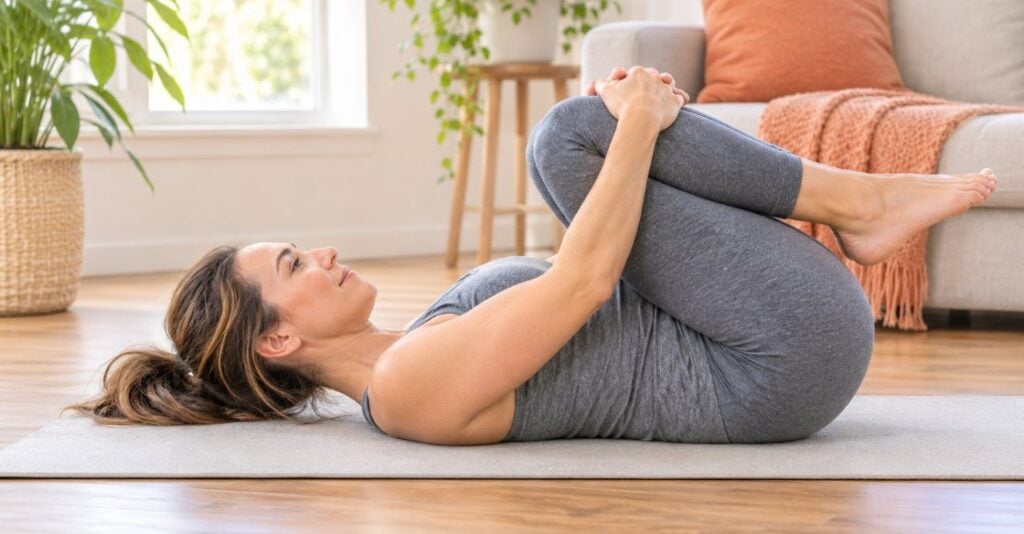
Lie on your back, bend your knees, and use your hands to gently pull them toward your chest so your lower back rounds and the muscles along it stretch. Hold for 5 seconds, then relax and repeat 2 to 3 times.
Knee rolls
Lie on your back with your knees bent and feet flat on the floor. Slowly lower both knees to one side, keeping your shoulders on the floor, which gently twists and loosens your lower back. Hold for 5 to 10 seconds, then move your knees to the other side. Repeat 2 to 3 times on each side.
Pelvic tilt
Lie on your back with your knees bent. Flatten your back into the floor by tilting your hips backward and curling your tailbone up. Then gently arch your lower back away from the floor by tilting your hips forward. Rock slowly between the two positions a few times, as far as you can without pain.
Glute bridge
Lie on your back with your knees bent and your feet flat on the floor. Tighten your lower belly muscles and squeeze your buttocks. Then lift your buttocks off the floor so your body forms a bridge.
Hold for about three deep breaths, then lower yourself slowly. Start with 5 repetitions a day and slowly build up to 30. This movement strengthens your belly and buttock muscles, which help support your lower back.
How long to try home treatment before you talk to a doctor
Call 911 or go to the nearest emergency room if you have any of these warning signs:
- Loss of bladder or bowel control, or trouble peeing
- Numbness in the groin, buttocks, or inner thighs
- Weakness in both legs, or new or worsening weakness in one leg
- Fever with your back pain
- Severe pain after a serious fall, blow, or accident
Home care works well for most new back pain, but it doesn’t fix everything. Some pain needs a doctor to find the cause, and some needs prescription medicine or a treatment plan that stretches alone can’t give you.
You may start to feel better within a week or so. But if your back still hasn’t improved after 4 weeks of home care, it’s better to talk to a doctor. You should also talk to a doctor if you:
- Are over 70, have osteoporosis (weak bones), or take steroids long-term, especially if your back pain started after a fall.
- Have had back pain before, but this episode feels different or worse.
- Have trouble walking or keeping your balance.
- Have burning when you pee, or blood in your urine.
- Have a history of cancer, or weight loss you can’t explain.
How an online doctor can help with back pain
If your symptoms aren’t an emergency, and sitting in a car or a waiting room makes your back worse, you can talk to a doctor online through Your Doctors Online. Download the app, create an account, and you will be connected to a licensed doctor. They can diagnose the likely cause and prescribe medicine when it’s appropriate. They can also order tests if you need them, and write a doctor’s note if you need time off work. If your symptoms need a hands-on exam, the doctor will tell you where to go next.
What treatments can a doctor recommend for lower back pain?
If over-the-counter medicine isn’t enough, a doctor may prescribe a stronger painkiller for lower back pain, such as a higher dose of naproxen or meloxicam. Learn more in our guide to meloxicam for back pain. A doctor may also prescribe a muscle relaxant to ease short-term pain and the spasms that make your back stiff. Methocarbamol for back pain is one common option, and our guide to over-the-counter and prescription muscle relaxers compares others.
For pain that travels down the leg, some doctors prescribe a short course of a steroid such as prednisone, which may slightly reduce this nerve-type pain. Steroids do not help back pain that stays in the back. Read more about prednisone for back pain.
Medication is only one part of treatment. Depending on what’s causing your pain, your doctor may also recommend:
- Physical therapy or group exercise sessions, where a therapist teaches you exercises to strengthen the muscles that support your back.
- Massage, acupuncture, or spinal manipulation, which can ease pain for some people.
- Cognitive behavioral therapy (CBT), a type of talk therapy that helps you manage how pain affects your daily life when it lasts longer than 12 weeks.
Injections or surgery may be options for certain long-term conditions when other treatments haven’t helped.
How to keep lower back pain from coming back
Back pain can return even after it settles, but regular exercise may lower the chance of another flare.
Exercise regularly
Back pain is more common in people who are not physically fit. Low-impact exercise that raises your heart rate, such as walking or swimming, can help keep the discs in your spine healthy. After a new flare, keep walking, and after 2 to 3 weeks you can gradually return to harder workouts.
Strengthen your core muscles
Your core is the group of muscles in your belly and lower back. When these muscles are weak, they may not support your spine well. A physical therapist, who treats pain through movement, can show you exercises to strengthen the muscles that support your back.
Take breaks from sitting
If you sit for long periods, get up, move around, and switch positions often, since holding one position for too long puts extra strain on your back. Try not to slouch, and tuck a small pillow or rolled-up towel behind your lower back for support.
Lift with your legs
When you lift something heavy, bend at your knees and use your leg and belly muscles to lift. Try not to twist your back while you lift.
Keep a healthy weight
Extra body weight puts stress on your back, so keeping a healthy weight helps limit the load on your spine.
Quit smoking
Smoking cuts blood flow and oxygen to the discs in your spine. This can make the discs wear down faster than normal.
If your back pain isn’t easing after a few weeks of home care, talk to a licensed doctor online.
Get a diagnosis and a treatment plan without sitting in a waiting room.
Download our app and describe your back pain. A licensed doctor can diagnose the cause, prescribe medicine if you need it, and write a doctor’s note for work. Your visit is private and HIPAA-compliant, and no insurance is needed.
Download our app and share your symptoms and medical history. You’ll be connected with a Canadian-licensed online doctor who can assess your pain and prescribe treatment if needed. Your visit is private and PIPEDA-compliant, with no family doctor needed and no walk-in wait.
Frequently asked questions
To get rid of lower back pain, stay as active as you can, use heat on the sore area, and take an over-the-counter NSAID if you need one. Gentle stretches can ease stiffness once you can move without sharp pain. If your pain hasn’t improved after 4 weeks of home care, or you have any of the warning signs above, talk to a doctor.
How long it takes to get rid of lower back pain depends on the cause, but most people with new back pain improve a lot within the first 6 weeks. About 1 in 5 people with a new episode go on to have chronic pain.
Sciatica occurs when the sciatic nerve is irritated or compressed, causing pain that travels down your leg. Home treatment, such as staying active, doing gentle exercises, and applying heat, may help relieve the pain. Sciatica often gets better on its own, though it can come back.
Get emergency care right away if you have pain in both legs, numbness around your genitals or bottom, or any of the other warning signs listed above.
No, most people with lower back pain don’t need an X-ray or MRI. A doctor may consider tests if your pain lasts beyond 8 weeks despite treatment, or you have a recent injury or any of the warning signs above.
To relieve lower back pain at night, try sleeping on your side in a curled-up position with your knees bent and a pillow between them. If you sleep on your back, place a pillow or rolled towel under your knees to reduce pressure on your lower back. No single mattress works for everyone, but research suggests a medium-firm mattress offers a good mix of comfort, sleep quality, and spine support.
Yes, walking is one of the activities that may help relieve lower back pain, since it keeps your back moving while it heals. A regular walking habit may also help prevent future flares. In the 2024 WalkBack trial published in The Lancet, adults who followed a walking program after recovering from lower back pain went a median of 208 days before their next flare that limited their activities. Those who did not follow the program went a median of 112 days.