Online Dermatitis Treatment
Start a consultation for dermatitis now, with no appointment and no waiting room. A board-certified doctor reviews your symptoms and photos, and your online prescription reaches your pharmacy the same day when treatment is medically appropriate.
Available 24/7 for new rashes, flare-ups, and repeat prescriptions.
How to get dermatitis treatment online
Connect with an online doctor and get a prescription online.
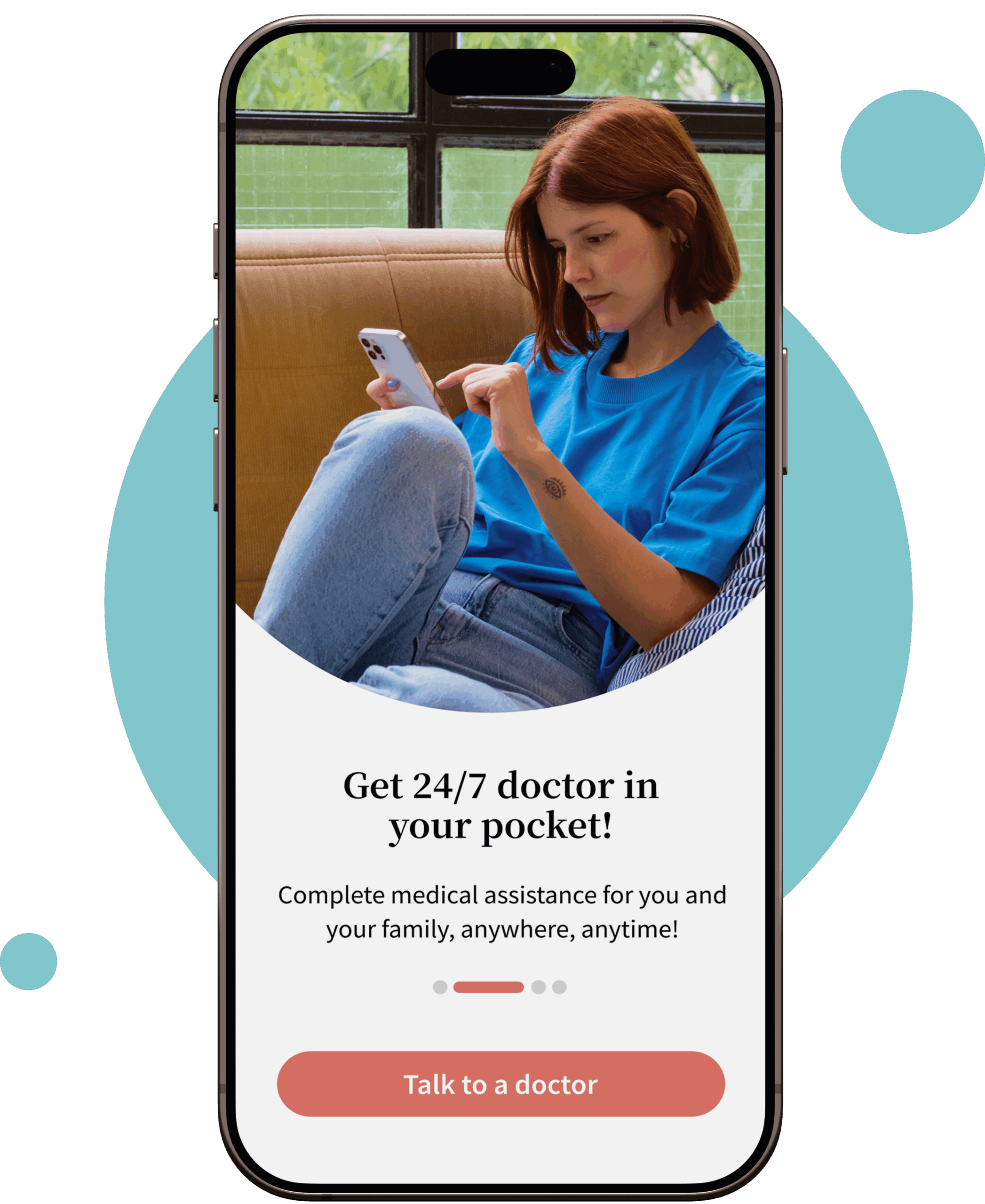
Describe your Issue
Download our app, register and tell us about your medical issue to get started.
- Skin
- Sexual Health
- Obesity
- STD
- UTI
- Allergies
Chat with a Doctor
Connect with a board-certified doctor. You can chat, send pictures and videos.
Hi I’m dr. Nicole. How may I help you?
Hi Dr. Nicole, I have painful rashes and blisters on the skin that itch. Can you please help?

Get Prescription
Our online doctors can help you with your medical issues and give you prescriptions.
Prescription
- Hydrocortisone 1 % Ointment
- Apply to the affected area once a day in the morning for a maximum of four weeks.
Send Prescription
What dermatitis medications can we prescribe online?
What we prescribe depends on which type of dermatitis you have and where it sits on your body. Once our doctor has reviewed your symptoms and photos, a prescription can be sent to your pharmacy the same day when medically appropriate.
- Triamcinolone: a mid-strength topical steroid for flares on the body, arms, and legs.
- Betamethasone: a stronger topical steroid for thick or stubborn patches away from the face.
- Ketoconazole: an antifungal cream or shampoo, the usual choice for seborrheic dermatitis and dandruff.
- Tacrolimus: a steroid-free ointment that suits the face, eyelids, and skin folds.
- Pimecrolimus: a steroid-free cream for mild to moderate atopic dermatitis on delicate skin.
- Metronidazole: a topical antibiotic, one of the first-line treatments for perioral dermatitis.
- Doxycycline: an oral antibiotic for perioral dermatitis that is widespread or slow to settle.
- Hydroxyzine: an antihistamine that takes the edge off the itch, which helps most at night.
What types of dermatitis can we treat online?
Dermatitis is a group of conditions rather than one, and telling them apart is what decides the treatment. These are the ones our doctors see most:
- Atopic dermatitis, the type most people call eczema. It is the most common chronic inflammatory skin disease. It usually starts in childhood and settles in the elbow creases, behind the knees, on the hands, and on the face.
- Contact dermatitis, a reaction in the exact spot where the skin meets something it does not like. That can be an irritant, such as a detergent, or an allergen, such as nickel, fragrance, or poison ivy.
- Seborrheic dermatitis, which leaves flaky white to yellowish scales on oily areas such as the scalp, eyebrows, sides of the nose, and ears. On a baby, it is called cradle cap.
- Perioral dermatitis, small inflamed bumps, and scaly pink patches around the mouth. It can reach the nose and the skin around the eyes, which is why it is also called periorificial dermatitis.
- Stasis dermatitis, discolored and itchy skin on the lower legs and ankles. Here, the skin is the symptom and the circulation is the problem, so treatment has to cover both.
If you are not sure which one you have, that is normal, and it is exactly what the consultation is for. Send a photo, and our doctor will tell you what you are looking at.
What is dermatitis?
Dermatitis is the medical name for skin that has become inflamed. It is not one condition but a family of them, and the common examples are contact dermatitis, atopic dermatitis, and seborrheic dermatitis. Eczema is one of those types, atopic dermatitis, rather than another name for dermatitis as a whole.
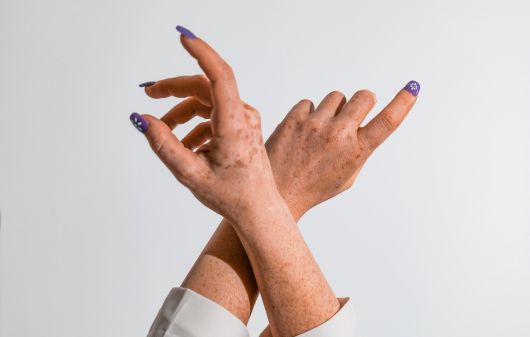
What dermatitis does is turn a patch of skin red and itchy, and it can raise small blisters that weep or crust over. The itch is the part that causes trouble. Scratching damages the skin further, which makes it itch more and gives bacteria a way in, so a small patch can spread or become infected.
None of the types we treat are contagious, so you cannot catch dermatitis from someone else or pass it on. Most of them settle with treatment but return in flares when something sets them off, so the goal is to calm a flare quickly and then keep the skin steady in between.
What are the symptoms of dermatitis?
Dermatitis does not look the same on everyone, and the same person can get different patches at different times. The usual signs are:
- Dry, scaly, cracked skin that stings when you wash
- Redness on lighter skin, or brown, purple, or grey patches on darker skin
- Small fluid-filled bumps that weep or crust over
- Thickened, leathery skin from months of scratching (lichenification)
- Flaky white-to-yellow scale on oily areas like the scalp, eyebrows, and sides of the nose, which points to seborrheic dermatitis
- Burning or stinging rather than itching, which points to an irritant rather than an allergy
Yellow crusting, pus, spreading warmth, or fever means the skin is infected and needs treatment now, not next week.

What causes dermatitis flares?
Dermatitis flares happen when something irritates your skin or causes your immune system to react. Common triggers include soaps, fabrics, lotions, stress, and allergies to pollen, certain foods, or animals. The cause can also vary depending on the type of dermatitis:
- Contact dermatitis: Happens when your skin comes into contact with an irritant, such as a detergent, or an allergen, such as nickel or poison ivy.
- Atopic dermatitis: Often develops because of a combination of genetic and environmental factors that make the skin barrier weaker.
- Seborrheic dermatitis: Often affects oily areas of the skin and is linked to a type of yeast called Malassezia. Stress, tiredness, extreme weather, and heavy alcohol use can make it worse.
- Perioral dermatitis: Can be triggered by steroid creams and nasal steroids. Fluoride toothpaste and heavy cosmetics may also contribute.
- Stasis dermatitis: Happens when blood builds up in the veins of the legs because the valves in those veins are not working properly.
Identifying what triggers your flare-ups can help with treatment. A doctor can review your symptoms, medical history, skincare products, and the rash’s location to determine the likely cause and recommend appropriate treatment.
Can you treat perioral or eyelid dermatitis at home?
Only partly. Treatment usually starts by removing things that may be irritating the skin.
- For perioral dermatitis, stop topical steroid creams and fluorinated dental products.
- For eyelid dermatitis, stop using cosmetics and skincare products around the eyes until the cause is clear.
- Your skin may look worse for a week or two after stopping a steroid cream. This can happen as the skin adjusts.
- Avoid restarting steroid creams on your own, especially around the eyes.
If the rash does not improve, you may need prescription treatment. Depending on the type and severity, a doctor may recommend topical or oral antibiotics or other prescription creams.
If you’re unsure what is causing the rash, a doctor can review your symptoms and a clear photo, determine the likely cause, and recommend the appropriate treatment.
FAQs about dermatitis
How to treat seborrheic dermatitis?
Your provider may prescribe oral antihistamines and topical corticosteroids like ointment or shampoo to treat seborrheic dermatitis. These are short-term treatments to control severe dermatitis initially. After controlling the severity, your doctor may prescribe another antidandruff shampoo to prevent flare-ups and reduce the buildup in your scalp.
How to treat red dermatitis?
To treat red dermatitis, your provider may prescribe anti-inflammatory products like a gentle moisturizer containing anti-itch ingredients to soothe the inflammation. Our doctors at Your Doctors Online may prescribe corticosteroids like hydrocortisone or oral antiallergics like diphenhydramine to help ease dermatitis symptoms.
What is the fastest way to settle a dermatitis flare?
The fastest way to settle a flare is with topical medication or medicated soaps and shampoos containing ingredients like ketoconazole, salicylic acid, zinc pyrithione, and selenium sulfide. Moreover, your provider may prescribe phototherapy in controlled amounts for severe cases. You can get medicated soaps and shampoos containing ketoconazole at Your Doctors Online. They should be applied to the affected area and rinsed off after 5-10 minutes.
What helps get rid of dermatitis?
You can get rid of dermatitis if, in addition to taking prescription medicines taking care of your skin and avoiding triggers that aggravate your dermatitis. For example, use products with anti-inflammatory and anti-itching ingredients, moisturize your skin regularly, use medicated shampoos and soaps, avoid scrubbing and scratching the skin, apply a cool compress, use mild laundry detergents, and bathe with lukewarm water. Consult a doctor at Your Doctors Online for the prescription of dermatitis medicines.
How can I stop dermatitis from getting worse?
When it comes to skin allergies like dermatitis, the best way to avoid it from getting worse is to avoid the triggers that aggravate your dermatitis. Things like stress, tobacco smoke, chemical irritants, and harsh skin products make dermatitis worse. Other ways to stop it from worsening are to use prescription medications and apply inflammation-soothing practices like cool compress, keeping skin clean and moisturized, and avoiding products containing harsh chemicals.
Does dermatitis ever go away?
It depends on the type. A one-off contact reaction usually clears for good once you find the trigger and stay away from it. Atopic and seborrheic dermatitis are long-term conditions that come and go, so the goal is to control them rather than cure them, and with the right treatment and skin care that is very doable.
Is dermatitis a fungal infection?
No. Dermatitis is inflammation of the skin rather than an infection, and it is not contagious. Seborrheic dermatitis is the one that causes the confusion, because it is linked to Malassezia, a yeast that lives on normal skin, which is why antifungal shampoos and creams help it. Skin broken by scratching can become infected on top of the dermatitis, and that part does need antibiotics, so it is worth having a doctor look at a rash that is weeping, crusting or getting more painful.
What is the best skin treatment for dermatitis?
For most flares it is a topical corticosteroid, which brings down the itching and the inflammation. Hydrocortisone 1% is sold over the counter and is often enough for a mild patch, but stronger steroids such as triamcinolone and betamethasone need a prescription, and the face, eyelids and skin folds need a gentler option than either. Talk to a doctor at Your Doctors Online and we will match the strength to the site.
Why is my dermatitis spreading?
Dermatitis can spread if you keep being exposed to the triggers. It can cause the spread of dermatitis rash to other body parts due to an Allergic Contact Dermatitis reaction. It is not bacterial or fungal but an allergic reaction from the immune system, which can cause it to spread all over the body.
Does scalp dermatitis go away?
Dermatitis at the scalp is also known as seborrheic dermatitis. It can go away with the proper treatment, like medicated shampoos or topical treatment that clears up inflammation and flare-ups preventing seborrheic dermatitis. If it occurs in newborns, it is called a cradle cap.
How do you treat dermatitis when pregnant?
During pregnancy, dermatitis can cause complications if left untreated. Per your doctor's prescription, you can control it with topical treatment and oral antihistamines. Consult a doctor at Your Doctors Online for the treatment and prescription of dermatitis during pregnancy.
How Our App Has
Helped Patients
Our 500,000+ Members Love Our Online Doctors 4.5 Rating With 5,000+ Reviews Here Is What They Say


-Phindile Mkhatshwa
-brooke snow
-Okiti Stephanie
-ASIF Khan
-Chelsey
-edith bien aime
-Lesego Thejane
-Stephanie Brown
-kulwinder gill
-Elijah Mark
Get Started Today
Talk to online doctors now and get medical advice, online prescriptions, refills, lab requisitions and medical notes within minutes. On-demand healthcare services at your fingertips.