Online Menopause Treatment and HRT
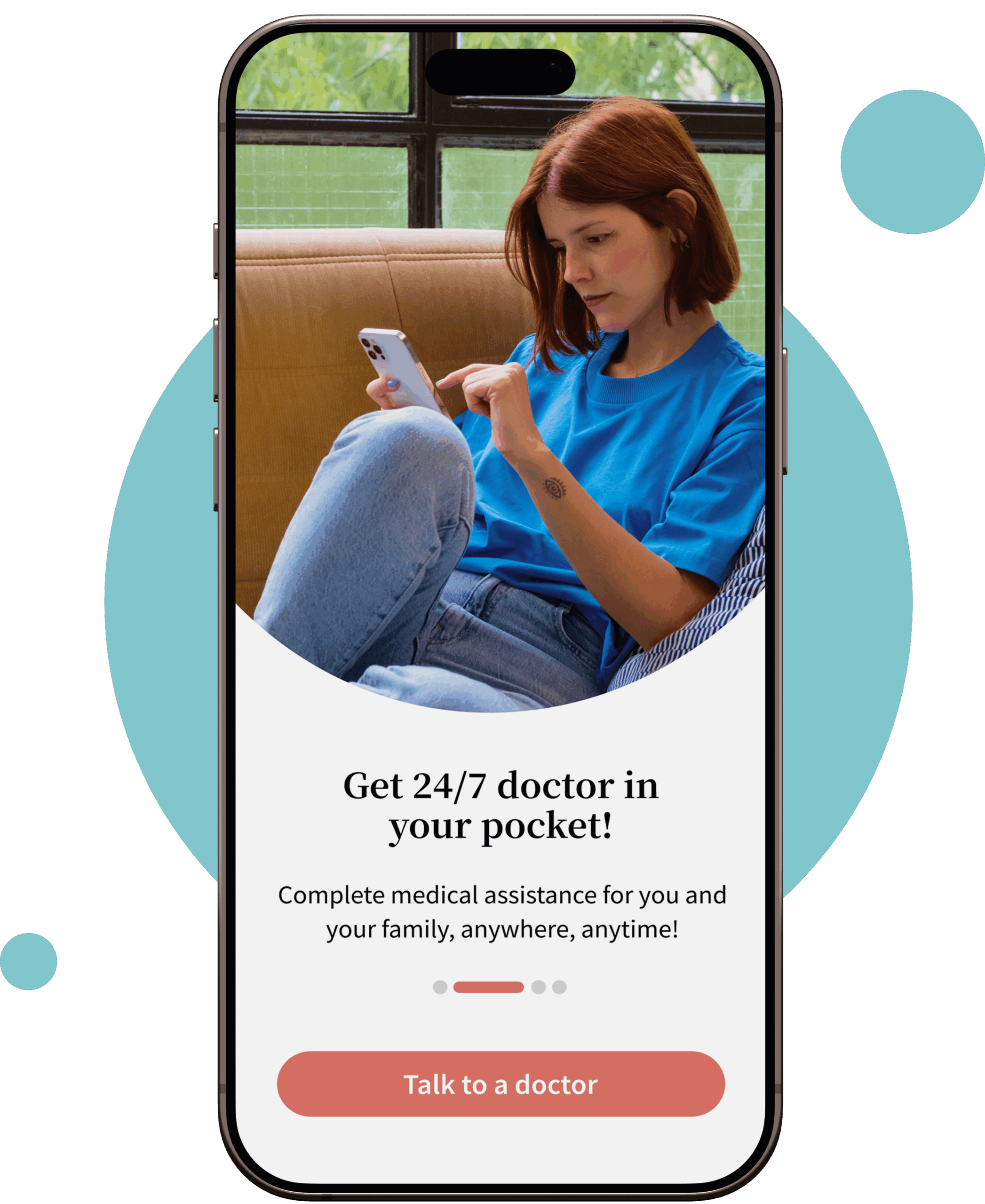
Talk to a doctor about menopause tonight, with no appointment and no waiting room. Our board-certified doctors review your symptoms, your cycle history, and your medical history, then go through the treatment options with you, including hormone therapy. When it is medically appropriate, your prescription is sent to the pharmacy you choose the same day.
Available 24/7 for hot flashes, night sweats, broken sleep, mood changes, and vaginal dryness. Pelvic exams, mammograms, and bone density scans still need to be done in person.
How to get menopause treatment online
Three steps. No appointment to book.
Describe your issue
Download our app, register and tell us about your medical issue to get started.
- Menopause
- Anemia
- STD
- UTI
- Skin
- Covid
Chat with a doctor
Connect with a board-certified doctor. You can chat, send pictures and videos.
Hi Dr. Nicole, I experience hot flashes and night sweats. Can you please help?

Get online prescription
Our online doctors can help you with your medical issues and give you prescriptions.
Prescription
- Estradiol patch 0.0375 mg per day
- Apply to clean, dry skin on your lower abdomen, never on your breasts.
- Change the patch twice a week.
Send Prescription
What are the treatment options for menopause, including HRT?
The right treatment depends on which symptoms are actually bothering you. Here is what a doctor will work through with you.
- Hormone therapy, or HRT. Estrogen on its own if you have had a hysterectomy, or estrogen with a progestogen if you still have a uterus. It relieves hot flashes and night sweats better than anything else available, and it also slows the bone loss that speeds up after your last period.
- Vaginal estrogen, as a cream, tablet, insert or ring, for dryness, burning and pain during sex. It works where you put it, so it will not touch your hot flashes, and its risks are not the same as the risks of a pill or a patch.
- Non-hormonal prescription medicines for hot flashes, if hormones are not safe for you or simply not what you want. Low-dose paroxetine is the only antidepressant the FDA has approved for hot flashes. Fezolinetant and elinzanetant are newer and work on the part of the brain that controls your temperature instead of on your hormones.
- Gabapentin, an anti-seizure medicine used off label, which is worth asking about if night sweats are the thing wrecking your sleep.
- Talking therapy. Cognitive behavioral therapy and clinical hypnosis both have good-quality evidence behind them for hot flashes. Almost nobody is offered them.
- Treatment for what menopause makes worse, not only the hot flashes. Sleep, mood, bladder leaks and repeat urinary tract infections each have their own treatment.
- Losing weight, if you are carrying extra. It is one of the few lifestyle changes that held up in the evidence reviews for hot flashes.
Two things that get recommended constantly and did not hold up: supplements and herbal remedies, and avoiding trigger foods. Black cohosh, DHEA and soy isoflavones are not proven to work for hot flashes and some carry real risks, including liver damage.
Once you and the doctor have picked a route, we can issue an online prescription and send it to the pharmacy you choose. If bloodwork makes sense first, the doctor can send you a lab requisition to take to a lab near you.
What menopause medications and HRT can we prescribe online?
estrogen
Learn More
progestogen
Learn More
SSRI
Learn More
anti-seizure
Learn More
Anything the doctor decides you need can be prescribed via telehealth and sent to the pharmacy you pick.
What is menopause and what causes it?
Menopause is one day, not a phase. You have reached it once you have gone a full 12 months without a period. The years of unpredictable cycles before that are perimenopause, and everything after it is postmenopause.
- It happens because your ovaries slow down as you get older and stop making most of your estrogen.
- It is the drop in estrogen, not menopause itself, that causes the symptoms.
- Most women reach it between 45 and 55, and the average in the United States is around age 52.
- Before 45 it is called early menopause. Before 40 it is premature menopause.
- You probably do not need a blood test. At 45 or older, an FSH test is not normally needed, because a high FSH is just a normal sign of menopause.
- Symptoms last far longer than most women expect. In the SWAN study, hot flashes and night sweats lasted a median of 7.4 years, and kept going a median of 4.5 years after the final period.
- Bone loss speeds up in the first few years after your last period, and falling estrogen also raises your cholesterol, which is worth mentioning to a doctor even in a year when hot flashes are the loud problem.
So if you have been waiting for this to pass on its own, that is why it has not. A doctor can work out where you are from your symptoms and your cycle history, which is exactly the kind of conversation that works over chat.
What are the symptoms of menopause?
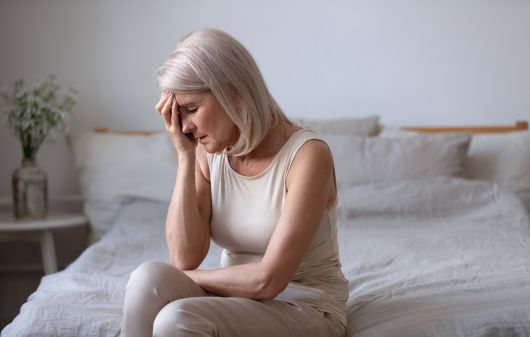
Symptoms vary a lot from one woman to the next. Some barely notice the change. Others find it takes over their sleep, their mood and their work for years, and the same woman can have an easy month and then a rough one. Most of it comes down to falling estrogen, and where you feel that first is different for everybody.
- Hot flashes and night sweats, which as many as three in four women get
- Broken sleep, or waking at 3am and not getting back off
- Periods that come closer together or further apart, lighter or heavier, shorter or longer
- Vaginal dryness, burning, and pain during sex
- Bladder leaks and more urinary tract infections than you used to get
- Irritability, low mood and anxiety
- Brain fog, losing your thread, forgetting words
- Aching joints and muscles
- Headaches, and a heart that races or pounds
- Less interest in sex
- Changes in weight and body shape
- Drier skin, eyes and mouth, and hair that thins
One thing that is never just menopause: bleeding or spotting after you have gone a full year without a period. Get it checked, because it can be a sign of cancer or another serious problem. Do not sit on it.
Is HRT safe, and is it right for you?
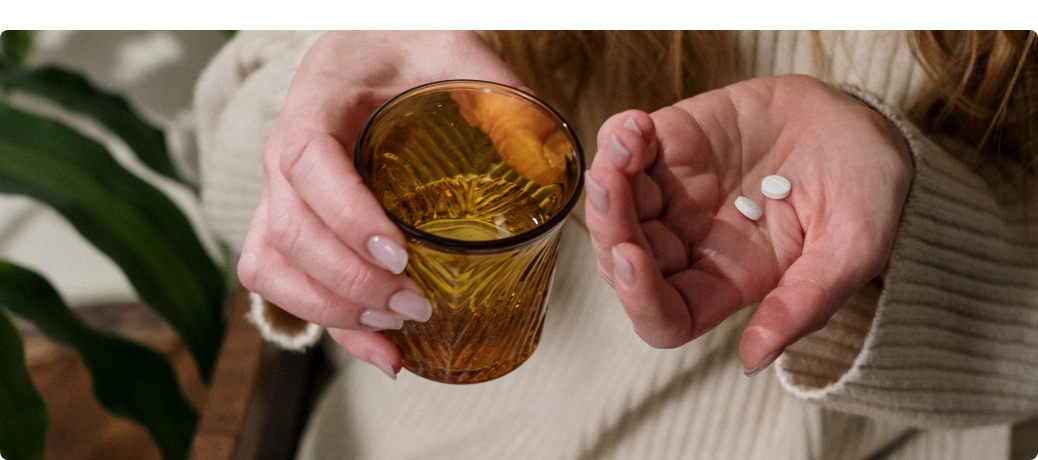
That depends on you, not on menopause, and it is the first thing a doctor will work through with you in the chat.
Worth knowing before you ask. The FDA started removing the heart disease, breast cancer and dementia warnings from hormone therapy labels in November 2025, and approved the first six updated labels in February 2026. It is being done product by product, so the leaflet in the box may still read the old way. The endometrial cancer warning stays on estrogen-only products, which is why you take a progestogen alongside estrogen if you still have a uterus: estrogen on its own thickens the lining. Timing matters too. The labeled advice is to start systemic hormone therapy within 10 years of your last period, or before you turn 60.
Hormone therapy is not for everyone, so tell the doctor if you have had breast cancer or another estrogen-driven cancer, vaginal bleeding nobody has explained yet, a blood clot, a stroke or a heart attack, liver disease, or a clotting disorder, and if there is any chance you are pregnant. If estrogen is off the table for you, the non-hormonal options above are still open, and that is the same conversation, not a new one.
What we can do from here: go through your symptoms and history, start or continue hormone therapy when it is appropriate, adjust your dose, switch you between a pill, a patch and a vaginal product, and send you a lab requisition. What still has to happen in person: a pelvic exam, a mammogram, a bone density scan, and testing for any bleeding after menopause.
Once you are on treatment, go straight to an emergency room if you get sudden swelling or pain in one leg, sudden shortness of breath, chest pain, or a sudden severe headache. And if you are put on fezolinetant or elinzanetant, both need liver blood tests before you start and while you are taking them; stop and get checked if you notice new tiredness, nausea, itching, yellowing of your eyes or skin, dark urine or pain in your belly.
FAQs about online menopause treatment
Which menopause treatment is best?
There is no single best one, and any site that gives you one answer is guessing about you. It depends on which symptoms are bothering you and what is safe for you. For hot flashes and night sweats, hormone therapy works better than anything else available. If hormones are not an option, low-dose paroxetine, fezolinetant, elinzanetant or gabapentin can help. If vaginal dryness is your only real complaint, a low-dose vaginal estrogen usually handles it without treating the rest of your body. A doctor matches the treatment to your symptoms and your history, in that order.
Can I get menopause treatment online?
Yes, for most of it. Our board-certified doctors can go through your symptoms and your cycle history, explain your options, start or continue hormone therapy when it is appropriate, adjust your dose, and send a prescription to the pharmacy you choose. What still has to happen in person is a pelvic exam, a mammogram, a bone density scan, and testing for any bleeding after menopause.
How to avoid menopause symptoms?
You cannot avoid menopause, and there is no reliable way to skip the symptoms. What you can do is treat them. Sleeping in a cooler room, dressing in layers and keeping a fan nearby make hot flashes easier to sit through, and quitting smoking is worth it because smokers tend to reach menopause earlier and have a rougher time of it. If that is not enough, that is not a failure on your part. That is the point at which prescription treatment starts to make sense.
How to treat hot flashes in the elderly?
Age changes the calculation. The FDA's labeled advice is to begin systemic hormone therapy within 10 years of your last period, or before you turn 60, so a woman in her seventies who has never taken it is usually pointed toward non-hormonal options instead. Low-dose vaginal estrogen for dryness is a separate question and is often still fine. Have this conversation with a doctor who has your full medication list in front of them, because interactions matter more as you get older.
Is there a cure for menopause?
Menopause is not an illness, so there is nothing to cure. It is a normal stage of life, like puberty. The symptoms are a different matter, and they are very treatable. You do not have to earn treatment by putting up with them first.
How to relieve menopause symptoms permanently?
Nothing switches them off for good, because they come from a permanent drop in estrogen. What treatment does is keep them under control for as long as you need it, and then you and your doctor decide when to stop. Worth knowing how long that tends to be: in the SWAN study, frequent hot flashes lasted a median of 7.4 years and continued for a median of 4.5 years after the final period. Vaginal dryness is the one symptom that usually needs ongoing treatment rather than a course.
What is the treatment for menopause mood swings?
A correction first, because this one gets repeated everywhere: mood changes are common, but hot flashes and night sweats are the most common menopause symptom, and as many as three in four women get them. For mood specifically, hormone therapy often helps indirectly by fixing your sleep. If what you have is depression rather than menopause-related irritability, an antidepressant at a normal dose is the treatment, not a menopause dose. Talking therapy helps too. If your mood has changed enough that you are worried about yourself, say that to the doctor plainly and early in the chat.
What is the hormone treatment for perimenopause?
Perimenopause is the stretch before your final period, when your hormones swing rather than simply fall, which is why the symptoms can be worse than they are afterwards. Estrogen, as a patch, gel, spray or tablet, is the usual treatment, and if you still have a uterus it is paired with a progestogen to protect the lining. Low-dose hormonal birth control is another route in perimenopause, because it steadies your cycle and covers contraception at the same time. And yes, you can still get pregnant, right up until you have gone a full 12 months without a period.
What is the over-the-counter menopause treatment?
Over the counter, the honest list is short. A water-based vaginal lubricant helps with pain during sex, and a vaginal moisturizer used every few days helps with day-to-day dryness. Neither needs a prescription and both are worth trying first. The supplements marketed for hot flashes are a different story. Black cohosh, DHEA and soy isoflavones are not proven to work, some carry real risks including liver damage, and none of them are regulated the way a prescription drug is. Tell your doctor what you are taking, including the ones you bought yourself.
What is the non-hormonal treatment for menopause?
There are several, and one bit of terminology to get right first: SSRI stands for selective serotonin reuptake inhibitor. Low-dose paroxetine is the only antidepressant the FDA has approved specifically for hot flashes, at 7.5 mg, far below the dose used for depression. Fezolinetant and elinzanetant are newer, are not hormones at all, and work on the part of the brain that controls your body temperature; both need liver blood tests before you start and while you are on them. Gabapentin is used off label and can help when night sweats are what keeps waking you. For painful sex specifically, ospemifene and prasterone are options.
How do you get rid of weight gain during menopause?
Menopause changes how your body uses energy and where it stores fat, so the weight often arrives without your habits changing, which is maddening. The things that work are the unglamorous ones: strength training as well as cardio, enough protein, and enough sleep. That last one sounds soft and is not, because if night sweats are destroying your sleep then nothing else you try is going to stick. Treating the night sweats is often what makes the rest possible. Hormone therapy is not a weight-loss treatment and should not be sold to you as one.
How Our App Has
Helped Patients
Our 500,000+ Members Love Our Online Doctors 5 Star Rating With 1600+ Reviews Here Is What They Say


-Phindile Mkhatshwa
-brooke snow
-Okiti Stephanie
-ASIF Khan
-Chelsey
-edith bien aime
-Lesego Thejane
-Stephanie Brown
-kulwinder gill
-Elijah Mark
Get Started Today
Talk to online doctors now and get medical advice, online prescriptions and refills, and lab requisitions. When required, you can get an online doctor’s note within minutes. On-demand healthcare services at your fingertips.