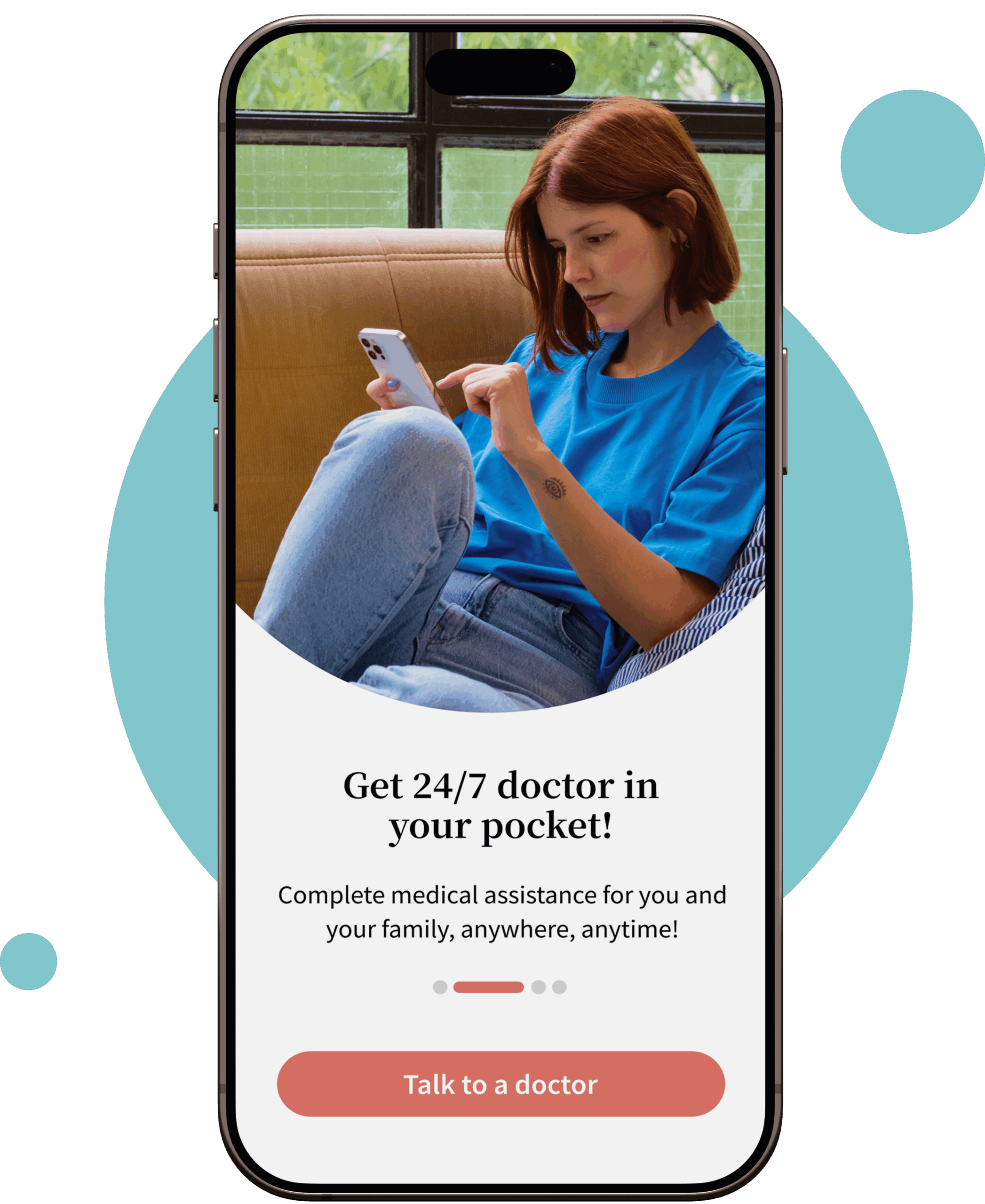
Online Fever Treatment at Home
Start fever treatment from home, with no appointment and no waiting room. A board-certified doctor reviews your temperature, your symptoms and how long the fever has lasted, then sends any prescription you need to your pharmacy the same day when treatment is medically appropriate.
Available 24 hours a day for adults and children, including the fevers that begin at night or over a weekend.
How to connect with a doctor online for a fever
Connect with a board-certified doctor in three easy steps.
Describe your Issue
Download our app, register and tell us about your medical issue to get started.
- Fever
- Sexual Health
- Obesity
- STD
- UTI
- Allergies
Chat with a Doctor
Connect with a board-certified doctor. You can chat, send pictures and videos.
Hi I’m Dr. Nicole. How may I help you?
Hi Dr. Nicole, I have a high fever and body aches. What should I do?

Get Prescription
Our online doctors can help you with your medical issues and give you prescriptions.
Prescription
- Acetaminophen (Tylenol) 500mg
- Take three times a day for three days
Send Prescription
When does a fever need prescription medication?
Most fevers improve with rest, fluids, and over-the-counter medicines. These medicines can lower your temperature and help you feel better, but they do not treat the underlying cause.
Prescription medication may be needed when a doctor identifies an infection or another condition causing the fever. During an online consultation, the doctor will ask how high your temperature is, how you measured it, how long you have had it, and what other symptoms you are experiencing. They will also review your medical history, allergies, and current medications to determine the likely cause and whether you need testing.
Depending on the cause, treatment may include:
- Antibiotics
- Antiviral medication
- Prescription symptom relief
Antibiotics do not work against viruses, including those that cause colds, flu, and most sore throats. If your symptoms suggest a bacterial infection or another condition that requires prescription treatment, your doctor can send the online prescription to your pharmacy when medically appropriate. They can also let you know if your symptoms require an in-person evaluation instead.
What are the symptoms of a fever?
Fever is the body’s temperature rising above its normal set point, usually while the immune system fights an infection. Here are the common symptoms associated with fever:
- Sweating
- Chills and shivering
- Headache
- Muscle aches
- General weakness
- Loss of appetite
- Dehydration
- Irritability, which is often the clearest sign in a young child
An adult has a fever once an oral reading goes above 99°F to 99.5°F (37.2°C to 37.5°C). For a child, the number that counts as a fever is 100.4°F (38°C) rectally, 99.5°F (37.5°C) orally or 99°F (37.2°C) under the arm. Normal temperature moves through the day and is usually highest in the evening.

What causes a fever?
Almost any infection can push your temperature up, and several things that are not infections do it too. The usual causes include:
- Respiratory infections, such as colds and the flu, sore throats, sinus infections, ear infections, bronchitis, and pneumonia
- Urinary tract infections, including bladder and kidney infections
- Stomach bugs, both viral and bacterial gastroenteritis
- Skin and deeper infections, such as cellulitis, an abscess, appendicitis, or a bone infection
- A recent vaccination, which can leave a low-grade fever for a day or two
- Autoimmune and inflammatory conditions, such as rheumatoid arthritis, lupus, Crohn’s disease, and ulcerative colitis
- Certain medicines, including some antibiotics, antihistamines, and seizure medicines
- Heat exhaustion, blood clots, and, less often, a cancer such as lymphoma or leukemia
A temperature of 101°F or higher that lasts for three weeks without a diagnosis is called a fever of unknown origin, and it requires proper treatment rather than another dose of a fever reducer.
When should you see a doctor about a fever?
Most fevers pass on their own. Talk to a doctor the same day if any of these apply:
- The temperature sits at or keeps climbing above 103°F (39.4°C)
- Fevers keep coming and going for a week or more, even when they are not high
- A new rash, pain when you urinate, a sore throat, an earache, or a cough come with the fever
- You are pregnant, having cancer treatment, taking steroids or immunosuppressing medicine, or living with diabetes, sickle cell anemia, COPD, or a heart condition
- The fever started after a recent trip outside the country
Call 911 or go to the nearest emergency room for a fever with a seizure, a stiff neck, a very bad headache, confusion, trouble breathing, or blue lips.
Frequently asked questions about fever treatment
What to do when the fever doesn't go down?
If the temperature has not come down after a dose of acetaminophen or ibuprofen, has lasted longer than 48 to 72 hours, or is coming with shortness of breath, a very bad headache or a stiff neck, get medical advice the same day. A fever that will not settle usually means the infection behind it needs treating.
How to bring down a fever?
Rest and fluids do most of the work. Acetaminophen (Tylenol) every 4 to 6 hours, or ibuprofen (Advil, Motrin) every 6 to 8 hours, will lower the temperature, and the goal is comfort rather than a normal reading. Keep clothing and bedding light, and use a lukewarm sponge bath rather than a cold bath, ice or an alcohol rub, which cause shivering and push the core temperature back up.
How to reduce 104 fever in a child?
A reading of 104°F (40°C) in a child is worth a same-day call to a doctor, especially if your child is drowsy, will not drink or has a rash. While you arrange that, keep clothing light, keep fluids going, and give acetaminophen or ibuprofen at the weight-based dose on the package. Do not use ibuprofen in a baby 6 months or younger, and do not give aspirin to a child.
What is the treatment for fever in pregnancy?
Acetaminophen (Tylenol) is the fever reducer used in pregnancy, along with rest, fluids and a cool cloth on the forehead. The FDA advises against NSAIDs such as ibuprofen, naproxen and aspirin from around 20 weeks of pregnancy. Let your doctor or midwife know about any fever in pregnancy, because the infection behind it may need treating.
Is it better to leave the fever untreated?
A mild fever with no other symptoms does not need treating. Fever is part of how the immune system fights infection, so the reason to take something is discomfort, poor sleep, vomiting or dehydration, not the number on the thermometer. Treat it if you feel unwell, and talk to a doctor if the fever keeps climbing or will not go away.
What happens if you don't treat a fever?
Most untreated fevers simply run their course as the infection clears. The risk is not the temperature itself, it is dehydration and whatever is causing the fever going untreated. Keep fluids going, and get medical advice if the fever lasts more than 48 to 72 hours, climbs above 103°F (39.4°C) in an adult, or comes with a stiff neck, confusion or trouble breathing.
How do you lower a fever with cancer?
During cancer treatment a fever is treated as an emergency, not something to bring down at home. Call your cancer care team right away if your temperature reaches 100.5°F (38°C) or higher, and ask before taking acetaminophen or ibuprofen, because a fever reducer can mask an infection that needs urgent treatment. Chemotherapy lowers the white cells that fight infection, which is why the threshold is so much lower than it is for everyone else.
How Our App Has
Helped Patients
Our 500,000+ Members Love Our Online Doctors 5 Star Rating With 1600+ Reviews Here Is What They Say


-Phindile Mkhatshwa
-brooke snow
-Okiti Stephanie
-ASIF Khan
-Chelsey
-edith bien aime
-Lesego Thejane
-Stephanie Brown
-kulwinder gill
-Elijah Mark
Get Started Today
Talk to online doctors now and get medical advice, online prescriptions, refills, lab requisitions and medical notes within minutes. On-demand healthcare services at your fingertips.