Online Hypothyroidism Treatment and Dose Adjustments
Refill your thyroid medication and get your dose reviewed without waiting weeks for an appointment. A board-certified doctor reviews your symptoms and most recent thyroid results with you, then sends your prescription to the pharmacy you choose the same day when treatment is medically appropriate.

- Fast and reliable prescription sent to your pharmacy
- 24/7 Instant care & immediate access
- No wait time to see your doctor
- HIPAA compliant
Trusted by millions for online doctor diagnosis
Over 1 million patients
5-star Doctor Ratings
4.5 Rating
5,000+ App Reviews
4.6 Rating
1k+ Trustpilot Reviews
Why choose Your Doctors Online for Hypothyroidism medication refills?
With a user-focused approach and timely treatment, Your Doctors Online offers secure, convenient, and fast telehealth services all across the US.
Personalized care from licensed doctors
Our virtual consultations connect you directly with experienced U.S. physicians who review your medical history and ensure your Levothyroxine dosage is appropriate before issuing a refill.
Same-day prescription refills to local pharmacies
Once approved, we send your thyroid medication online to the pharmacy of your choice within minutes for same-day pickup.
Real-time prescription tracking
Track your consultation and prescription status in our secure app, so you always know when your medication will be ready.
How to get hypothyroidism treatment online
Just three easy steps to get expert medical help from your phone, wherever you are.
Create your secure account
Sign up through our app or website and share details about your condition and medication needs.

Chat with a licensed online doctor
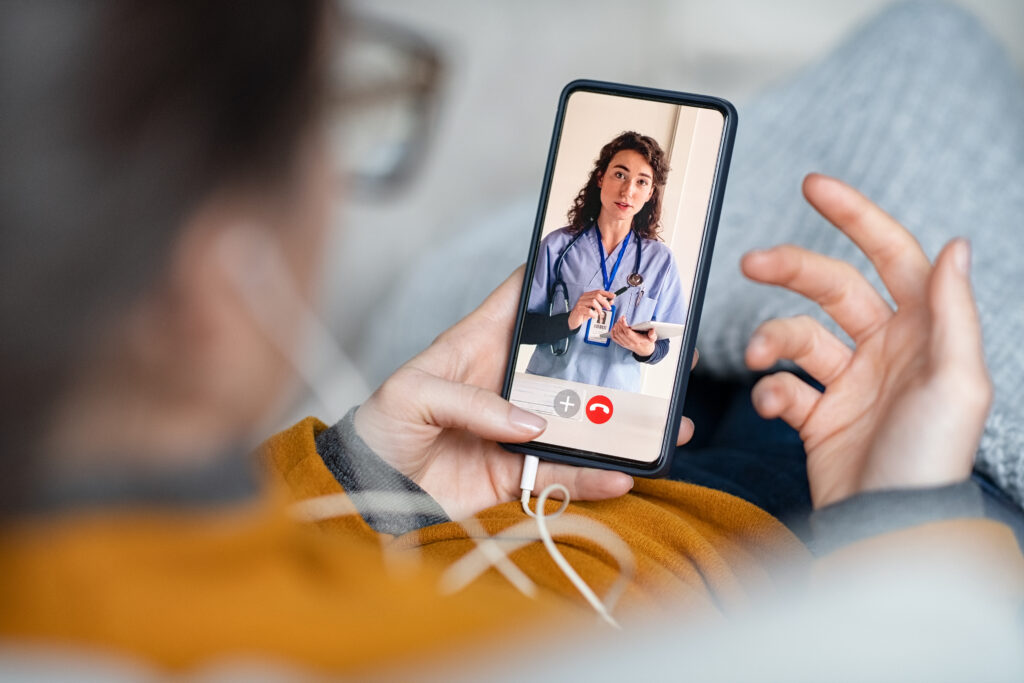
Speak with a physician via secure chat, audio, or video to review your health status and current prescription.
Receive your prescription refill
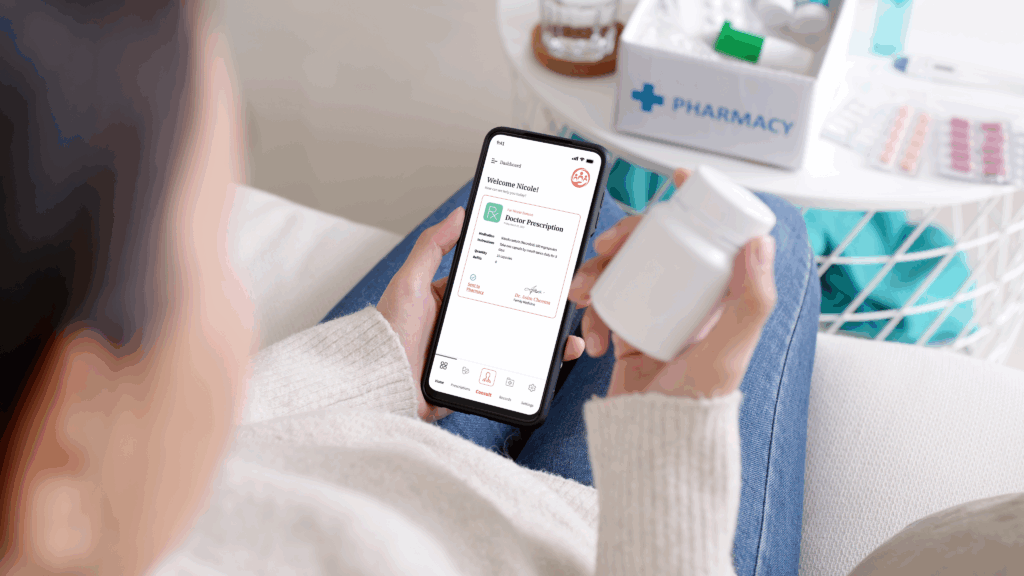
If appropriate, your prescription will be sent electronically to your preferred local pharmacy for immediate pickup.
How do online thyroid consultations and lab tests work?
Online hypothyroidism treatment at Your Doctors Online follows the same clinical steps as an in-person review, in a chat you can start from your phone.
- Your doctor goes over your diagnosis, the dose you are on now and how you have been feeling on it.
- If your last thyroid panel is out of date, you can be issued online lab requisitions to take to a lab near you.
- Your results come from a thyroid blood panel that starts with TSH, with free T4 and thyroid antibodies added when the TSH result is abnormal.
- Refills reach your pharmacy the same day once your doctor is satisfied your dose is stable.
- After a dose change your doctor will ask you to repeat the test in 6 to 8 weeks, then roughly once a year while you stay in range.
Your Doctors Online refills and adjusts thyroid medication for people who already have a hypothyroidism diagnosis and a stable dose. A first diagnosis needs in-person testing before treatment starts, and your doctor will tell you if that is what your case calls for.

What hypothyroidism medications can we prescribe online?
These are the thyroid medications our doctors can refill and adjust once you have a diagnosis.
Levothyroxine
(refills)
Armour Thyroid
(refills)

What is hypothyroidism?
Hypothyroidism means the thyroid gland, a small butterfly-shaped gland at the base of your neck, is not making enough thyroid hormone. Those hormones, thyroxine (T4) and triiodothyronine (T3), set the pace of your metabolism, heart rate, digestion and body temperature, so when they run low the whole system slows down.
It is confirmed on blood tests rather than on symptoms. A raised TSH with a low free T4 is overt hypothyroidism. A raised TSH with a free T4 still inside the normal range is subclinical hypothyroidism, which is more common and is not always treated straight away.
It is also more common than most people assume. About 5 in 100 Americans aged 12 and over have an underactive thyroid, and because it comes on so gradually, many people notice nothing for months or even years.
Holding a prescription is not the same as being at your target, and that gap is where most of the damage sits. In a 2026 study of 1,750 people already taking levothyroxine, 1 in 10 never reached their TSH target across three years of follow-up, and those who reached it least often reported more fatigue, more trouble concentrating, lower mood and more difficulty with daily and social life. That is the day-to-day cost of a dose that is close but not right, and it is why a dose review matters as much as the refill itself.
What are the symptoms of hypothyroidism?
Hypothyroidism symptoms build slowly, and most people put them down to stress, age or a hard year before they think about the thyroid.
Early signs worth acting on:
- Tiredness and low energy that rest does not fix
- Weight gain with no change to your diet or activity
- Feeling cold when everyone around you is comfortable
- Constipation
- Dry skin, brittle nails and thinning hair
- Aching joints and muscles, and general weakness
- Heavier, irregular or missed periods, and trouble getting pregnant
- Low mood, low motivation or difficulty concentrating
- A slow heart rate
Left untreated for long enough it also shows up as a hoarse voice, a puffy face, thinning of the outer eyebrows, a dulled sense of taste and smell and a lower body temperature, along with raised cholesterol and a swollen thyroid.
Get urgent care for chest pain, a racing heartbeat, or severe drowsiness and confusion in someone with a known thyroid problem. Myxedema crisis is rare but is a medical emergency.
What causes hypothyroidism and who is at risk?
In the United States the usual cause is the immune system rather than diet. These are the ones doctors see most often.
- Hashimoto’s disease, where the immune system attacks the thyroid. It is the most common cause in the US, and thyroid peroxidase antibodies are positive in over 90% of cases.
- Thyroiditis after a viral illness, or in the months after giving birth, which affects about 1 in 10 women after a pregnancy.
- Thyroid surgery, radioactive iodine treatment, or radiation to the head and neck.
- Medicines that act on the thyroid, including amiodarone, lithium, interferon and some cancer immunotherapies.
- Congenital hypothyroidism, present from birth and picked up on newborn screening.
- Iodine, where too little is the leading cause worldwide and a long-running excess also raises risk.
- A pituitary problem, a rare cause in which the gland that signals the thyroid is the one at fault.
You are more likely to develop it if you:
- Are a woman. Hashimoto’s is at least seven times more common in women than in men, and peaks between 45 and 55.
- Are over 60.
- Have a family history of thyroid disease.
- Have had a thyroid problem, thyroid surgery or neck radiation before.
- Have given birth in the past six months.
- Have another autoimmune condition, such as type 1 diabetes, celiac disease, rheumatoid arthritis, lupus or pernicious anemia.
- Have Turner syndrome.
Meet our online doctors in the United States
Dr. Stotland Mitchell is a board-certified Occupational Medicine physician with 5+ years of experience. He provides virtual care across all U.S. states and D.C., blending allopathic medicine with public health insights. His approach focuses on rapid symptom relief and long-term prevention, often resulting in faster recovery and improved health outcomes for his patients.

Dr. Richard Honaker is a board-certified physician with more than 40 years of experience in family and emergency medicine. He serves as Chief Medical Advisor at Your Doctors Online and is affiliated with Medical City Plano in Texas. Recognized multiple times by D Magazine and Texas Monthly, Dr. Honaker provides evidence-based care across a wide range of conditions including diabetes, hypertension, and injury care.

Dr. Monique Rainford is an OB/GYN expert and Assistant Clinical Professor at Yale School of Medicine. With 25+ years of experience, she’s led OB/GYN departments at Yale Health and Baltimore Medical System. Her clinical interests include pregnancy, menstrual health, chronic pelvic conditions, and lifestyle medicine. Dr. Rainford advocates for maternal health equity, especially in underserved communities.

Dr. Candice Fraser is an OB/GYN practitioner and founder of Trinity Medical Care. With over a decade of experience, she focuses on reproductive care, menstrual health, and menopause management. Along with medical training and residency, she also holds an MBA in healthcare management, blending business insight with clinical excellence.
Dr. Danielle DonDiego is a double board-certified Family and Obesity Medicine physician, business mentor, and author of Self-Care Rx. She focuses on helping patients manage weight, improve nutrition, and adopt sustainable lifestyle changes. A graduate of the Virginia College of Osteopathic Medicine with an MBA from Virginia Tech, she combines her medical expertise with a passion for patient education and long-term wellness.
Dr. Amber Robins is a double board-certified Family and Lifestyle Medicine physician with a strong focus on women’s health, preventive care, and patient advocacy. She earned her MD from the University of Rochester and an MBA from LSU-Shreveport. A published author and media contributor, she blends clinical expertise with a passion for empowering patients to make informed health decisions.
Dr. Nina Carroll is a retired OB/GYN with decades of experience serving women in the U.S. and abroad. She specialized in menopause care, sexual health, and trauma-informed women’s health. Today, she continues her work through medical writing, focusing on sexual minority women’s health and care for survivors of trauma.
Dr. Nerissa Bauer is a behavioral pediatrician specializing in ADHD, parenting strategies, and mental health in children. A former academic and AAP spokesperson, she is the creator of the TEACH Me ADHD program, helping families better understand and manage ADHD. She brings warmth, creativity, and evidence-based guidance to her work with patients and parents.


Frequently asked questions
Can I get thyroid medication without a doctor?
No. In the US, Levothyroxine and other thyroid medications require a prescription from a licensed healthcare provider. With Your Doctors Online, you can get a refill after a virtual consultation with an online doctor for thyroid medication.
How to get thyroid medication without insurance?
Insurance is not required to use our service. You pay for the virtual visit, and the medication cost can be paid directly at the pharmacy. Some pharmacies may offer discount programs for patients paying out of pocket.
Can I buy Levothyroxine online?
Yes, but only through licensed telehealth services like Your Doctors Online. After your consultation, your online prescription will be sent to a legitimate pharmacy for dispensing, never shipped from unverified online sources.
Will my pharmacy accept an online thyroid prescription?
Yes. All major U.S. pharmacies and most local pharmacies accept electronic prescriptions from Your Doctors Online.
Can you adjust my Levothyroxine dose online?
If you have recent lab results and your doctor determines a change is necessary, they may adjust your dose. Otherwise, you may need in-person testing before a change is made. We also provide specialist referrals to get you the best treatment for Hypothyroidism.
What if I have symptoms of hypothyroidism but no diagnosis?
We cannot prescribe Levothyroxine without prior diagnosis and lab confirmation. In this case, we recommend you see an in-person doctor for initial testing.
Can an online doctor prescribe thyroid medication?
Yes. Through a thyroid disorder online consultation at Your Doctors Online, licensed physicians can provide refills for thyroid medications such as Levothyroxine or Armour Thyroid if you already have a diagnosis and a stable treatment plan. Prescriptions are sent directly to your chosen pharmacy for same-day pickup.
Can the thyroid heal itself?
In most cases, hypothyroidism from autoimmune conditions such as Hashimoto’s thyroiditis is permanent and requires lifelong medication. Temporary thyroid problems from pregnancy or thyroiditis may resolve without long-term treatment, but only a doctor can confirm if you can safely stop medication.
What are the best underactive thyroid treatments?
If the thyroid is underactive, it can be treated via daily hormone replacement therapy via medications like Levothyroxine. It fulfills the deficiency of the thyroid gland in your body. However, you need to test your blood initially to check the level of your thyroid hormones. Consult our doctor at Your Doctors Online for a refill of levothyroxine.
Is Hypothyroidism serious if untreated?
Hypothyroidism can be fatal if left untreated, as a deficiency of enough thyroid hormone due to malfunctioning of the thyroid gland can damage organs, causing cardiovascular problems like high cholesterol levels, hypertension, and other heart problems. It can also affect mental health, metabolism, and the menstrual cycle, and can cause skin and hair issues. In children, it can cause impaired development during pregnancy.
Can I get Hypothyroidism treatment without going to the doctor?
Hypothyroidism can be treated with FDA-approved medications like NDT (Nature-thyroid, Armour thyroid) or Levothyroxine. Still, these are prescription-only, and you need to get a consultation from a doctor for their prescription. Talk to a provider at Your Doctors Online for the refill of hypothyroid medications virtually.
When should you see a doctor for thyroid problems?
You should see a doctor for thyroid problems if you experience symptoms like weight changes, fatigue, sensitivity to colds, changes in menstrual periods, depression, or other signs of thyroid dysfunction. It’s crucial to seek medical attention if your symptoms persist or worsen over time, especially if you have a family history of thyroid issues or if you suspect thyroid problems.
What is the treatment for the atrophic thyroid gland?
The treatment for the atrophic thyroid gland typically involves thyroxine replacement therapy to manage hormone levels and support normal growth and development. In asymptomatic cases with elevated TSH levels, preventive thyroid replacement therapy is recommended to prevent progression. Regular monitoring of thyroid function is essential to ensure effective hormone replacement and overall thyroid health management.
At what TSH level should Hypothyroidism be treated in pregnancy?
If your TSH level is more than 10mlU/L during the 1st trimester of pregnancy, you should consult a doctor immediately. However, if TSH is less than 2.5, treatment is not required.
Why does my Hypothyroidism keep getting worse?
Hypothyroidism may worsen if you are not taking your medication as instructed or if the dosage is not right for you. Consult a doctor if you are experiencing such symptoms at Your Doctors Online.