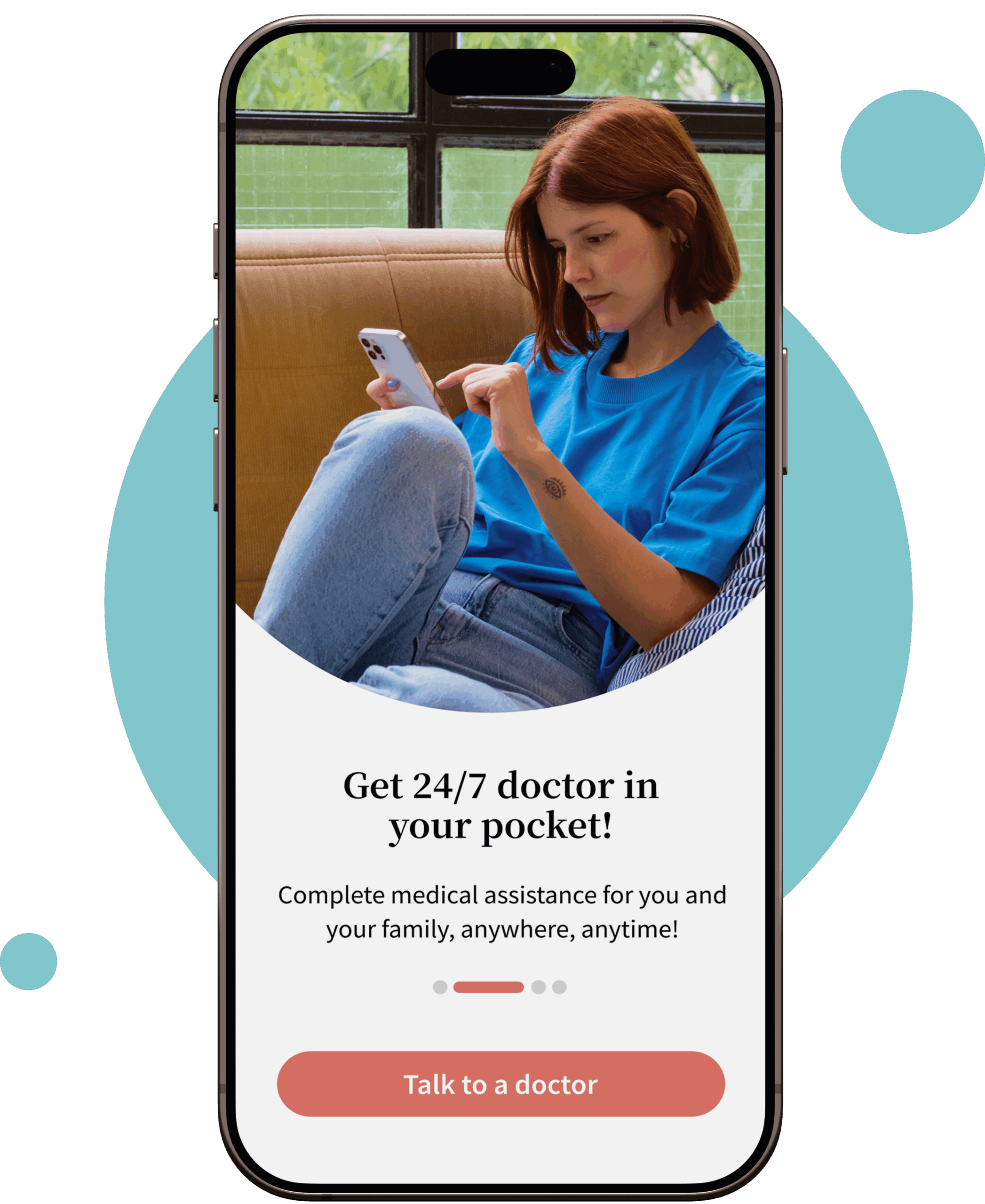
Online Nausea Treatment
Get anti-nausea medication prescribed online, usually within minutes. Our board-certified doctors are available 24/7 to work out what is behind the nausea, whether that is a stomach bug, pregnancy, a migraine, or a medication you just started, and send treatment to the pharmacy you choose when it is medically appropriate.
Available 24/7 for new nausea, nausea that keeps coming back, and nausea from a medication you need to stay on. Blood in your vomit, or vomiting that will not stop, needs in-person care.
How to get nausea treatment online
Connect with an online doctor and get a prescription online.
Describe your Issue
Download our app, register and tell us about your medical issue to get started.
- Nausea
- Sexual Health
- Obesity
- STD
- UTI
- Allergies
Chat with a Doctor
Connect with a board-certified doctor. You can chat, send pictures and videos.
Hi I’m dr. Nicole. How may I help you?
Hi Dr. Nicole, I am feeling nausea and bloating. Can you help me?

Get Prescription
Our online doctors can help you with your medical issues and give you prescriptions.
Prescription
- Prochlorperazine 10 mg
- Take one tablet up to three times a day as needed for nausea.
Send Prescription
What are the treatment options for nausea?
Treatment for nausea depends on what is causing it. Most people start with fluids and bland food, and add medication if the nausea is not settling on its own.
- Fluids first: Sip small amounts of clear liquid often rather than drinking a lot at once. Aim for 8 to 10 cups a day, and cold water is usually the easiest to keep down.
- Small, bland meals: Six to eight small meals through the day are usually easier to tolerate than three large ones. Crackers, toast, rice, noodles, potatoes, and plain chicken or fish are good places to start.
- Prescription anti-nausea medication: If food and fluids are not enough, a doctor can send an online prescription for an antiemetic. These usually start working 30 to 60 minutes after you take them, and they work best if you take them when the nausea starts rather than waiting until you feel very unwell.
- Treating the cause: Nausea from a migraine, reflux, pregnancy, or a medication you have just started needs the cause treated too, not just the nausea.
- Fluids through a drip: If you cannot keep anything down at all, you need in-person care and fluids through a vein.
What anti-nausea medications can we prescribe online?
The right anti-nausea medication depends on what is causing the nausea, how severe it is and what else you take. A board-certified doctor can review your symptoms and send anti-nausea medication to the pharmacy you choose when it is medically appropriate.
5-HT3 blocker
Learn More
Antihistamine
Phenothiazine antiemetic
Antiemetic
Antihistamine with vitamin B6
What causes nausea?
Nausea is a symptom rather than a condition itself, so the right treatment depends on what is causing it. Common causes include:
- Stomach bugs: Viruses such as norovirus can cause nausea, vomiting, and diarrhea.
- Food poisoning: Often starts within hours of eating contaminated food.
- Pregnancy: Nausea can begin early in pregnancy and may happen at any time of day.
- Migraine: Nausea is a common part of migraine attacks.
- Motion sickness: Traveling in a car, boat, plane, or on a ride can trigger nausea when your eyes and inner ear send conflicting movement signals.
- Medications: Some medicines, including chemotherapy, opioids, antibiotics, and certain diabetes and weight-loss medications, can cause nausea.
- Digestive conditions: Reflux, ulcers, and delayed stomach emptying can all cause nausea.
- Stress, pain, or strong smells: Anxiety, severe pain, and certain odors can trigger nausea in some people.
- Heavy cannabis use: Long-term, frequent cannabis use can cause repeated nausea and vomiting.
Nausea can also happen with more serious problems, including appendicitis, bowel obstruction, or poisoning, particularly in children. It can feel like an urge to vomit along with sweating, extra saliva, weakness, stomach discomfort, or bloating.

How can you relieve nausea at home?
Most short-term nausea gets better with a few simple changes. Try these at home:
- Take it easy: Sit quietly and avoid too much movement. Stay upright after eating instead of lying down.
- Sip fluids: Take small, frequent sips of cold water or other clear liquids rather than drinking a lot at once. If you also have diarrhea, an oral rehydration solution is a better choice than juice or soda.
- Eat small, bland meals: Crackers, toast, rice, noodles, potatoes, and plain chicken or fish are usually easier on your stomach. Smaller meals throughout the day may be easier to tolerate than three large ones.
- Avoid common triggers: Greasy, fried, spicy, or very salty foods, as well as alcohol, caffeine, and fizzy drinks, can make nausea worse.
- Avoid strong smells: Fresh air and staying away from cooking smells may help.
- After vomiting: Rinse your mouth with water to get rid of the unpleasant taste and protect your teeth.
- Try ginger: Ginger may help with nausea during pregnancy, although it does not appear to help motion sickness.
- During pregnancy: Keep crackers by your bed and eat a few before getting up. Taking your prenatal vitamin at night with a small amount of food may also be easier on your stomach.
When should you see a doctor about nausea and vomiting?
Most nausea and vomiting gets better on its own, but some symptoms mean you should get medical care sooner.
- Go to the ER or call 911 if you see blood or dark, coffee-ground-like material in your vomit, or think you may have swallowed something poisonous.
- Get medical care the same day if you have been vomiting for more than 24 hours, cannot keep fluids down for 12 hours, have vomited three or more times in one day, have severe stomach pain, a headache with a stiff neck, or have not urinated for 8 hours or more.
- Watch for dehydration: Signs include a dry mouth, unusual thirst, dark urine, urinating less often, sunken eyes, or no tears when crying.
- For babies and young children: Fewer wet diapers can be a sign of dehydration. A baby 3 months or younger with a rectal temperature of 100.4°F (38°C) or higher needs same-day medical advice.
- Nausea that keeps going: If nausea lasts more than 48 hours or comes with unexplained weight loss, it is worth finding the cause rather than simply treating the symptom.
If your symptoms are not improving or are getting worse, you can talk to a doctor online. A doctor can review your symptoms and medical history, help identify the likely cause, and prescribe anti-nausea medication when medically appropriate.
FAQs About Nausea
How to treat fever and vomiting in a child?
Most fever and vomiting in children is caused by a virus rather than a bacterial infection, so antibiotics will not help. Rotavirus and norovirus are the usual causes. Keep your child drinking small amounts often, around 2 to 4 ounces every 30 to 60 minutes, and keep an eye on how many wet diapers or bathroom trips they have. Acetaminophen can bring a fever down, but for a baby 3 months or younger you should speak to your child’s doctor before giving any medicine, and a rectal temperature of 100.4°F (38°C) or higher at that age needs same-day medical advice. Promethazine should never be given to a child under 2 years old, because its label carries a boxed warning for fatal breathing problems. Get your child seen if they cannot keep any fluids down, have not urinated for 8 hours, or seem unusually sleepy or floppy.
How to treat nausea and diarrhea?
When you have both nausea and diarrhea, you are losing water and minerals, so fluids come first. Drink small amounts often, around 2 to 4 ounces every 30 to 60 minutes, rather than a lot at once. An oral rehydration solution is a better choice than juice or soda, which do not replace the minerals you are losing and can make diarrhea worse. Older children and adults can also use a sports drink. Go back to ordinary food as soon as you can keep it down. Cereal, bread, potatoes, lean meat, bananas, fresh apples, and cooked vegetables are usually easy to tolerate. Plain yogurt is fine too, although you may want to leave dairy out if it adds to your bloating. Wash your hands properly, especially before eating, because norovirus spreads easily and you can pass it on for up to two weeks after you feel better.
How to treat nausea and vomiting in cancer patients?
Anti-nausea medication given before treatment is the main tool. Nausea and vomiting from chemotherapy are far easier to prevent than to stop once they have started, which is why antiemetics are usually given before a session rather than after. Ondansetron (Zofran) and the other 5-HT3 blockers are FDA-approved for this, and Promethazine is another option. Eating something before the session, having small meals rather than large ones, and staying hydrated can all help. Ginger and peppermint tea are popular, although it is still unclear whether ginger adds anything to standard anti-nausea treatment for chemotherapy. A fever during cancer treatment is an emergency rather than a nausea problem, so call your cancer team straight away.
How to treat a queasy stomach?
A queasy stomach usually settles with small sips and small meals. Sit quietly, sip cold clear liquid rather than drinking a glassful at once, and eat six to eight small portions of bland food through the day instead of three larger meals. Crackers, toast, rice, noodles, potatoes, and plain chicken or fish are usually easier on your stomach. Stay upright for a while after eating rather than lying down. Greasy, fried, or very spicy foods, along with caffeine, alcohol, and fizzy drinks, can make it worse.
How to treat nausea from chemotherapy?
Chemotherapy nausea is treated by preventing it, which is why anti-nausea medication is given before a session rather than after. It usually lasts 24 to 48 hours, although some people feel sick for up to a week. The medications used are 5-HT3 blockers such as Ondansetron, Granisetron, and Palonosetron, NK-1 blockers such as Aprepitant, and often a steroid alongside them. Your cancer team decides that combination. Alongside the medication, small frequent meals are usually easier to manage than one or two large ones, and caffeine, fizzy drinks, very cold soft drinks, and spicy food are worth avoiding.
What can I take to settle my stomach after vomiting?
After vomiting, start with water rather than food. You lose both fluid and minerals, so begin with around 2 to 4 ounces of cold clear liquid every 30 to 60 minutes rather than a full glass. Rinse your mouth with water afterwards to get rid of the taste and protect your teeth, or use a rinse of baking soda and salt if the taste lingers. Once liquids are staying down, move on to small amounts of bland food. Spicy, fatty, and sugary foods take longer to digest, so leave them until your stomach has settled.
How do I stop feeling nauseous and not throwing up?
Vomiting can be prevented by taking over-the-counter anti-vomit medication, restricting your diet to bland foods, and avoiding triggering foods that cause vomiting.
Is nausea without vomiting serious?
Nausea without vomiting is usually not serious, although it depends on the cause. It can come from dozens of things without ever making you throw up, including pregnancy, migraine, reflux, motion, anxiety, a medication side effect, or slow stomach emptying. A day or two of nausea on its own is common and normally settles. Nausea that runs past 48 hours, or comes with severe stomach pain or unexplained weight loss, is worth having a doctor look into rather than treating with another dose of medicine.
How Our App Has
Helped Patients
Our 500,000+ Members Love Our Online Doctors 5 Star Rating With 1600+ Reviews Here Is What They Say


-Phindile Mkhatshwa
-brooke snow
-Okiti Stephanie
-ASIF Khan
-Chelsey
-edith bien aime
-Lesego Thejane
-Stephanie Brown
-kulwinder gill
-Elijah Mark
Get Started Today
Talk to online doctors now and get medical advice, online prescriptions, refills, lab requisitions and medical notes within minutes. On-demand healthcare services at your fingertips.