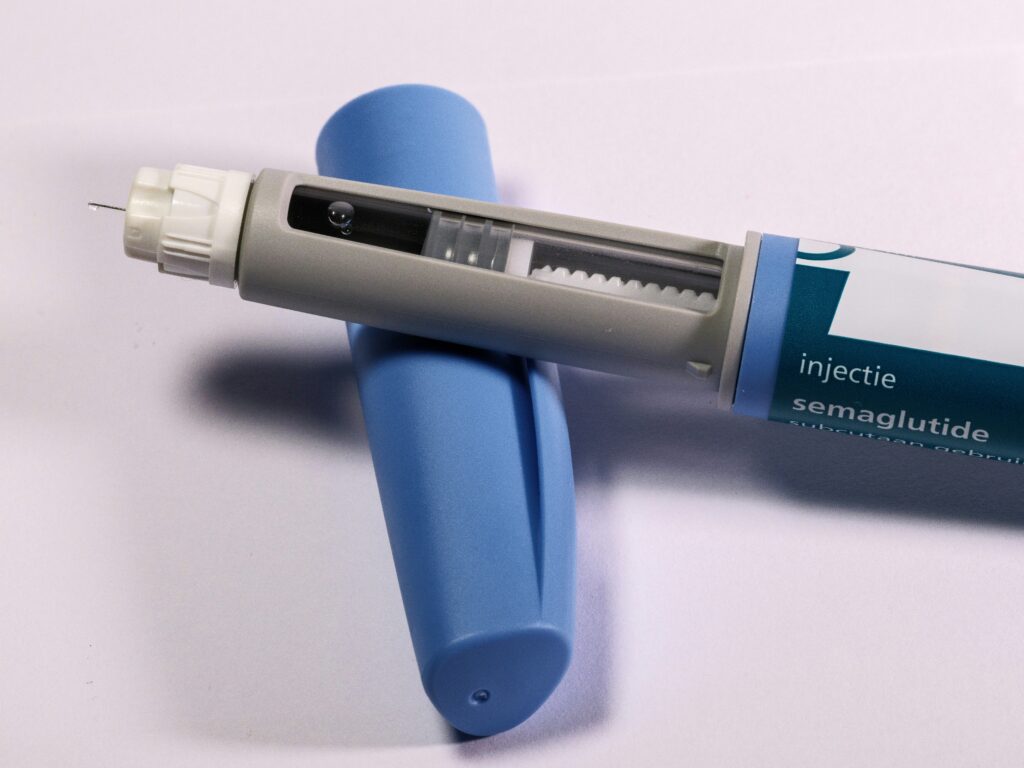
You qualify for prescription weight loss medication if your BMI is 30 or higher, or if your BMI is 27 or higher and you have at least one weight-related health condition such as type 2 diabetes, high blood pressure, or sleep apnea. These are the FDA thresholds that govern approval for every major weight loss drug currently on the market.
How Do Weight Loss Medications Work?
Prescription weight loss medications work through several distinct mechanisms depending on the drug class. GLP-1 receptor agonists such as Wegovy and Zepbound mimic the hormone glucagon-like peptide-1, which slows stomach emptying, reduces appetite, and signals the brain that the body is full. These are currently the most effective class of weight loss medications available.
Zepbound (tirzepatide) is actually a dual GIP and GLP-1 receptor agonist (often called a twincretin). It mimics two gut hormones: glucagon-like peptide-1 AND glucose-dependent insulinotropic polypeptide.
Older medications work differently. Contrave combines bupropion and naltrexone to reduce food cravings through the central nervous system. Qsymia combines phentermine with topiramate to suppress appetite. Xenical (orlistat) works in the gut by blocking fat absorption rather than acting on appetite. Each drug class has its own eligibility requirements and contraindications, which are covered below.
Who Qualifies For Weight Loss Medication?
A proper online consultation can guide you better
“Connect now with an online doctor and find out if you fulfill the criteria.”
“Connect today with an online Canadian-licensed doctor to better understand who qualifies for weight loss medication.”
BMI Requirements for Weight Loss Medication
Body mass index is the primary screening criterion for eligibility for weight-loss medication under FDA approval criteria. The two thresholds that matter are a BMI of 30 or higher and a BMI of 27 or higher with qualifying health conditions.
BMI is calculated from your height and weight. It is an imperfect measure of health, but remains the standard clinical criterion. A BMI of 18.5 to 24.9 is considered the normal range. A BMI of 25 to 29.9 is overweight. A BMI of 30 and above is classified as obesity.
BMI 30 or Higher
A BMI of 30 or higher qualifies you for all FDA-approved weight loss medications without needing an additional health condition. This applies to Wegovy, Zepbound, Saxenda, Contrave, Qsymia, and Xenical. No comorbidity is required at this threshold.
According to CDC obesity data, approximately 42 percent of US adults have a BMI of 30 or higher. Most of these individuals are clinically eligible for at least one approved weight loss medication and have never discussed that option with a physician.
BMI 27 to 29.9 with Weight-Related Conditions
If your BMI falls between 27 and 29.9, you can still qualify for prescription weight loss medications provided you have at least one weight-related health condition. The FDA recognizes the following conditions as qualifying comorbidities:
- Type 2 diabetes
- Hypertension (high blood pressure)
- Obstructive sleep apnea
- High cholesterol (dyslipidemia)
- Metabolic dysfunction-associated steatohepatitis (MASH, formerly known as NASH)
- Established cardiovascular disease
This matters because a meaningful share of adults who struggle with weight-related health problems fall just below the BMI 30 threshold. The comorbidity pathway was designed specifically to extend access to this group.
| BMI Range | Classification | Medication Eligibility |
| Below 27 | Normal weight or overweight | Not eligible for FDA-approved weight loss medications |
| 27 to 29.9 | Overweight | Eligible with at least one qualifying health condition |
| 30 and above | Obesity | Eligible without additional conditions required |
Health Conditions That Qualify You for Weight Loss Medication
If your BMI is between 27 and 29.9, the conditions listed below are recognized by the FDA as qualifying comorbidities. Having any one of them, along with a BMI of 27 or higher, meets the eligibility threshold for prescription weight-loss medications.
Type 2 diabetes: GLP-1 medications were originally developed as diabetes treatments and carry strong evidence for blood sugar reduction alongside weight loss. Wegovy and Zepbound are approved for weight management specifically; Ozempic and Mounjaro contain the same active ingredients as Wegovy and Zepbound,
respectively, but are FDA-approved specifically for type 2 diabetes at different doses; they are sometimes prescribed off-label for weight loss
High blood pressure: Hypertension is one of the most common qualifying conditions. Weight loss of 5 to 10 percent of body weight produces clinically meaningful reductions in blood pressure in most patients.
Sleep apnea: Obstructive sleep apnea has a direct mechanical relationship with excess weight. The FDA approved Zepbound specifically for sleep apnea treatment in adults with obesity in 2024, making it the first weight loss medication with a formal sleep apnea indication.
High cholesterol: Dyslipidemia, including elevated LDL, low HDL, or elevated triglycerides, qualifies under the comorbidity pathway.
Cardiovascular disease: Adults with established cardiovascular disease and a BMI of 27 or higher qualify. The 2023 SELECT trial demonstrated that semaglutide reduced the risk of major cardiovascular events in this population, strengthening the clinical rationale for treatment.
MASH (metabolic dysfunction-associated steatohepatitis): Formerly called NASH, this liver condition is directly linked to obesity and metabolic dysfunction. It qualifies as a comorbidity under FDA criteria.
FDA-Approved Weight Loss Medications: Eligibility by Drug
Not all weight loss medications have identical eligibility criteria. The table below summarizes the approved indications for each major drug.
| Drug | BMI Threshold | Comorbidity Required? | Notable Restrictions |
| Wegovy (semaglutide) | 30+ or 27+ with condition | Yes, if BMI 27 to 29.9 | Contraindicated in MEN2 or medullary thyroid carcinoma history; approved age 12+ |
| Zepbound (tirzepatide) | 30+ or 27+ with condition | Yes, if BMI 27 to 29.9 | Same thyroid contraindications; sleep apnea indication at 30+ |
| Saxenda (liraglutide) | 30+ or 27+ with condition | Yes, if BMI 27 to 29.9 | Daily injection; same thyroid contraindications; approved age 12+ |
| Contrave (bupropion/naltrexone) | 30+ or 27+ with condition | Yes, if BMI 27 to 29.9 | Contraindicated with seizure disorders or opioid use |
| Qsymia (phentermine/topiramate) | 30+ or 27+ with condition | Yes, if BMI 27 to 29.9 | Controlled substance; not for pregnancy; requires REMS program |
| Xenical (orlistat) | 30+ or 27+ with condition | Yes, if BMI 27 to 29.9 | OTC version (Alli) available at a lower dose; fat malabsorption side effects |
Wegovy Eligibility and BMI Requirements
Wegovy (semaglutide 2.4 mg) is FDA-approved for chronic weight management in adults with a BMI of 30 or higher, or a BMI of 27 or higher with at least one weight-related condition. It is also approved for patients aged 12 and older with a BMI at or above the 95th percentile for age and sex. See the Wegovy online prescription page for more on how to access it through telehealth.
Wegovy requires weekly subcutaneous injection and follows a dose escalation schedule over 16 to 20 weeks. Patients with a personal or family history of medullary thyroid carcinoma or Multiple Endocrine Neoplasia syndrome type 2 are excluded.
Zepbound Eligibility Criteria
Zepbound (tirzepatide) received FDA approval in 2023 for weight management in adults with a BMI of 30 or higher, or a BMI of 27 or higher with at least one qualifying condition. A second approval followed in 2024, specifically for moderate to severe obstructive sleep apnea in adults with a BMI of 30 or higher who are also using positive airway pressure (PAP) therapy.
Zepbound is a weekly injection. It carries the same thyroid contraindications as Wegovy. Clinical trial data show slightly greater average weight loss with tirzepatide compared to semaglutide, though individual results vary.
Other Approved Weight Loss Drugs
Saxenda (liraglutide 3 mg) is a daily GLP-1 injection approved for adults at the same BMI thresholds as Wegovy and Zepbound, and also for teens aged 12 and older with obesity. It is older than the weekly injectables and generally considered less effective for weight loss at the population level. See the Saxenda for weight loss guide for a detailed comparison.
Contrave combines bupropion and naltrexone and targets brain pathways involved in food cravings. It is contraindicated in patients with a history of seizures, eating disorders, or current opioid use. It is not a GLP-1 medication and does not carry thyroid warnings.
Qsymia combines phentermine and topiramate. It is a controlled substance and requires enrollment in a Risk Evaluation and Mitigation Strategy (REMS) program because of teratogenicity risk. It cannot be prescribed during pregnancy. Xenical (orlistat) works by reducing fat absorption rather than by appetite suppression, and is available in a lower over-the-counter dose as Alli.
Who Should Not Take Weight Loss Medication?
Several conditions disqualify a patient from GLP-1 medications specifically, and some exclude patients from weight loss medications broadly. A prescribing physician will review your full medical history before recommending any drug.
- Pregnancy: All FDA-approved weight loss medications are contraindicated during pregnancy. GLP-1 medications should be discontinued at least two months before a planned pregnancy.
- Personal or family history of medullary thyroid carcinoma or MEN2: This applies to all GLP-1 medications (Wegovy, Zepbound, Saxenda). The FDA boxed warning is based on animal data; human risk is not established, but the contraindication stands.
- Active or prior pancreatitis: A history of pancreatitis requires careful risk-benefit evaluation. GLP-1 medications are generally avoided in patients with a prior episode of pancreatitis.
- Severe gastrointestinal disease: Conditions such as gastroparesis are relative contraindications to GLP-1 medications, as these drugs further slow gastric emptying.
- Current opioid use: Contrave contains naltrexone, an opioid antagonist. It will precipitate withdrawal in patients currently taking opioids.
- Active eating disorder: Contrave is contraindicated in patients with active bulimia or anorexia nervosa.
BMI alone is not the only filter. A physician review of your complete medical history is part of the eligibility process, not a formality.
Does Insurance Cover Weight Loss Medication?
Insurance coverage for weight loss medications is inconsistent and varies significantly by plan, employer, and state. The situation has improved since 2020, but coverage gaps remain substantial.
Medicare and Medicaid GLP-1 Coverage
Medicare Part D did not cover weight loss medications for most of its history. That changed in 2024 when the Biden administration expanded coverage for GLP-1 medications prescribed for cardiovascular risk reduction, following the approval of Wegovy for that indication. The Centers for Medicare & Medicaid Services (CMS) has proposed further expanding coverage for obesity treatment. Check CMS.gov for the current status of Medicare coverage for your specific medication.
Medicaid coverage varies by state. Some states cover GLP-1 medications for obesity; others do not or require prior authorization with significant documentation requirements. Contact your state Medicaid office or your managed care plan to confirm what is covered in your state.
Private Insurance and Prior Authorization
Most private insurance plans that cover weight loss medications require prior authorization before they will pay. Prior authorization typically requires documentation of your BMI, at least one qualifying comorbidity, evidence that lifestyle interventions have been attempted, and sometimes a letter of medical necessity from your physician.
Employer self-funded plans set their own formularies and may exclude weight loss medications entirely, regardless of FDA approval. If your employer’s plan excludes coverage, there is no legal requirement for them to cover it. Appealing the denial is an option, but success rates vary.
Cash-Pay Weight Loss Medication Through Telehealth
If your insurance does not cover weight loss medication, or if prior authorization delays are preventing timely access, cash-pay through a telehealth platform is a practical alternative. Your Doctors Online offers consultations starting at $20 per month. If you qualify, the prescription is sent directly to your pharmacy. See weight loss medications for current pricing and available medications.
Compounded semaglutide was available during FDA-designated shortage periods, but the FDA shortage designation for Wegovy and Ozempic has ended, which means compounding pharmacies are no longer permitted to produce these medications for most patients. Verify the current status with your prescribing doctor before purchasing any compounded GLP-1 product.
How to Qualify for Weight Loss Medication Through Telehealth
The process through a telehealth platform like Your Doctors Online follows the same clinical steps as an in-person visit, without the scheduling delays.
You describe your symptoms, current health conditions, and weight history through the platform. A board-certified physician reviews your information, asks follow-up questions, and assesses whether you meet eligibility criteria for one or more approved medications. If you qualify, the prescription is sent electronically to a pharmacy of your choice.
You do not need a referral, prior lab work, or an in-person visit. However, the physician may request recent bloodwork or a blood pressure reading before prescribing certain medications. Having that information available before your consultation speeds the process.
For patients who already have an obesity diagnosis or documented comorbidity, telehealth is particularly well-suited. The physician can review your existing records and proceed directly to prescribing if you meet the criteria. See obesity treatment online for what the consultation covers.
What to Expect at Your Weight Loss Medication Consultation
A weight loss medication consultation typically covers the following:
- Weight and height: Your BMI is calculated from these measurements. Have an accurate scale and a recent height measurement ready.
- Medical history review: The physician will ask about current diagnoses, prior surgeries, medications, and any relevant family history.
- Cardiovascular and metabolic screening: Blood pressure, cholesterol, blood sugar, and kidney function may be relevant depending on which medication is being considered.
- Prior weight loss attempts: Most physicians and all insurance prior authorization processes ask about prior diet, exercise, and medication attempts.
- Contraindication screening: The physician will specifically ask about thyroid cancer history, pancreatitis, pregnancy status, and current medications that may interact.
The consultation ends with a prescription if you qualify, or a referral or recommendation if a different approach is more appropriate for your situation. A physician who determines you do not currently qualify will typically explain what threshold you do not meet and what options exist.
Can Teens Qualify for Weight Loss Medication?
Yes. Two GLP-1 medications are FDA-approved for adolescents. Wegovy (semaglutide) is approved for patients aged 12 and older with a BMI at or above the 95th percentile for age and sex, which corresponds to obesity classification in pediatric standards. Saxenda (liraglutide) is also approved for patients aged 12 and older at the same BMI threshold.
Zepbound, Contrave, Qsymia, and Xenical are not currently approved for patients under 18. A pediatrician or adolescent medicine specialist is typically involved in the evaluation process for younger patients.
| Note for parents and caregivers: The decision to start a teenager on weight loss medication involves considerations beyond BMI alone, including psychological readiness, family support, and long-term treatment planning. A specialist in adolescent medicine or pediatric obesity is the appropriate starting point, not a general telehealth consultation. |
Frequently Asked Questions
A BMI of 30 or higher qualifies without any additional conditions. A BMI of 27 or higher qualifies if you also have at least one weight-related health condition, such as type 2 diabetes, high blood pressure, high cholesterol, sleep apnea, or cardiovascular disease. These are FDA approval thresholds, not administrative guidelines.
No referral is required for a telehealth consultation for weight loss medication. A board-certified physician can assess your eligibility and prescribe directly. Some insurance plans require prior authorization, but the initial physician consultation does not depend on a referral.
Yes. Both are available through telehealth platforms when prescribed by a licensed US physician who determines you meet eligibility criteria. Your Doctors Online physicians can prescribe either medication if you qualify. See the Wegovy online prescription page for specifics on how the process works.
Medicare Part D began covering Wegovy for cardiovascular risk reduction in 2024. Coverage for weight loss as the primary indication remains limited under Medicare. The CMS has proposed broader obesity treatment coverage, but the policy is still evolving. Verify current coverage directly with your Part D plan before assuming coverage applies.
You can access a physician consultation and prescription through a cash-pay telehealth platform. Medication costs vary. Branded GLP-1 medications such as Wegovy and Zepbound can cost over $1,000 per month without insurance. Manufacturer savings programs and prior authorization appeals are options worth pursuing alongside telehealth access.
Yes, if your BMI is 30 or higher. At that threshold, no qualifying health condition is required. The comorbidity requirement only applies to patients with a BMI between 27 and 29.9.
Pregnancy disqualifies patients from all approved weight loss medications. A personal or family history of medullary thyroid carcinoma or MEN2 disqualifies patients from all GLP-1 medications. Active pancreatitis or a history of pancreatitis requires careful physician evaluation and often disqualifies patients from GLP-1 therapy. Current opioid use disqualifies patients from Contrave.