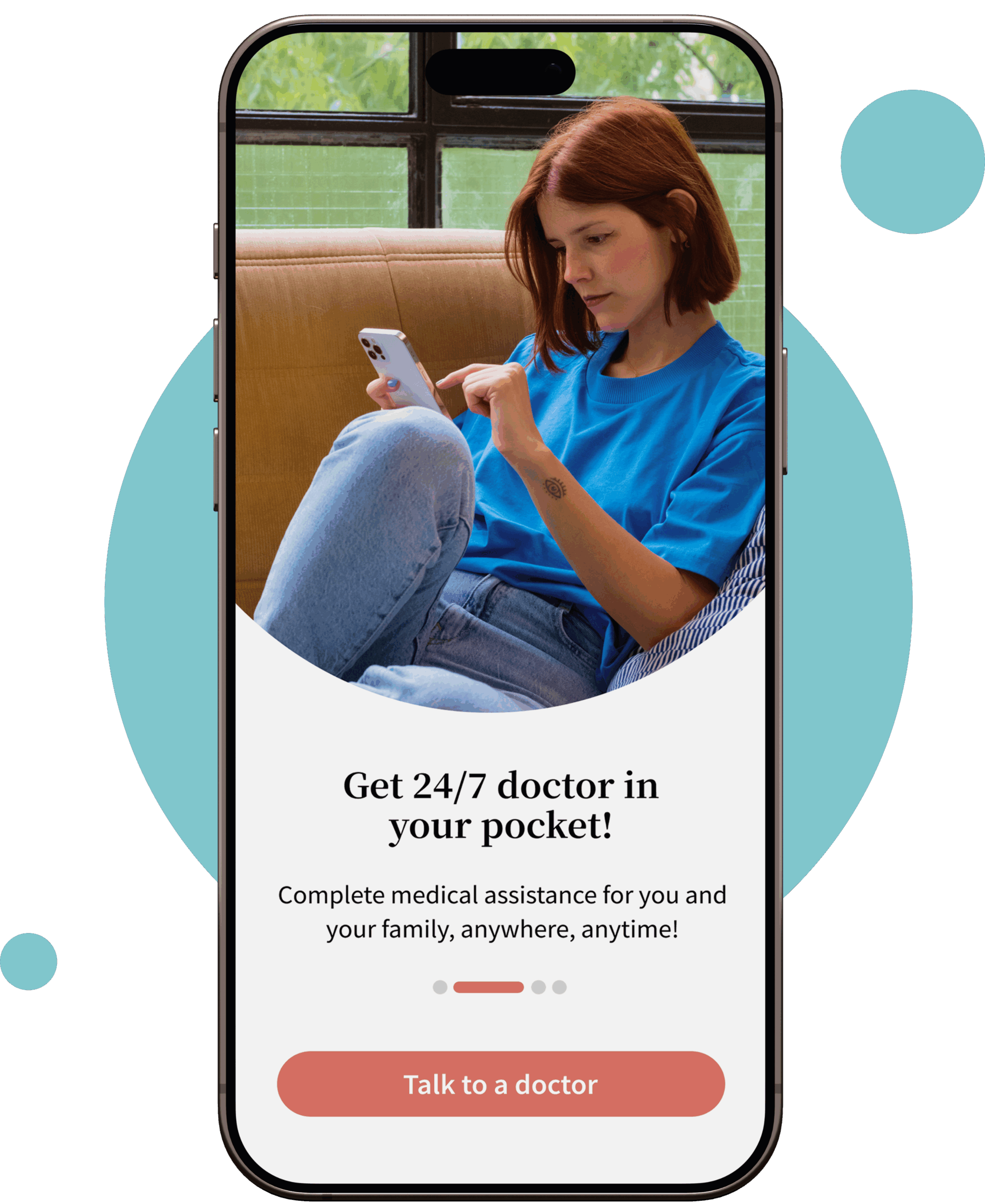
Online Women's Health Care
A UTI that burns every time you urinate, a yeast infection that keeps coming back, or a birth control refill that runs out before your next appointment can’t always wait for a clinic visit. With Your Doctors Online (YDO), you can talk to a licensed online doctor from home 24/7, who can review your symptoms and medical history and send a prescription to the pharmacy you choose when it is medically appropriate.
Pickup available in less than an hour at your local pharmacy
Prescriptions subject to provider approval
How to talk to a doctor online about women's health
Get care for infections, birth control, and period concerns from a licensed online doctor.
Describe your symptoms
Download our app, register, and tell us about your symptoms or the medication you need.
- UTI
- Yeast Infection
- Birth Control
- STD
- Menopause
- Period Problems
Chat with a doctor
Connect with a licensed doctor. You can chat, send pictures, and videos so the doctor can understand your symptoms.
Hi I’m Dr. Nicole. How may I help you?
Hi Dr. Nicole, I have itching and a thick white discharge again. Can I get treatment for a yeast infection, please?
Get online prescription
Receive your prescription at the pharmacy you choose once the doctor confirms the right treatment.
Prescription
- Fluconazole 150 mg, one tablet by mouth as a single dose
Send Prescription
What women's health conditions can we treat online?
Our doctors can assess and treat many common women’s health concerns online, from infections and birth control to period problems, pregnancy questions, and menopause symptoms. Choose your concern below to learn how online care works for it.
What women's health medications can we prescribe online?
Our doctors can prescribe antibiotics, antifungals, antivirals, birth control, and hormone therapy when it is medically appropriate. The right medication depends on your symptoms, your medical history, and any other medicines you take. You can get an online doctor prescription for a new treatment or a refill of a medication you already take.
These are some of the medications our doctors may prescribe:
Antifungal
Learn MoreAntibiotic
Learn MoreAntiviral
Learn MoreAntiviral
Learn MoreAntibiotic
Learn MoreBirth control pill
Learn MoreAntifibrinolytic
Learn MoreHormone therapy
Learn MoreSSRI
Learn MoreHow does an online women's health consultation work?
A virtual women’s health visit works much like an in-person appointment, without the drive or the waiting room. Here is what to expect:
- Share your symptoms: You answer questions about your symptoms, your periods, any chance of pregnancy, and the medicines you take.
- Talk to a doctor: A licensed doctor reviews your answers by chat or video, asks follow-up questions, and may ask for photos if they help.
- Get tested if needed: UTI symptoms can be similar to STI symptoms, and some infections need a test before treatment. Your doctor can give you a lab requisition to take to a lab near you.
- Get your prescription: When treatment is medically appropriate, your doctor sends the prescription to the pharmacy you choose.
- Follow up: If your symptoms do not improve or get worse after you start treatment, talk to a doctor again.
When should you see a doctor in person?
Many women’s health concerns can be handled online, but some need a physical exam, a procedure, or an injection. You need in-person care for:
- Cervical cancer screening: Pap tests and HPV tests are usually done in a doctor’s office or clinic.
- IUDs, implants, and the birth control shot: An IUD or implant is inserted by a doctor in the office or clinic, and the shot is given at a doctor’s office or family planning clinic.
- Gonorrhea treatment: Gonorrhea is usually treated with a single antibiotic injection.
- A new breast lump or nipple discharge: A doctor needs to examine your breast and may order a mammogram or a breast ultrasound.
- Pelvic pain with fever or unusual discharge: These can be signs of pelvic inflammatory disease (PID), which is often treated with an antibiotic shot followed by antibiotic pills.
- UTI symptoms with fever or back pain: A kidney infection is more serious than a bladder infection and needs prompt care.
Call 911 or go to the nearest emergency room if you are pregnant or think you could be and have sudden, severe pain in your lower belly, pain in your shoulder, or feel faint. These can be signs of a ruptured ectopic pregnancy.
Who are our online doctors?
Our doctors are licensed in the United States and help women with infections, birth control, period problems, pregnancy questions, and menopause symptoms. Your consultation and medical information are kept private.
Meet our online doctors in the United States
Dr. Stotland Mitchell is a board-certified Occupational Medicine physician with 5+ years of experience. He provides virtual care across all U.S. states and D.C., blending allopathic medicine with public health insights. His approach focuses on rapid symptom relief and long-term prevention, often resulting in faster recovery and improved health outcomes for his patients.

Dr. Richard Honaker is a board-certified physician with more than 40 years of experience in family and emergency medicine. He serves as Chief Medical Advisor at Your Doctors Online and is affiliated with Medical City Plano in Texas. Recognized multiple times by D Magazine and Texas Monthly, Dr. Honaker provides evidence-based care across a wide range of conditions including diabetes, hypertension, and injury care.

Dr. Monique Rainford is an OB/GYN expert and Assistant Clinical Professor at Yale School of Medicine. With 25+ years of experience, she’s led OB/GYN departments at Yale Health and Baltimore Medical System. Her clinical interests include pregnancy, menstrual health, chronic pelvic conditions, and lifestyle medicine. Dr. Rainford advocates for maternal health equity, especially in underserved communities.

Dr. Candice Fraser is an OB/GYN practitioner and founder of Trinity Medical Care. With over a decade of experience, she focuses on reproductive care, menstrual health, and menopause management. Along with medical training and residency, she also holds an MBA in healthcare management, blending business insight with clinical excellence.
Dr. Danielle DonDiego is a double board-certified Family and Obesity Medicine physician, business mentor, and author of Self-Care Rx. She focuses on helping patients manage weight, improve nutrition, and adopt sustainable lifestyle changes. A graduate of the Virginia College of Osteopathic Medicine with an MBA from Virginia Tech, she combines her medical expertise with a passion for patient education and long-term wellness.
Dr. Amber Robins is a double board-certified Family and Lifestyle Medicine physician with a strong focus on women’s health, preventive care, and patient advocacy. She earned her MD from the University of Rochester and an MBA from LSU-Shreveport. A published author and media contributor, she blends clinical expertise with a passion for empowering patients to make informed health decisions.
Dr. Nina Carroll is a retired OB/GYN with decades of experience serving women in the U.S. and abroad. She specialized in menopause care, sexual health, and trauma-informed women’s health. Today, she continues her work through medical writing, focusing on sexual minority women’s health and care for survivors of trauma.
Dr. Nerissa Bauer is a behavioral pediatrician specializing in ADHD, parenting strategies, and mental health in children. A former academic and AAP spokesperson, she is the creator of the TEACH Me ADHD program, helping families better understand and manage ADHD. She brings warmth, creativity, and evidence-based guidance to her work with patients and parents.
FAQs about women's health online
What diseases are women most concerned about?
Women are often concerned about health issues such as breast cancer due to its prevalence, reproductive health that can affect fertility, menstrual cycle problems, heart disease, and mental health, including anxiety or depression. Heart disease is the leading cause of death for women in the United States. Other gynecological conditions like endometriosis and PCOS are also common and can be a cause of significant concern for women. PCOS was renamed polyendocrine metabolic ovarian syndrome (PMOS) in May 2026, so you may see either name.
Can I take birth control pills with anti-diabetic medications?
It’s important to discuss any medication-related issues with your healthcare provider or pharmacist to avoid any drug-related interactions.
What are the common symptoms of hormonal imbalances in women?
Common symptoms of hormonal imbalances in women include irregular menstrual cycles, mood swings, fatigue, and weight changes. If you experience these, seek guidance from a healthcare professional or providers online.
How often should women schedule routine gynecological exams?
Many women have a routine gynecological checkup once a year, but you may not need a Pap test at every visit. If you are 21 to 29 and your results are normal, a Pap test is usually repeated every three years. If you are 30 to 65, you may have an HPV test every five years instead. Your health needs may be different, so talk to your doctor about the schedule that is right for you.
Get started today
Talk to online doctors now and get medical advice, online prescriptions, and referrals within minutes. On-demand healthcare services at your fingertips.