A small, painless bump on your lip almost always turns out to be something harmless, a clogged gland, a blocked salivary duct, or a minor skin cyst. But because your lips are a place where several different conditions can look nearly identical, it helps to know what you are dealing with before you dismiss it or panic about it.
Quick Identification Guide
| What it looks like | Most likely cause | Action needed? |
| Small white or yellowish dots, often multiple, on the inner lip border | Fordyce spots | No, completely normal |
| Single, clear or bluish fluid-filled bump, usually on the lower lip | Mucocele (mucous cyst) | Usually resolves on its own; see a doctor if it persists beyond 2 weeks |
| Tiny, hard, white dome, single or in a small cluster | Milia | No, typically disappears on its own |
| Skin-colored or slightly red bump at the lip’s edge or just above it | Acne/clogged pore | OTC treatment usually sufficient |
| White or yellowish patches or Patches inside the lip, creamy texture | Oral thrush (fungal) | Yes, needs antifungal treatment |
| Single bump that’s been there for weeks with no change | Lipoma, fibroma, or, rarely, oral cancer | Yes, see a doctor if it hasn’t gone after 2 weeks |
| Multiple bumps appear after using a new lip product or eating a food | Allergic reaction/contact cheilitis | Antihistamine; remove the trigger, see a doctor if it doesn’t clear up |
| Cold sores on the lips typically appear as small, fluid-filled blisters that develop in clusters along the outer edge of the lip. | Cold sores on the lips are primarily caused by the Herpes Simplex Virus (HSV), most commonly the HSV-1 strain. | Treat a cold sore immediately to shorten the outbreak. Dab (do not rub) over-the-counter antiviral creams like docosanol (Abreva) or get a prescription for oral antivirals (like Valtrex). Numb the pain with ice or OTC numbing creams, and wash your hands after touching the area |
It May Seem Like A Small Bump, But It Could Be Something Serious
Small bumps on lips often present with no pain, but they do carry some serious consequences
“Skip the waiting room and the commute hassle. Connect with an online doctor and get yourself checked for any unusual presentations. The doctor will assess your symptoms and prescribe medication online that can help you get rid of lip bumps. All of this from the comfort of your home.”
“You can now instantly connect with an online doctor, anywhere in Canada, without having to endlessly wait in the waiting room. You can even those small bumps on your lips checked from the comfort of your home.”
Common Causes of a Painless Bump on the Lip
1. Fordyce Spots
Fordyce spots are the most common reason people notice small white or pale yellow bumps on or just inside their lips. They are simply oil-producing (sebaceous) glands that sit close enough to the surface to be visible. They are not a sign of infection, illness, or poor hygiene. Up to 80% of adults have them; they are harmless and require no treatment. They often become more noticeable during puberty and may multiply slightly with age, but they don’t grow into anything dangerous. If the appearance bothers you, a dermatologist can remove them with laser treatment or topical prescription retinoids, though this is entirely cosmetic.
2. Mucocele (Mucous Cyst)
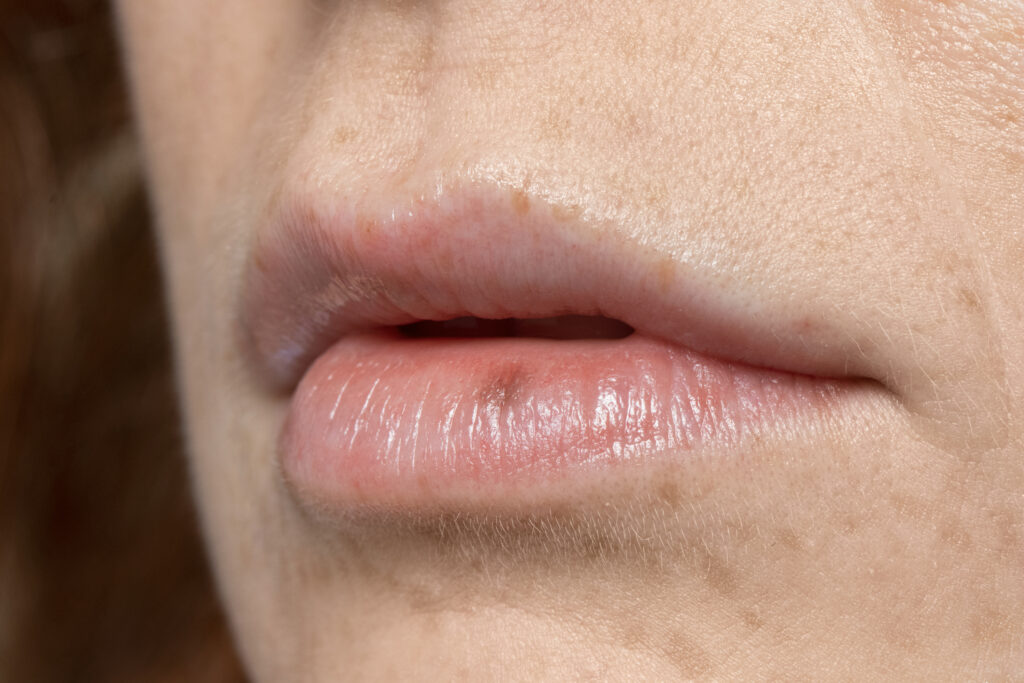
A mucocele forms when a small salivary gland gets blocked or damaged, usually from accidentally biting the inside of your lower lip. The result is a smooth, fluid-filled bump that’s clear or slightly bluish and typically painless. Most mucoceles go away on their own within a few weeks once the trauma heals. If the same mucocele keeps coming back or has been there for more than 2weeks without shrinking, a doctor may drain it or remove the affected gland. Do not try to pop or drain it yourself; this significantly increases the risk of infection and often causes it to recur.
3. Milia
Milia are small, hard white cysts that form when dead skin cells get trapped just below the skin’s surface. On the lip, they usually appear as tiny white domes, either alone or in a small cluster, and are completely painless. They are more common on the cheeks and nose but do appear on and around the lips. Most milia disappear on their own within a few weeks without any treatment. If they persist, a dermatologist can remove them, but squeezing or picking at them yourself will cause redness, swelling, and potential scarring.
4. Acne or a Clogged Pore
Lips don’t have hair follicles, but the skin right at the border of the lip and just above it does. A clogged pore or acne breakout at that edge can look like it’s on the lip itself. These bumps tend to be flesh-colored or slightly red and may have a small whitehead. Keeping the area clean and using a gentle salicylic acid or benzoyl peroxide product on the skin around the lip (not directly on the lip tissue) will usually clear them up. Oily lip products can contribute to clogged pores, so switching to a non-comedogenic formula is worth trying if you are getting recurring bumps.
5. Allergic Reaction / Contact Cheilitis
Allergic contact cheilitis is an allergic reaction that affects the lips. It can be triggered by lip balms, lipsticks, certain toothpastes, dental materials, or foods. While it’s often accompanied by itching or swelling, mild cases can present as small, painless bumps. The treatment involves identifying and stopping contact with the trigger. A topical steroid from a doctor speeds up healing. If you have recently started using a new lip product and bumps appeared shortly afterward, that’s a strong indicator.
6. Oral Thrush
Oral thrush is a fungal infection caused by an overgrowth of Candida albicans. It typically appears as white or yellowish patches or bumps on the inner lips, tongue, and roof of the mouth. Unlike Fordyce spots, these patches can be wiped off (and doing so leaves a red, sometimes sore surface underneath). Thrush is more common in people who have recently taken antibiotics, use inhaled corticosteroids for asthma, have diabetes, or have a weakened immune system. It requires antifungal treatment, a prescription liquid or lozenge, and rarely resolves on its own. A doctor can prescribe the right oral thrush treatment online.
7. Cold Sore (Herpes Simplex Virus) – Early Stage
Cold sores are caused by herpes simplex virus type 1 (HSV-1) and rarely by HSV-2. While they are well-known for becoming painful blisters, the very early stage of a cold sore can present as a small, painless bump or hardening of the skin. Within 24–48 hours, a tingling or burning sensation typically develops, and the bump progresses into a fluid-filled blister. If a bump on your lip evolves quickly from painless to painful and develops a blister, this is almost certainly what’s happening. Antiviral medications like acyclovir or valacyclovir are most effective when started during this early stage, before the blister fully forms.
8. Perioral Dermatitis
Perioral dermatitis is a skin condition that causes a rash of small red or flesh-colored bumps around the mouth and sometimes the nose. It’s not contagious, and its exact cause isn’t fully understood, but it’s frequently linked to prolonged use of topical steroids, heavy face creams, or fluorinated toothpastes. It can look similar to acne, but doesn’t respond to standard acne treatments. Treatment typically involves stopping the suspected trigger, using a gentle skincare routine, and in persistent cases, a prescription antibiotic cream or oral antibiotic from your doctor.
9. Lipoma or Fibroma
A lipoma is a slow-growing, soft fatty lump. A fibroma is a small, firm, flesh-colored bump made of connective tissue, often caused by repeated trauma or irritation (like chronic lip chewing). Both are benign and painless. On the lips, fibromas are more common than lipomas. They are harmless but won’t go away on their own, so if one is bothering you cosmetically or you are not sure what it is, a doctor can remove it with a simple in-office procedure.
10. Oral Cancer (Rare, But Worth Knowing)
Lip and oral cancers are uncommon; they affect roughly 0.1% of people over a lifetime, but they do appear first as painless bumps, sores, or thickened patches that don’t heal. The absence of pain is exactly why they are often ignored for too long. About 50% of oral cancer cases are diagnosed at an advanced stage (III or IV), which significantly reduces treatment effectiveness. Risk factors include tobacco use, heavy alcohol use, and chronic sun exposure to the lips, and oral HPV. A bump that has been present for more than two weeks without any change or improvement should be evaluated by a doctor, regardless of whether it hurts.
How to Tell a Painless Lip Bump Apart From a Cold Sore
This is one of the most common concerns people have, and it’s worth addressing directly. Cold sores go through stages:
- Day 1 – 2: A small, firm, possibly painless bump or tingling sensation
- Day 2 – 4: Tingling intensifies; the bump becomes a cluster of fluid-filled blisters
- Day 4 – 5: Blisters burst and form a crust
- Day 5 – 10: Crusting heals; sore resolves
If your bump has been there for more than a week without progressing through any of those stages, no tingling, no blistering, no crusting, it’s almost certainly not a cold sore. Fordyce spots, milia, mucoceles, and fibromas all remain stable over time, which is the most reliable distinguishing feature.
How Are Painless Lip Bumps Treated?
Treatment depends entirely on the cause. Here’s a practical breakdown:
| Cause | Typical treatment | Requires a prescription? |
| Fordyce spots | None needed; cosmetic removal available (laser, retinoids) | Only if cosmetic removal is desired |
| Mucocele | Usually resolves on its own; surgical removal or laser for persistent cases | Yes, for removal |
| Milia | Usually resolves on its own; dermatologist extraction if persistent | No (or topical retinoid prescription) |
| Acne/clogged pore | Salicylic acid or benzoyl peroxide OTC products; gentle cleansing | No (OTC) |
| Allergic reaction | Remove trigger; oral antihistamine; topical corticosteroid for inflammation | For steroid cream, yes |
| Oral thrush | Antifungal medication (nystatin swish-and-swallow, or fluconazole) | Yes |
| Cold sore (early) | Antiviral medications (acyclovir, valacyclovir); OTC docosanol cream | For prescription antivirals, yes |
| Perioral dermatitis | Stop topical steroids; prescription antibiotic cream or oral antibiotics | Yes |
| Fibroma/lipoma | In-office removal if desired | Yes |
Home Remedies: What Actually Helps (and What Doesn’t)
A warm, damp compress applied to the area 2–3 times a day can help with mucoceles by encouraging the blocked gland to drain naturally. It also reduces minor irritation from acne or small blocked pores. Beyond that, the evidence for most home remedies is thin. Coconut oil and aloe vera provide moisture and mild anti-inflammatory effects, which won’t hurt, but won’t reliably resolve any of the specific conditions above. Apple cider vinegar applied directly to the lip is not recommended; it’s acidic enough to irritate or damage the sensitive lip tissue. For Fordyce spots and milia in particular, no home remedy will remove them; they either go away on their own or they don’t.
When You Should See a Doctor
See a doctor if any of the following apply:
- The bump has not changed or improved after two weeks
- The bump is growing in size, changing in color, or texture
- You notice swollen lymph nodes in the neck or jaw alongside the bump
- The bump starts bleeding without being injured
- You develop difficulty swallowing or chewing
- There’s any numbness in the lip or surrounding area
- White or red patches appear around the bump that don’t wipe off cleanly
- You have a fever along with the bump (possible sign of infection)
- The bump is in a child and is accompanied by blisters on the hands or feet (could be hand, foot, and mouth disease)
If any of the above apply to you, you should talk to an online doctor.