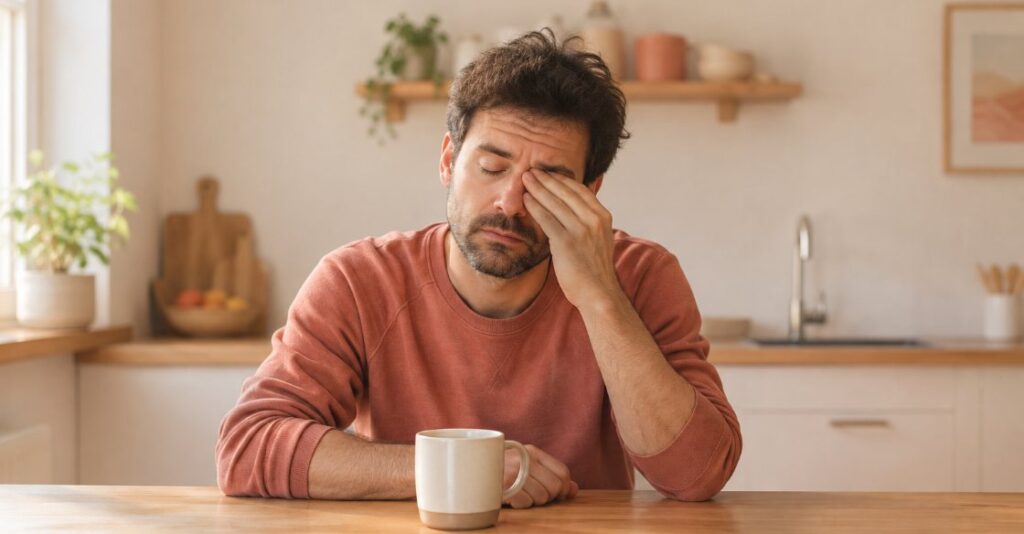
Common low iron symptoms include tiredness that doesn’t improve with sleep, weakness, headaches, dizziness, pale skin, cold hands and feet, and shortness of breath during activities that used to feel easy. They often develop gradually as your iron levels fall, so it’s easy to blame them on stress, poor sleep, or simply being busy.
You can have low iron before you develop anemia. Your hemoglobin may still be normal even when your iron stores are running low, so a routine blood count can miss iron deficiency. A ferritin test measures your stored iron and can show whether your iron levels are low.
If you think you may have an iron deficiency, or you have an existing test confirming iron deficiency, you can get iron deficiency treatment online after speaking with a doctor.
What is low iron?
Low iron means your body doesn’t have enough iron stored to meet its needs. Iron helps your body make hemoglobin, the protein in red blood cells that carries oxygen from your lungs to the rest of your body. Your body stores extra iron in a protein called ferritin.
Low iron is also called iron deficiency. If it continues, your body may not have enough iron to produce the hemoglobin it needs, which can lead to iron-deficiency anemia. You can have low iron even before anemia develops.
Iron deficiency is the most common cause of anemia worldwide. Learn more about anemia symptoms and causes, including the other main types.
How iron deficiency symptoms change as your iron runs low
Iron deficiency symptoms start mild while your stored iron runs down and get stronger once your hemoglobin falls, although some people have no symptoms at all. Doctors split this into three stages.
| Stage | What’s happening | What blood tests show | What you may notice |
|---|---|---|---|
| 1. Iron stores run low | Your body uses up its stored iron | Low ferritin, normal hemoglobin | Sometimes nothing, or tiredness, headaches, restless legs, or hair shedding |
| 2. Red blood cell production slows | Too little iron reaches your bone marrow, where red blood cells are made | Low ferritin, less iron in the blood, hemoglobin is usually still normal | Symptoms similar to anemia, but milder |
| 3. Iron-deficiency anemia | Your hemoglobin falls below the normal range | Low hemoglobin, smaller and paler red blood cells | Shortness of breath, pale skin, brittle nails, a sore tongue |
Common low iron symptoms
When your stored iron runs out, your body can’t make enough hemoglobin, so your red blood cells carry less oxygen around your body. Your organs and muscles then don’t get all the oxygen they need, so your heart and lungs work harder to compensate. Many of the symptoms below come from this shortage. What low iron feels like also depends on how fast and how far your hemoglobin falls, since your body can adjust to a slow drop.
Tiredness and weakness that rest doesn’t fix
Feeling tired or weak is one of the first symptoms of low iron to appear. Climbing stairs, carrying groceries, or getting through a workout starts to feel harder than it should, and a good night’s sleep doesn’t help.
This happens because your muscles need oxygen to produce energy. Iron is needed to make myoglobin, a protein that helps supply oxygen to your muscles, so when your iron is low, your muscles may not get or use oxygen as well as they should. That can leave you feeling unusually tired or weak.
Tiredness has many causes besides low iron, such as poor sleep and thyroid problems. If your iron test comes back normal, a doctor can look into other reasons, including providing treatment for chronic fatigue.
Shortness of breath, dizziness, and a racing heart
You may get out of breath on stairs or on a walk that used to be easy, and need to stop partway to catch your breath. You may also feel dizzy or lightheaded, or notice your heart is beating faster.
As your hemoglobin drops and less oxygen reaches your brain and muscles, your heart beats faster, and you breathe harder to make up the difference.
In more serious anemia, a doctor may hear a fast heartbeat even at rest and a flow murmur, a soft rushing sound of blood moving quickly through the heart.
Brain fog, headaches, and mood changes
Brain fog means trouble concentrating, thinking clearly, or remembering things, and it can make work or school harder than usual. This may happen because less oxygen reaches your tissues, and iron-dependent enzymes do not work as well.
Low iron can also bring on headaches and mood changes, such as irritability. Iron-deficiency anemia is about twice as common in adults with chronic daily headaches, defined as headaches on 15 or more days a month for at least three months. The reason for the link isn’t clear.
Restless legs
Restless legs syndrome (RLS) is an urge to move your legs. It gets worse from evening into the night and eases when you move, so it can keep you awake and leave you more tired the next day.
People with RLS have lower iron levels in parts of the brain. Frequent or bothersome restless legs syndrome calls for an iron test to check your iron levels. Iron treatment is considered when ferritin is below 75 ng/mL or transferrin saturation is below 20%. IV iron may also be used when ferritin is between 75 and 100 ng/mL.
Low iron is linked to other sleep problems, too. People with iron-deficiency anemia are diagnosed with sleep disorders about 1.5 times as often as people without it, and less often if they take iron.
Craving ice or other non-food items
Low iron can cause strong cravings for nonfood items, such as ice, dirt, clay, or raw starch. When you eat these things for a month or more, it is called pica. Craving ice is a strong clue that your iron is low, so if you chew ice every day, tell a doctor even if you feel fine.
Pica affects about half of people with iron deficiency, and eating what you crave won’t fix the problem, because those things don’t supply extra iron. One idea is that chewing ice may increase blood flow to the brain and help people with anemia think more clearly. Why low iron causes pica is still poorly understood, but the cravings usually fade quickly once iron treatment starts.
Signs of low iron you can see
The signs of low iron you can see are pale skin, brittle or spoon-shaped nails, hair shedding, and changes in your tongue and mouth. Most appear as anemia gets worse, but hair shedding can start earlier.
Pale skin and pale inner eyelids
Hemoglobin is what makes blood red, so when it falls, your skin, lips, and the inside of your mouth lose some of their color.
Doctors may look at your inner eyelids, the inside of your mouth, and the creases of your palms for signs of anemia. You can also gently pull down your lower eyelid at home to check whether the inside looks unusually pale.
Pale inner eyelids are more likely to appear when anemia is more severe. However, pink-looking eyelids do not rule out low iron or anemia. Only a blood test can confirm your hemoglobin and iron levels.
Brittle or spoon-shaped nails
Nails that chip, split, or snag on clothing can be a sign that iron-deficiency anemia is worsening. If the deficiency lasts, nails can also turn thin and dip in the middle while the edges curve up into a spoon shape. A drop of water placed on a spoon-shaped nail sits in the dip instead of running off.
Spoon nails are a classic sign of long-lasting iron-deficiency anemia, but only about 5 in 100 people with iron deficiency get them, so normal nails don’t rule it out. The reason isn’t certain. Poor blood flow to the fingertips may weaken the tissue under the nail, or nail cells may run short of the iron they need.
Nails grow slowly, so it can take several months for them to return to normal after iron treatment.
Hair shedding
Low iron can cause hair to shed more than usual from all over your scalp. You may lose 100 or more hairs a day or find more hair than usual on your pillow, brush, or shower drain.
When iron runs short, your body saves it for your blood, which matters more for survival than hair, so shedding can start before your red blood cells start to shrink. Because shedding often starts about three months after the problem begins, low iron is easy to miss as the cause. The hair usually grows back once your iron is treated.
If shedding continues after your iron is back to normal, a doctor can look for other causes and discuss hair loss treatment.
A sore tongue or cracks at the corners of your mouth
Low iron can make your tongue sore as iron-deficiency anemia gets worse. It may also turn red, smooth, and shiny as the tiny bumps on its surface flatten, which can make it painful to eat.
You may also notice cracks at the corners of your mouth. These can cause red, sore patches that hurt when you open your mouth. Most cases have other causes, such as a yeast infection, but up to 1 in 4 are linked to low iron or low B vitamins.
Low vitamin B12 and folate cause the same changes, so testing iron, B12, and folate together helps determine whether one of them is low.
What causes low iron?
Low iron levels usually result from blood loss, insufficient iron intake from food, poor iron absorption, or increased iron needs.
Losing blood
Because blood contains iron, ongoing blood loss can lower your iron levels. Common causes include heavy periods, childbirth, bleeding in the stomach or bowel, and regular blood donation.
Not getting enough iron from food
You can run low on iron if you don’t eat enough iron-rich foods, such as meat, seafood, beans, and fortified cereals. People who follow a vegetarian or vegan diet need almost twice as much iron, because the body absorbs iron from plant foods less easily. See our list of iron-rich foods for anemia.
Not absorbing enough iron
You can eat enough iron and still become deficient if your body cannot absorb it properly. Conditions such as celiac disease, Crohn’s disease, ulcerative colitis, and H. pylori infection, as well as stomach or bowel surgery, can interfere with iron absorption.
Needing more iron
Your body needs more iron during pregnancy and periods of rapid growth. Heavy endurance exercise can also contribute to low iron.
Causes of low iron symptoms in women
Women are more likely to develop anemia because of periods, pregnancy, and childbirth. Low iron is one of the most common nutritional causes of anemia. Nearly 4 in 10 girls and young women aged 12 to 21 in the US have low iron. About 1 in 16 have iron-deficiency anemia. This means you can have low iron even when your hemoglobin is still normal.
Heavy periods are a common reason women lose too much iron over time. Losing more blood each month means losing more iron, which can eventually lead to low iron levels.
Pregnancy also increases your need for iron. Your daily requirement rises from 18 mg to 27 mg, which can make low iron more likely or worsen an existing deficiency. Read more about iron deficiency in pregnancy.
Causes of low iron symptoms in men
Men usually have larger iron stores than women, and they typically don’t lose blood every month through menstruation.
While less common, when a man has low iron, a doctor should look for a source of blood loss. The same applies to women after menopause. Bleeding in the stomach or bowel can be slow and difficult to notice, but still cause iron deficiency over time. In some cases, this can be related to a serious condition, including cancer. An upper endoscopy and colonoscopy may be used to look for bleeding in the digestive tract.
When to get tested for low iron
Get tested if symptoms of low iron don’t go away, or if you have heavy periods, are pregnant, follow a vegetarian diet, have a gut condition, or donate blood often. Test before you start iron pills. Iron can raise your levels without fixing what caused the drop, such as a slow bleed that still needs to be found.
Blood tests that check for low iron
A complete blood count (CBC) counts your blood cells and measures your hemoglobin, which shows if you have anemia. It doesn’t measure iron, so ask for ferritin by name when your doctor orders blood work. The following tests can give you a clear picture of the levels of iron in your blood:
- Ferritin: Measures the amount of iron stored in your body. It is often one of the first iron measurements to fall when your iron stores are running low.
- Serum iron: Measures the amount of iron circulating in your blood.
- Transferrin saturation: Shows how much of the protein that carries iron in your blood is carrying iron.
- Total iron-binding capacity (TIBC): Measures how much iron your blood could carry and generally rises when iron levels are low.
What your results mean
Low ferritin means your stored iron is low, and low hemoglobin means you have anemia. The level considered low can vary depending on your health, whether you are pregnant, and whether you have inflammation or another medical condition.
The ferritin cutoffs below come from an American Society of Hematology guideline published in September 2026, so many labs still use older, lower cutoffs. The hemoglobin cutoffs come from the World Health Organization’s 2024 guideline.
| Test | Who it applies to | Counts as low if it’s |
|---|---|---|
| Ferritin | Adults, including people who have periods or are pregnant | 30 ng/mL or lower |
| Ferritin | Heavy periods or anemia during pregnancy | 50 ng/mL or lower |
| Ferritin | Adults with inflammation, such as cancer, inflammatory bowel disease, or an infection | Under 100 ng/mL, or transferrin saturation under 20% |
| Hemoglobin | Men | Under 13.0 g/dL (130 g/L) |
| Hemoglobin | Non-pregnant women | Under 12.0 g/dL (120 g/L) |
| Hemoglobin | Pregnancy, first and third trimesters | Under 11.0 g/dL (110 g/L) |
| Hemoglobin | Pregnancy, second trimester | Under 10.5 g/dL (105 g/L) |
How to get tested without a primary care provider
A licensed doctor at Your Doctors Online can send you a lab requisition online, the form that tells a lab which tests to run, such as a CBC and ferritin. You get your blood drawn at a lab near you. The doctor then goes over your results and treats low iron if you have it.
Don’t wait for a routine blood test if you have black, tarry stools or a lot of blood in your stool, vomit blood, or have chest pain or trouble breathing. Call 911 or go to the nearest emergency room.
If you think your iron might be low, talk to a licensed doctor online and get your blood work ordered.
A ferritin test shows your stored iron, even when your hemoglobin still looks normal.
Download our app and describe your symptoms. A licensed doctor can order your blood work, prescribe iron deficiency treatment online if your levels are low, and look for what caused them. No insurance is required, and every visit is HIPAA-compliant.
Download our app, or talk to a doctor online and share your symptoms and medical history. You’ll be connected with a Canadian-licensed online doctor who can arrange your blood work and treatment.
Frequently asked questions
Untreated low iron can turn into iron-deficiency anemia, which can lead to heart problems, pregnancy complications, and developmental delays in children. Your heart is affected because it has to pump harder to deliver enough oxygen. With treatment, the outlook is usually good, although it depends on the cause.
You can’t tell for sure if your iron is low from symptoms alone. Pale inner eyelids, spoon-shaped nails, and ice cravings can point to low iron, but you can have low iron without any of them. A blood test that includes ferritin is the only reliable check, and a doctor can order one online.
Eat iron-rich foods, and take iron if your doctor recommends it. Rich sources include fortified breakfast cereal (up to 18 mg per serving), white beans (8 mg per cup), and beef liver (5 mg per 3 ounces, or 85 g). A large egg has about 1 mg, compared with the 8 to 18 mg most adults need daily.
Yes, low iron may contribute to anxiety, but a direct cause-and-effect link has not been proven. People with iron-deficiency anemia have been diagnosed with anxiety and depression about 1.5 times as often as people without it, and those who took iron had fewer psychiatric diagnoses. A racing or pounding heart caused by anemia can also feel similar to anxiety. Learn more about getting anxiety treatment online.
Recovery takes a few months. Most people feel better within about a week of starting iron, and hemoglobin usually starts to rise within a few weeks. Refilling your iron stores often takes 3 to 6 months, so keep taking iron for as long as your doctor recommends, even once you feel better. Read more about how to increase hemoglobin.