The best way to increase hemoglobin is to treat the underlying cause of the low hemoglobin. If iron deficiency is the cause, an iron supplement is usually the main treatment. In one study, hemoglobin rose by about 1.8 g/dL in the first two weeks of oral iron and kept rising over the following weeks. Iron-rich foods, vitamin C, and spacing tea, coffee, and dairy away from your iron can also help your body absorb more of it.
But low hemoglobin doesn’t always mean you need more iron. Anemia can also result from low vitamin B12 or folate levels, blood loss, chronic illness, or inherited conditions such as thalassemia. Taking iron when you don’t need it won’t correct the underlying problem.
A ferritin test can show whether your iron stores are low. If your bloodwork already shows iron deficiency, you can get iron deficiency treatment online and discuss the right approach with a doctor.
What is a low hemoglobin count?
Hemoglobin is the protein in your red blood cells that carries oxygen from your lungs to the rest of your body. Iron is a physical part of that protein, and it’s the point where oxygen attaches.
When your iron stores run low, your body can’t produce enough hemoglobin, and your hemoglobin level falls, leading to anemia. As a result, less oxygen reaches your muscles and brain. That shows up as symptoms of low hemoglobin, including tiredness that sleep does not fix, breathlessness on stairs, cold hands and feet, dizziness, headaches, a fast heartbeat, and pale skin. Read more about low iron symptoms.
Normal and low hemoglobin levels by age
These are the hemoglobin levels used as a reference when reading your blood test to determine whether your level is considered low. These typical normal ranges for adults come from MedlinePlus.
| Who you are | Typical normal range | Anemia if below |
|---|---|---|
| Men, 15 and older | 13.8 to 17.2 g/dL | 13.0 g/dL |
| Non-pregnant women, 15 and older | 12.1 to 15.1 g/dL | 12.0 g/dL |
| Pregnant, first and third trimesters | Varies | 11.0 g/dL |
| Pregnant, second trimester | Varies | 10.5 g/dL |
| Children 12 to 14 | Varies with age | 12.0 g/dL |
| Children 5 to 11 | Varies with age | 11.5 g/dL |
| Children 2 to 4 | Varies with age | 11.0 g/dL |
| Children 6 to 23 months | Varies with age | 10.5 g/dL |
What causes low hemoglobin?
Most of the time, low hemoglobin is the result of a deficiency of iron in your body. Knowing that your hemoglobin is low is only the first step. Understanding the causes of low iron can help you determine how to increase your hemoglobin.
Common causes of low iron include blood loss, insufficient iron, impaired iron absorption, and long-term health conditions such as kidney disease or chronic inflammation.
Blood loss is a common reason for iron deficiency. Heavy periods can cause ongoing iron loss, while bleeding in the stomach or bowel can also lower your iron levels. Conditions such as celiac disease, Crohn’s disease, and previous stomach or bowel surgery can make it harder for your body to absorb iron.
In men, and women past menopause, the digestive tract is checked for possible bleeding. Iron-deficiency anemia in this group often requires an endoscopy or colonoscopy to check the stomach and bowel.
How ferritin shows whether iron is the problem
Ferritin indicates how much iron your body stores. If your ferritin is low, iron deficiency may be the reason your hemoglobin has dropped. If your ferritin is normal, low iron may not be the reason, and taking more iron may not help.
| Ferritin level | What it suggests |
|---|---|
| Under 15 ng/mL | Your iron stores are empty |
| 30 ng/mL or lower | Iron deficiency in most adults |
Ferritin in ng/mL is the same number as µg/L, so the two units are interchangeable on your report.
A complete blood count and a ferritin test show whether you have anemia and whether low iron is behind it. You can get a lab requisition online to get these tests done at a lab near you.
How to increase hemoglobin levels
You can increase hemoglobin count in blood through the nutrients in your food, what you drink alongside it, and iron supplements when a deficiency is confirmed. How low your iron is determines whether food is enough or you need a supplement to replenish your stores.
If your ferritin is only slightly low and your hemoglobin is barely below the cutoff, you may be able to raise your hemoglobin naturally by eating iron-rich foods and pairing them with vitamin C. If your iron stores are empty, you’ll need a supplement, and your diet keeps your levels up once they recover.
Eat foods that increase hemoglobin
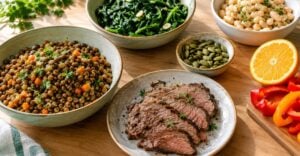
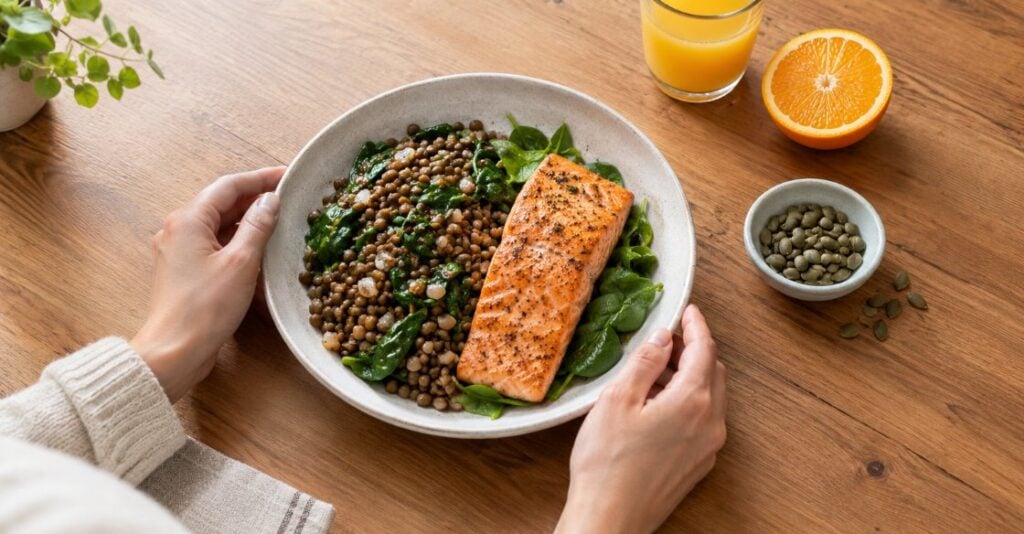
There are two sources of iron in food: heme iron and non-heme iron. Heme iron comes from animal foods. You’ll find it in:
- Beef, lamb, and liver
- Chicken and turkey
- Oysters, clams, and mussels
- Sardines and salmon
Non-heme iron comes from plants and fortified foods (ones with iron added during manufacturing). Good sources include:
- Lentils, chickpeas, and beans
- Tofu
- Spinach and other dark leafy greens
- Pumpkin seeds
- Dried apricots, raisins, and prunes
- Iron-fortified cereals and breads
For scale, women aged 19 to 50 need 18 mg of iron a day, and men need 8 mg. A single serving of these foods gives you:
| Food | Serving | Iron |
|---|---|---|
| Fortified breakfast cereal (100% DV) | 1 serving | 18 mg |
| Oysters, cooked | 3 oz | 8 mg |
| White beans, canned | 1 cup | 8 mg |
| Beef liver, pan-fried | 3 oz | 5 mg |
| Lentils, boiled | ½ cup | 3 mg |
| Spinach, boiled | ½ cup | 3 mg |
| Tofu, firm | ½ cup | 3 mg |
| Chickpeas, boiled | ½ cup | 2 mg |
| Sardines, canned | 3 oz | 2 mg |
| Dark chocolate, 45% to 69% cacao | 1 oz | 2 mg |
Your body absorbs 5% to 12% of the iron in a vegetarian diet, compared with 14% to 18% from a diet with meat and seafood, so vegetarians need about 1.8 times as much iron. If you’d like help planning iron-rich meals, you can talk to a nutritionist online. For a longer list, see our guide to iron-rich foods for anemia.
Get enough folate and vitamin B12
Low iron is not the only nutritional cause of anemia. Your bone marrow needs folate and vitamin B12 to build red blood cells, and without enough of either, it makes fewer red blood cells that come out abnormally large. No amount of iron fixes that. Read more about the symptoms and causes of anemia.
These foods give your body the folate and B12 it needs to keep making red blood cells:
| Nutrient | Good food sources |
|---|---|
| Folate | Broccoli, beans, peanuts, avocado, eggs, leafy greens |
| Vitamin B12 | Meat, fish, dairy products, fortified foods |
Vitamin B12 comes almost entirely from animal foods, so if you eat a vegan diet, ask for a B12 test alongside your ferritin.
What to drink to raise hemoglobin
No drink raises hemoglobin on its own, but some make the iron in your meal easier to absorb, and others make it harder. Drinks made with citrus, strawberries, or tomatoes add vitamin C to the meal and improve how much plant-based iron you absorb. Some other good options include:
- Orange or grapefruit juice with an iron-rich breakfast
- Green smoothies made with spinach or kale and a citrus fruit
- Tomato juice
- Prune juice, which also contains some iron
Maximize iron absorption
What you eat and drink alongside iron affects how much of it your body absorbs. Vitamin C raises the amount of plant iron you absorb, while tea, coffee, whole grains, beans, and dairy lower it.
- Tea and coffee contain polyphenols, which bind to plant iron in your gut so it can’t be absorbed.
- Whole grains and beans contain phytates, which hold onto iron in the same way.
- Milk, cheese, and yogurt contain calcium, which competes with iron for absorption.
That doesn’t mean you need to avoid these foods. Drink tea, coffee, and milk between meals rather than with them, and pair beans and grains with a vitamin C source, such as lemon, oranges, tomatoes, or peppers.
Take an iron supplement
When food and drinks aren’t enough to bring your iron levels back up, your doctor may prescribe an iron supplement. Doctors usually prescribe one iron tablet once a day or every other day, for example ferrous sulfate 325 mg (about 65 mg of elemental iron). This gives your body much more iron than you can usually get from food, helping it make new red blood cells and rebuild your iron stores.
Iron supplements come in different iron salts, each containing a different percentage of elemental iron.
| Type of iron tablet | The percentage of elemental iron |
|---|---|
| Ferrous fumarate | About 33% |
| Ferrous sulfate | About 20% |
| Ferrous gluconate | About 12% |
Talk to your doctor before choosing an iron supplement, so you know which type and dose are right for you. A 325 mg ferrous sulfate tablet contains about 65 mg of elemental iron. The same 325 mg on a gluconate bottle would give you closer to 39 mg.
Take iron at the best time
Follow your doctor’s instructions first, since the best schedule can depend on the type of iron you are taking. In general, iron is absorbed best when taken on an empty stomach, often as a single dose in the morning. If it makes you feel sick, taking it with a small amount of food may be easier on your stomach and is better than skipping your dose.
Don’t split your dose across the day. Each dose temporarily increases a hormone called hepcidin, which reduces how much iron your body absorbs from the next dose. In fact, taking iron on alternate days may improve absorption compared with taking it every day. Your doctor can recommend the schedule that’s right for you.
Keep antacids, dairy, and your morning coffee at least a couple of hours away from the tablet, since calcium and the polyphenols in tea and coffee reduce how much iron you absorb from it.
Does vitamin C with an iron supplement help?
Not measurably. Vitamin C helps you absorb iron from food, but when added to an iron tablet, it makes almost no difference. In one study, hemoglobin increased by 1.84 g/dL with iron alone compared with 2.00 g/dL when 200 mg of vitamin C was taken three times a day. There was no significant difference between the groups after four, six, or eight weeks.
Side effects of iron supplements
Iron supplements can cause constipation, nausea or an upset stomach, and dark or black stools. Dark stools are common on iron and usually harmless. Black, tarry stools can be a sign of bleeding, so tell a doctor if you notice them, especially with other symptoms.
A stool softener can help with constipation, and taking iron with a small amount of food can ease nausea. If side effects make it hard to keep taking iron, ask your doctor about a lower dose, every-other-day dosing, or a different type of iron.
When IV iron is used
Your doctor may recommend IV iron, given through a vein, if you can’t tolerate iron tablets, your iron levels don’t improve on tablets, or you have a condition that makes it hard to absorb iron, such as celiac disease, inflammatory bowel disease, or weight-loss surgery. IV iron is also used when anemia is severe or blood loss is ongoing.
How fast can you increase hemoglobin?
Hemoglobin usually rises fastest in the first few weeks, then slows as it gets closer to normal. In one study of adults taking oral iron, hemoglobin started at an average of 8.8 g/dL. It rose by 1.84 g/dL by week two and by 4.07 g/dL by week eight.
These timelines are for an iron supplement taken at a treatment dose. Changing what you eat and drink supports that process, but diet alone does not produce this kind of rise.
| Time on oral iron | Total gain so far | Increase during those two weeks |
|---|---|---|
| 2 weeks | 1.84 g/dL | 1.84 g/dL |
| 4 weeks | 2.98 g/dL | 1.14 g/dL |
| 6 weeks | 3.62 g/dL | 0.64 g/dL |
| 8 weeks | 4.07 g/dL | 0.45 g/dL |
You may notice the biggest improvement at first, followed by smaller increases as your hemoglobin gets closer to normal.
How to increase hemoglobin in 3 days
You can’t meaningfully increase hemoglobin in 3 days. The iron you swallow today goes to your bone marrow, where it gets built into new red blood cells over the following weeks, and there’s no way to speed that part up.
The first sign that treatment is working appears at 7 to 10 days, when your marrow starts releasing new, young red blood cells.
If you need your hemoglobin level raised quickly due to severe anemia or an upcoming medical procedure, speak with a doctor as soon as possible. Depending on how low your hemoglobin is and what’s causing the anemia, treatment may include an iron infusion or, in certain situations, a blood transfusion. These treatments are only appropriate in specific circumstances and should be decided by a healthcare professional.
How long do you need to take iron?
You may need to take iron for 3 to 6 months, even after your hemoglobin returns to normal. Hemoglobin often starts improving within a few weeks and may return to normal within 6 to 8 weeks, but your body needs more time to rebuild its iron stores.
Stopping your treatment as soon as your blood test improves can leave your iron stores low and increase the chance of the deficiency returning.
Get a plan based on your own bloodwork. Talk to a doctor online about whether you need iron pills, an infusion, or a closer look at the cause.
Share your latest blood test and get a plan for raising your hemoglobin.
Download the app and share your recent blood test or symptoms. A licensed doctor will review your hemoglobin and ferritin, look for the cause, and prescribe iron or order further testing if it fits your case. No insurance needed, and no appointment.
Download the app and share your medical history, symptoms, and lab results. You will be connected with a Canadian-licensed online doctor who can assess your iron levels and arrange treatment or testing.
How to increase hemoglobin during pregnancy
If your hemoglobin is low during pregnancy, the first step is to find out whether iron deficiency is the cause. Your doctor or midwife may check your ferritin level along with your routine blood count to see how much iron you have stored.
If you are low in iron, your doctor may recommend an iron supplement in addition to your prenatal vitamin. Pregnancy increases your iron needs to 27 mg a day, but a prenatal vitamin may not contain enough iron to treat an established deficiency.
You can also support your iron levels by eating iron-rich foods such as meat, beans, lentils, leafy greens, and iron-fortified foods. Pairing these foods with vitamin C can help your body absorb more iron.
If anemia is severe or does not improve enough with iron tablets, an iron infusion may be considered later in pregnancy. Your prenatal provider can decide whether you need one. Read more about iron deficiency in pregnancy.
When to see a doctor about low hemoglobin
Get medical care immediately if you have:
- Chest pain or pressure
- Trouble breathing at rest or on light activity
- Fainting or nearly fainting
- A fast or pounding heartbeat while sitting still
- New confusion
- Vomiting blood, or something that looks like coffee grounds
These are signs of severe anemia or active bleeding. The first five mean your heart is working harder to move oxygen around, and they’re the point where anemia stops being something to manage at home. The last one can mean bleeding in your digestive tract, which is a main cause of iron-deficiency anemia and can continue quietly for months.
Book a regular appointment if your hemoglobin hasn’t improved after a month of iron, if tiredness is affecting your day despite a normal hemoglobin, or if a low reading has never been looked into.
Frequently asked questions
Yes, a hemoglobin level of 10 g/dL is low for adults. Anemia is generally defined as hemoglobin levels below 12.0 g/dL in non-pregnant women and 13.0 g/dL in men.
A level of 10 g/dL does not automatically mean you need emergency treatment. What you need depends on why your hemoglobin is low. If iron deficiency is the cause, your doctor may recommend iron treatment, and hemoglobin often takes several weeks to improve.
For iron-deficiency anemia, the fastest way to recover is to treat the cause and take iron as your doctor prescribes. Doctors usually prescribe one iron tablet once a day or every other day, and hemoglobin often starts to rise within a few weeks.
Take it as directed and keep it away from tea, coffee, dairy, and antacids, which can reduce iron absorption. How fast your levels rise varies from person to person.
If your hemoglobin needs to increase quickly because of severe anemia or another medical reason, your doctor may consider treatments such as IV iron or a blood transfusion, depending on your situation.
There isn’t one hemoglobin level that is considered dangerous for everyone. A level below 7 g/dL is often used as a threshold for considering a blood transfusion in stable adults, while a higher threshold may be used for some people with heart disease or other medical conditions.
The decision also depends on your symptoms, overall health, how quickly your hemoglobin has fallen, and what’s causing the anemia.
Both schedules raise hemoglobin by about the same amount. Taking iron every other day lets a hormone called hepcidin drop back down between doses, which improves how much iron you absorb from each one. Because more of the dose is absorbed, less iron remains in your gut, which is likely why some people experience fewer stomach-related side effects on the alternate-day schedule. You can ask a doctor online which one fits you better.
Your hemoglobin can return to normal before your iron stores are fully restored. Your blood count may look normal while your ferritin is still low, and you may continue to feel tired.
Keep taking iron for at least three months after your hemoglobin returns to normal, and ask your doctor about checking your ferritin if you’re still tired.
In the United States, you generally need a hemoglobin level of at least 12.5 g/dL if you’re female and 13.0 g/dL if you’re male to donate blood. A whole-blood donation removes about 230 mg of iron, and it can take several months to rebuild those iron stores.
Tell your surgical team as soon as you know your hemoglobin is low. Iron tablets usually take several weeks to raise hemoglobin, so the time before surgery matters. If surgery is coming up soon, your team may recommend an iron infusion to replenish iron more quickly.
It depends on the cause. Iron-deficiency anemia can be corrected once the underlying problem is treated, such as heavy periods, blood loss, or poor iron absorption. If the cause isn’t addressed, the anemia can return after treatment stops.