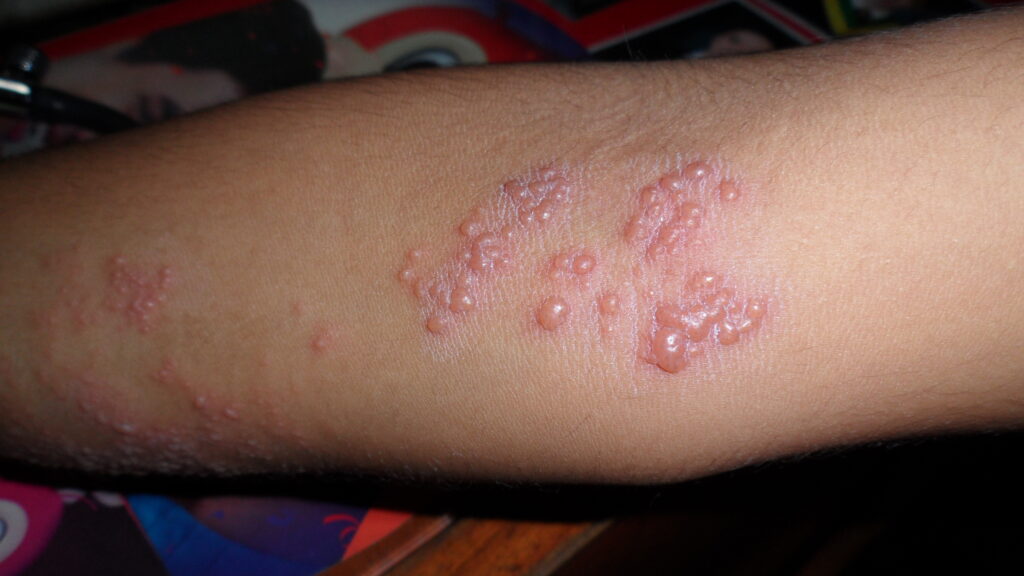
How long it takes for herpes to show up in a woman is usually 2 to 12 days after exposure, with an average of around 4 days. The same range applies to men, though the first outbreak is milder because the urethra is shorter and less skin surface is exposed. Herpes is caused by one of two viruses: HSV-1, which causes most cold sores, and HSV-2, which causes most genital sores. The gap between exposure and your first symptom is called the incubation period. How long it runs depends on which virus you have, where it entered the body, and whether it is a brand-new infection or a flare of one you have carried for years.
If you have been exposed and the wait is becoming unbearable, you can talk to a doctor about herpes treatment the same day without going to a clinic.
How long does it take for herpes to show up?
Herpes symptoms appear 2 to 12 days after exposure in most people, with an average of around 4 days. How fast herpes shows up depends on whether this is a first infection or a recurrence. The first outbreak is usually the most severe and can last 2 to 4 weeks. Repeat outbreaks are shorter, milder, and confined to the original site. Some people never develop recognizable symptoms at all and only learn they have herpes through a blood test or a partner’s diagnosis. If you recently slept with someone who has herpes, symptoms typically appear 2 to 12 days later, though some people see them sooner and others not for months. The reason this window swings so wide is that HSV-1 and HSV-2 follow slightly different timelines, and where the virus first enters the body changes how quickly your immune system reacts.
HSV-1 vs HSV-2: Incubation period differences
HSV-1 and HSV-2 are two distinct members of the herpes simplex virus family that share a similar incubation period but cause symptoms in different parts of the body. HSV-1 most often causes cold sores around the mouth. HSV-2 shows up on the genitals, the inner thighs, the buttocks, or the anus. How long it takes for herpes to appear after exposure depends on the virus and the site of entry.
HSV-1 timeline (oral herpes / cold sores)
The HSV-1 incubation period runs about 3 to 7 days from exposure to the first visible symptom. The first sign is tingling, itching, or burning on the lip or near the mouth. Within 24 hours, small red bumps form, then turn into clusters of fluid-filled blisters that break open and crust over within a week. A first HSV-1 infection in adults can also cause fever, sore throat, swollen lymph nodes, and painful gingivostomatitis, an inflammation of the gums and inner mouth that resolves as the virus enters its long-term dormant state.
HSV-2 timeline (genital herpes)
How long does it take for HSV-2 to show up is 2 to 12 days after sexual exposure in most people, with an average of 4 days. The first genital outbreak is usually the most severe one a person will ever have. When herpes symptoms start, they appear as tingling, burning, or itching at the site of infection. Painful blisters and ulcers follow over the next few days, often accompanied by fever, body aches, swollen lymph nodes in the groin, and burning during urination. The full first outbreak runs 2 to 4 weeks, and often looks different in women than in men.
How long does it take for herpes to show up in a woman?
It takes 2 to 12 days for herpes to show up in a woman after exposure for the first outbreak, with most women noticing the earliest signs around day 4. Women have more severe first outbreaks than men because the virus has more surface area to infect, including the vulva, labia, vagina, cervix, perianal skin, and urethra. The early signs are easy to miss because they overlap with much more familiar problems like a yeast infection or a UTI. Knowing what to look for and where matters more than counting days from exposure.
First signs and prodrome symptoms (tingling, itching, burning)
The first signs of herpes in women are usually sensations, not visible sores. Doctors call this early-warning phase the prodrome, the 1 to 3-day window between when the virus moves to the skin’s surface and when a blister appears. Two to three days before any blister appears, you may experience:
- Tingling, itching, or burning in the area where the virus entered
- Shooting pain in the lower back, buttocks, and thighs
- Mild fever and headache
- A swollen, heavy feeling in the groin
When and where sores show up
Sores usually appear 2 to 4 days after the prodrome starts and 4 to 7 days after exposure. They appear as clusters of small, fluid-filled blisters that break open within a day or two, leaving shallow ulcers behind. In women, the most common sites are:
- The vulva
- The labia majora and minora
- The entrance to the vagina
- The cervix
- The perineum
- The anus
- The inner thighs
- Buttocks
Cervical sores are common in first outbreaks but often go unnoticed because the cervix has fewer pain receptors than the vulva. If you had receptive anal sex with an infected partner, you can also develop anal herpes symptoms and timeline on the same schedule, with pain, discharge, or bleeding from the rectum.
Why women’s symptoms are often missed or mistaken for UTI, yeast infection, or ingrown hairs
Women miss or misread first-outbreak herpes more often than men do, mostly because early on, there are other conditions that may look like herpes. Burning during urination feels exactly like a urinary tract infection. Itching and irritation around the vulva feel exactly like a yeast infection. A single sore on the bikini line looks exactly like an ingrown hair after a wax or shave. A few features help separate herpes, pimples, and other sores:
- Herpes sores usually appear in clusters of small blisters that break open into shallow, painful ulcers within 1 to 2 days.
- Ingrown hairs are usually deeper under the skin, do not typically break open on their own, and often appear 1 to 2 days after shaving rather than after sexual contact.
- Yeast infections may look like herpes sores, commonly cause itching and thick white discharge, but they do not usually cause painful clusters of sores or flu-like symptoms such as fever.
- UTIs can cause burning during urination, but the burning is usually felt inside the urethra rather than when urine touches open sores on the vulva.
If you are unsure what the bump or sore is, send a photo to an online doctor before it crusts over. Once the sore crusts over, it gets harder to diagnose, and the swab test loses accuracy. The same first-outbreak pattern shows up in men, just on different skin.
Worried you might have been exposed to herpes?
A licensed doctor can review your symptoms, send a swab requisition, or prescribe antivirals the same day if appropriate.
Talk to a board-certified U.S. virtual doctor within minutes and start treatment the same day.
A Canadian-licensed doctor can review your symptoms, order STI testing, and issue prescriptions online if appropriate for you.
How long does it take for herpes to show up in a man?
Herpes symptoms in men appear in the same 2 to 12-day window as in women, with an average of about 4 days. The most common sites are the shaft of the penis, the head of the penis, the foreskin, the scrotum, the inner thighs, the buttocks, and the anus. Although men have milder outbreaks than women, the first sores can still be painful enough to interfere with urination and walking. Men are also more likely to mistake a first sore for a friction blister, jock itch, or a small skin abrasion, which delays the diagnosis past the prodrome window when antivirals work best.
The 5 stages of a herpes outbreak
The herpes symptoms timeline from prodrome to fully healed skin runs 2 to 4 weeks. The outbreak moves through five recognizable stages, and knowing which stage you are in tells you whether antivirals can still help and when you are most contagious.
- Prodrome (1 to 3 days). Tingling, itching, or burning at the site of infection before any blister is visible.
- Papule (about 24 hours after the prodrome). Small red bumps appear on the skin.
- Vesicle (1 to 3 days after the papule). The bumps fill with clear fluid and become the classic painful blisters of a herpes outbreak.
- Ulcer (1 to 2 days after the vesicle). The blisters break open, leaving shallow, raw sores. This is the most painful stage.
- Crust (4 to 7 days after the ulcer). The ulcers dry and form a scab that falls off as new skin grows underneath. No scarring once it heals.
How long does the first herpes outbreak last?
The herpes symptoms timeline from prodrome to fully healed skin [runs 2 to 4 weeks]. Repeat outbreaks follow the same five stages but usually finish in 7 to 10 days. You remain contagious through the entire outbreak, with the highest viral shedding during the vesicle and ulcer stages.
Why do some people never develop symptoms
About 81% of people who tested positive for HSV-2 had never been told by a doctor that they had genital herpes. Some of those people are truly asymptomatic and never develop sores. Many others have had symptoms so mild or atypical that they were mistaken for a yeast infection, a pulled muscle, a heat rash, or a single pimple on the bikini line.
This matters for two reasons.
- The virus can still be contagious without visible sores due to asymptomatic viral shedding, meaning it can spread even when no symptoms are present.
- A blood test is the only way to confirm past exposure when no sores are available for testing, so the absence of symptoms does not rule out infection if a partner has been diagnosed.
When to get tested for herpes after exposure
When to get tested for herpes after exposure depends on the test you use. A swab of an active sore can yield results within days. A blood test for antibodies can take 12 weeks to turn positive after a new infection. Testing too early with the wrong test is the single most common reason people do not even realize that they have herpes. If you want to skip the in-person trip, you can arrange online STI testing and treatment and have the right test ordered for your situation.
If you have a sore: the swab test
If you have a visible sore, the next step is usually a swab test, which is the most accurate way to confirm what’s going on. The doctor takes a small sample from the blister or ulcer and sends it for PCR or NAAT testing, which checks directly for the virus’s DNA.
Timing matters here. The test works best when the sore within the first 48 hours because that’s when the viral load is highest. As the sore begins to heal and crust over, there’s less virus on the surface, which can sometimes make the test miss an infection.
Beyond confirming whether herpes is present, the same test can also identify whether it’s HSV-1 or HSV-2, which helps guide treatment.
If you do not have a sore: the blood test
A blood test is the next step when no sore is visible, but exposure is suspected. The test looks for IgG antibodies, which are proteins your immune system produces after the virus enters your body. These antibodies can tell HSV-1 apart from HSV-2, but they cannot confirm an active outbreak. The timing matters more here than with a swab. Your body needs time to build measurable antibody levels after a new infection, and testing before that point gives a negative result even if you are infected.
On average, antibodies may first show up about 3 weeks after exposure on the HerpeSelect ELISA test, but reliable results can take 12 to 16 weeks on the more sensitive Western blot. The CDC recommends repeating the test 12 weeks after a suspected exposure if your first result is negative. A positive blood test confirms you have been infected at some point, but it cannot tell you when.
Can herpes stay in the body without causing any symptoms?
Yes, herpes can stay dormant in your body for months or even years before causing a noticeable outbreak. The infection occurs at the moment of exposure, but the virus retreats into nerve cells near the original infection site and stays inactive there until something triggers reactivation. How long herpes can lay dormant depends on stress, illness, and overall immune health
This is why a positive test can turn up in someone who has been in a monogamous relationship for years without any prior symptoms. It is also why a “first outbreak” is not always the first infection. It may be the first reactivation of an infection that has been there all along.
When to see a doctor
See a doctor any time you have a new genital sore, a cluster of blisters, painful urination with visible skin changes, or unexplained pelvic pain with flu-like symptoms. The first outbreak responds best to antivirals when treatment starts within the first 3 days, so the earlier you get a diagnosis, the more useful the medication will be.
For most first outbreaks, a telehealth visit is enough. A licensed doctor can review your symptoms over chat or video, provide an online lab requisition for a swab test when needed, and send antivirals to your pharmacy the same day.
Treatment options to shorten symptoms
Your doctor can recommend antivirals to shorten the duration of the outbreak. Antivirals are medications that block a virus from replicating within infected cells. Three antiviral medications can shorten a herpes outbreak when started early:
- Acyclovir: 400 mg three times a day for 7 to 10 days
- Valacyclovir: 1 gram twice a day for 7 to 10 days
- Famciclovir: 250 mg three times a day for 7–10 days
None of them clears herpes from your body, but each one shortens an outbreak by 2 to 4 days, reduces the severity of symptoms, and lowers the chance of passing the virus to a partner during an active outbreak. Starting during the prodrome, before any sore appears, gives the best result.
Note: These medicines are for initial episodes. Doses may vary for recurrent episodes. It’s important to see a doctor before starting any treatment.
Frequently asked questions
Oral herpes shows up 3 to 7 days after exposure, with cold sores appearing first as tingling on the lip and turning into blisters within 24 hours. A first oral herpes infection in adults can also cause fever, sore throat, and swollen lymph nodes for the first week. Cold sores from recurrent outbreaks usually heal in 7 to 10 days without antivirals, but starting an antiviral cream or pill at the first tingling can shorten the outbreak.
No, a true first herpes outbreak does not show up in 24 hours. Anything that appears within a day of sexual contact is almost certainly something else, such as an allergic reaction, friction irritation, an ingrown hair, or a flare of a pre-existing condition. The shortest reliably reported incubation for a first herpes outbreak is 2 days. If you already have herpes and feel a prodrome, a visible sore can appear within 24 hours of the first tingling, but that is a recurrent outbreak from a virus already in your body, not a new infection.
A first herpes outbreak in a woman is most often mistaken for a urinary tract infection, a yeast infection, an ingrown hair after waxing or shaving, a friction blister, or a pimple on the bikini line. Other conditions that can look similar include molluscum contagiosum, contact dermatitis from a new soap or fabric, lichen sclerosus, and atypical patches of psoriasis. If a yeast infection or UTI never clears with the usual treatment, herpes is worth ruling in or out with a swab before assuming the original diagnosis was right.
Yes, stress is one of the most common triggers for a herpes outbreak in people who already carry the virus. Both physical stress, like a cold or a poor night of sleep, and emotional stress can weaken the immune system enough for the virus to reactivate from its dormant state in the nerve cells. Stress does not cause a new herpes infection. A positive test after a stressful period does not mean the virus arrived recently. It means an existing infection finally produced a visible outbreak.
If you have a visible sore, get a swab test as soon as possible, within the first 48 hours of the sore appearing, when PCR sensitivity is highest. If you have no sore but suspect exposure, the CDC recommends a type-specific IgG blood test repeated 12 weeks after the suspected exposure, since antibody levels can take that long to become detectable.
Valacyclovir does not change when first-outbreak symptoms appear after a new infection, because the incubation period reflects the virus replicating inside cells before the immune system reacts. It shortens outbreaks once they start and reduces the chance of passing herpes to a partner during suppressive therapy.
Shaving does not cause a new herpes infection, but it can both trigger a recurrent outbreak and spread the virus to nearby skin. The small cuts and inflammation from a razor irritate the skin and may reactivate dormant herpes in the same nerve area. If a razor or wax strip touches an active sore and then moves across nearby skin, it can carry the virus to new sites in the same outbreak. Avoid shaving the area until a recurrent outbreak has fully healed, and use a clean razor each time.
Neonatal herpes usually shows up within the first 4 weeks of life if a baby is exposed to the virus at birth. Symptoms can include skin sores, fever, breathing trouble, poor feeding, lethargy, or seizures. Neonatal herpes is a medical emergency and needs intravenous antivirals in the hospital. The risk is highest when a mother gets a first-episode infection in her third trimester, which is why ACOG recommends cesarean delivery in that scenario.