
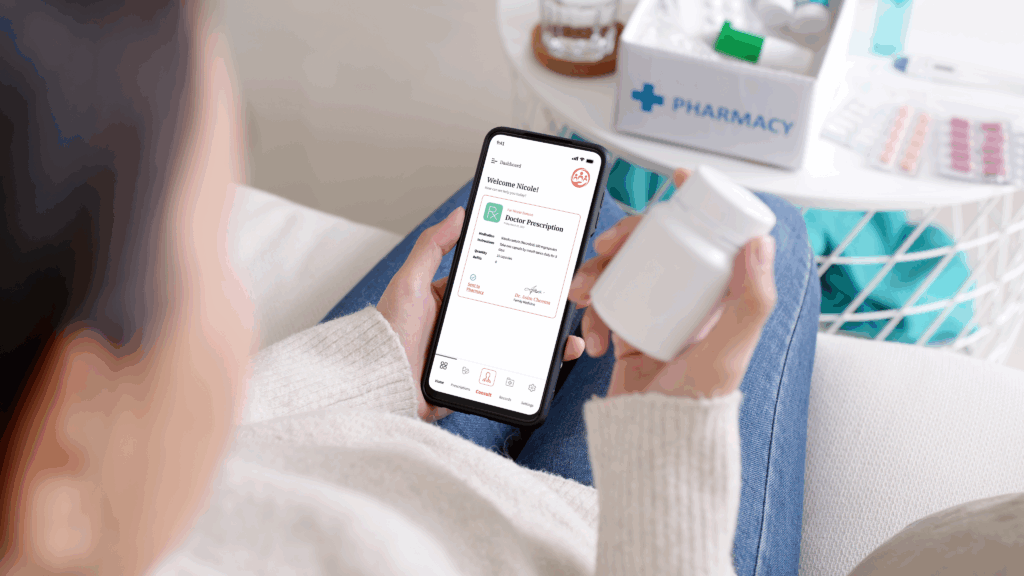


Online Stomach Pain Treatment
Stomach pain can be hard to ignore when you are not sure what is causing it or whether it needs treatment. Your Doctors Online (YDO) lets you speak with a board-certified doctor from home, 24/7. They can review your symptoms, help find the likely cause, and recommend the right treatment. When medically appropriate, your prescription can be sent to the pharmacy you choose.
- HIPAA compliant
- 24/7 Instant care & immediate access
- No wait time to see your doctor
- Serving all of the United States
Trusted by millions for online doctor diagnosis
Over 1 million patients
5-star Doctor Ratings
4.5 Rating
5,000+ App Reviews
4.6 Rating
1k+ Trustpilot Reviews
Why choose Your Doctors Online for stomach pain?
Being HIPAA compliant, Your Doctors Online (YDO) offers medically accurate treatments and virtual prescriptions for abdominal pain, stomach ache, and diarrhea.
Personalized care from licensed doctors
Our virtual doctors evaluate your symptoms, review your history, and recommend safe treatment, whether it’s for indigestion, GERD, constipation, or gastritis.
Same-day prescriptions to your local pharmacy
We prescribe evidence-based medications, such as acid reducers for reflux and ulcers, and antibiotics when a bacterial infection is the cause. Our prescriptions are sent directly to your pharmacy.
Real-time prescription tracking
With our secure app, you can monitor your consultation and know exactly when your medication is ready for pickup.
How to get stomach pain treatment online
Follow these three steps to talk to a doctor about your stomach pain from home.
Create your secure account
Register on our platform and describe your symptoms, such as nausea, bloating, constipation, or burning stomach pain.
Chat with a licensed online doctor
A licensed physician will review your symptoms and determine if they are caused by acid reflux, food poisoning, constipation, or infections.
Receive your online prescription
When medically appropriate, your doctor can prescribe treatment, such as an acid reducer or an anti-nausea medicine, and send it to your chosen pharmacy for same-day pickup.
What are the treatment options for stomach pain?
Treatment for stomach pain depends on what is causing it. Most stomach pain is not serious and gets better with simple care at home, but pain that keeps coming back or does not ease needs a closer look. Treatment may include:
- Home care: Sipping water or clear fluids, skipping solid food for a few hours, and then eating small amounts of mild foods such as rice, applesauce, or crackers can help ease mild pain.
- Antacids and acid reducers: If the pain is high in your belly and comes after meals, antacids may help, especially with heartburn or indigestion. Medicines such as famotidine or omeprazole can relieve symptoms, and a doctor may prescribe them at a higher dose when needed.
- Medicine for cramping: Antispasmodic medicines such as dicyclomine can help control muscle spasms in the intestines that cause cramping in irritable bowel syndrome (IBS).
- Fluids for diarrhea and vomiting: Drinking small amounts of fluid often, such as an oral rehydration solution, replaces the fluids and electrolytes your body loses.
- Testing when the cause is unclear: Your doctor can issue a lab requisition for blood, breath, or stool tests, such as a test for H. pylori, that you can take to a lab near you.
- Avoiding certain pain relievers: Aspirin, ibuprofen, and naproxen are common causes of gastritis and can make some types of stomach pain worse.
If over-the-counter options are not enough, you can talk to a doctor and receive an online prescription the same day when medically appropriate.
What medications can we prescribe online for stomach pain?
There is no single prescription pill for stomach pain. The right medicine depends on the cause, such as an ulcer, IBS, or an H. pylori infection. These are some of the medications our doctors may prescribe when medically appropriate:
What causes stomach pain?
Stomach pain, or abdominal pain, is pain anywhere between your chest and groin. It can start in your stomach, intestines, or nearby organs, and where you feel it and what comes with it can help a doctor narrow down the cause. Common causes include:
- Acid reflux (GERD) and indigestion: A burning or aching pain in the upper belly, often after meals, sometimes with heartburn.
- Gas and bloating: Crampy pain that moves around and often eases after you pass gas or burp.
- Stomach flu and food poisoning: Cramps that come with diarrhea, nausea, or vomiting. For most people, the illness goes away in a few days.
- Constipation: Cramping, bloating, and a full feeling in the lower belly when bowel movements are hard or infrequent.
- Irritable bowel syndrome (IBS): Belly pain and cramps that come with diarrhea, constipation, or both, and often ease after a bowel movement.
- Gastritis and stomach ulcers: A burning or gnawing pain in the upper belly, most often caused by H. pylori, heavy alcohol use, or pain relievers such as ibuprofen.
- Food intolerance: Gas, bloating, and cramps after certain foods, such as dairy products, if you have lactose intolerance.
- Other causes: Period cramps, a urinary tract infection, gallstones, kidney stones, and a muscle strain can also cause belly pain.
Less common causes, such as appendicitis, pancreatitis, or a blocked bowel, need emergency care.
Do you need antibiotics for stomach pain?
Most of the time, no. Stomach pain is usually caused by indigestion, gas, constipation, or a stomach virus, and antibiotics do not work for viruses. Taking an antibiotic you do not need will not help you, and its side effects can still cause harm. A doctor may prescribe antibiotics when there is a clear bacterial cause, such as:
- H. pylori infection: H. pylori is a type of bacteria and the main cause of stomach ulcers. It is treated with a combination of antibiotics and acid-reducing medicines, which may include clarithromycin and amoxicillin, or a bismuth-based combination that includes metronidazole.
- Travelers’ diarrhea: Diarrhea that keeps you from your normal activities may be treated with an antibiotic such as azithromycin or ciprofloxacin. Mild cases usually do not need one.
Antibiotics can also cause stomach pain. Any antibiotic can lead to C. diff, a gut infection that causes watery diarrhea and cramps, and it is most often linked to clindamycin, ciprofloxacin, and cephalosporins such as cefuroxime. Diarrhea is also a common side effect of amoxicillin-clavulanate. Talk to a doctor if you get diarrhea while taking an antibiotic or after finishing one.
When is stomach pain an emergency?
How bad the pain feels does not always reflect how serious the cause is, so it helps to know the warning signs. Call 911 or go to the nearest emergency room if you have stomach pain with any of these:
- Sudden, sharp, or severe belly pain
- A belly that is hard, rigid, or very tender to touch
- Pain that starts around the belly button and moves to the lower right side
- Vomiting blood or material that looks like coffee grounds
- Bloody, black, or tarry stools
- Being unable to pass stool, especially if you are also vomiting
- Chest, neck, or shoulder pain, or pain between your shoulder blades with nausea
- Trouble breathing
- Stomach pain during pregnancy or if you could be pregnant
- Pain after a recent injury to your belly
- Stomach pain while you are being treated for cancer
For pain that is not an emergency, talk to a doctor if it does not improve within 24 to 48 hours, lasts a week or longer, or comes with a fever, diarrhea for more than 5 days, or unexplained weight loss.
Get prescription from our healthcare providers

Dr. Asim Cheema is a board-certified Cardiology and Internal Medicine specialist with nearly 30+ years of clinical experience. He has been operating as an independent practitioner since 2001. He has worked at several leading healthcare institutions in Ontario, including Southlake Regional Health Centre in Newmarket and St. Michael’s Hospital in Toronto. He focuses on the diagnosis, management, and long-term care of complex cardiovascular and internal medicine conditions.

For more than eleven years, Dr. Marsha Dunkley has been committed to providing compassionate, comprehensive medical care to patients across Ontario, British Columbia, and Nova Scotia. Her clinical experience spans chronic conditions such as diabetes, hypertension, and high cholesterol and acute illnesses, including the common cold, seasonal allergies, influenza, and COVID-19.

Dr. Sohail Cheema is a seasoned pediatrician with 30+ years of experience. A 1987 graduate of Nishtar Medical College, he’s recognized for patient-centered care and clear communication. He's a member of the Royal College of Physicians (UK & Ireland) and certified in Ontario. He practices at Halton Healthcare – Georgetown and St. Michael’s Hospital in Toronto.
Dr. Stotland Mitchell is a board-certified Occupational Medicine physician with 5+ years of experience. He provides virtual care across all U.S. states and D.C., blending allopathic medicine with public health insights. His approach focuses on rapid symptom relief and long-term prevention, often resulting in faster recovery and improved health outcomes for his patients.

Dr. Mandy Leideman offers telehealth services and chronic care consultations to patients, whether insured or uninsured. With 30+ years of experience in general practice, she now focuses on long-term care and chronic disease prevention. Dr. Leideman is affiliated with several professional organizations, including the College of Physicians and Surgeons of Ontario, the Canadian College of Family Physicians, and the Canadian Medical Association.

Dr. Kieran Kettyls is a compassionate family physician who specializes in bariatric medicine, women’s health, and in-office procedures. Originally from Calgary, Alberta, he pursued his medical education and training internationally. He provides virtual care for patients across Alberta and British Columbia. He developed an AHS-covered weight loss program focusing on personalized care for obesity, metabolic, and hormonal health.

Dr. Richard Honaker is a board-certified physician with more than 40 years of experience in family and emergency medicine. He serves as Chief Medical Advisor at Your Doctors Online and is affiliated with Medical City Plano in Texas. Recognized multiple times by D Magazine and Texas Monthly, Dr. Honaker provides evidence-based care across a wide range of conditions including diabetes, hypertension, and injury care.

Dr. Monique Rainford is an OB/GYN expert and Assistant Clinical Professor at Yale School of Medicine. With 25+ years of experience, she’s led OB/GYN departments at Yale Health and Baltimore Medical System. Her clinical interests include pregnancy, menstrual health, chronic pelvic conditions, and lifestyle medicine. Dr. Rainford advocates for maternal health equity, especially in underserved communities.

Dr. Candice Fraser is an OB/GYN practitioner and founder of Trinity Medical Care. With over a decade of experience, she focuses on reproductive care, menstrual health, and menopause management. Along with medical training and residency, she also holds an MBA in healthcare management, blending business insight with clinical excellence.
Dr. Danielle DonDiego is a double board-certified Family and Obesity Medicine physician, business mentor, and author of Self-Care Rx. She focuses on helping patients manage weight, improve nutrition, and adopt sustainable lifestyle changes. A graduate of the Virginia College of Osteopathic Medicine with an MBA from Virginia Tech, she combines her medical expertise with a passion for patient education and long-term wellness.
Dr. Amber Robins is a double board-certified Family and Lifestyle Medicine physician with a strong focus on women’s health, preventive care, and patient advocacy. She earned her MD from the University of Rochester and an MBA from LSU-Shreveport. A published author and media contributor, she blends clinical expertise with a passion for empowering patients to make informed health decisions.
Dr. Nina Carroll is a retired OB/GYN with decades of experience serving women in the U.S. and abroad. She specialized in menopause care, sexual health, and trauma-informed women’s health. Today, she continues her work through medical writing, focusing on sexual minority women’s health and care for survivors of trauma.
Dr. Nerissa Bauer is a behavioral pediatrician specializing in ADHD, parenting strategies, and mental health in children. A former academic and AAP spokesperson, she is the creator of the TEACH Me ADHD program, helping families better understand and manage ADHD. She brings warmth, creativity, and evidence-based guidance to her work with patients and parents.
Frequently Asked Questions about online stomach treatment
What are the three types of stomach pain?
Stomach pain is often grouped into three types based on where the pain comes from. Visceral pain comes from an organ, such as the stomach or intestines, and usually feels like a dull ache or cramp that is hard to pinpoint. Parietal pain comes from irritation of the lining of the belly and is usually sharp, easy to pinpoint, and worse when you move or cough. Referred pain is felt away from where the problem is, such as pancreatitis pain that spreads to the back.
How do I know if my stomach pain is gas?
If your stomach pain is caused by gas, you might notice signs like burping, pain, cramps, or a knotted feeling. Connect with an online doctor at Your Doctors Online to get medical care.
What are the early warning signs of pancreatitis?
The main sign of pancreatitis is pain in the upper left side or the middle of the belly that may spread to the back. The pain may get worse soon after eating, especially fatty foods, and then become constant and severe. Fever, nausea, vomiting, sweating, and a swollen belly can also happen. Sudden, severe belly pain like this needs emergency care.
How long does painful diarrhea last?
Acute diarrhea usually lasts less than a week and goes away on its own. Diarrhea that lasts 2 to 4 weeks is called persistent, and diarrhea that lasts 4 weeks or longer is called chronic. Diarrhea can cause belly pain, cramps, and dehydration, so keep drinking fluids, and talk to a doctor if it lasts more than 5 days or if you see blood in your stool.
What is a severe stomach pain that comes and goes?
Severe pain that comes in waves and starts and ends suddenly is called colicky pain. Gallstones and kidney stones are common causes. Milder cramping that comes and goes is often caused by gas, bloating, or a stomach bug. Talk to a doctor if the pain keeps coming back, lasts more than 24 hours, or comes with a fever or rectal bleeding.
Do you provide a Family Sharing Plan?
Yes. With our Family Sharing Plan, multiple family members can access unlimited online consultations for issues like stomach pain, prescriptions, and doctor’s notes under one subscription.
Does ibuprofen help with stomach pain?
Usually not, unless the pain comes from period cramps. Ibuprofen can irritate the stomach lining and is one of the most common causes of gastritis, so it may make other types of stomach pain worse. Since the right medicine depends on the cause, talk to a doctor before taking a pain reliever for stomach pain.
What medicine gives instant stomach relief?
No medicine gives instant relief for every kind of stomach pain, because the right one depends on the cause. For heartburn or indigestion, antacids such as Tums, Rolaids, or Mylanta may relieve symptoms. Bismuth subsalicylate (Pepto-Bismol) can help with an upset stomach and diarrhea, but it should not be given to children or teenagers who have or are recovering from chickenpox or flu-like symptoms. If you need antacids often, talk to a doctor, since frequent heartburn can be a sign of GERD.
Do you work with pharmacies?
Yes, we partner with both major chains and independent pharmacies across the US to ensure prescriptions are delivered electronically for fast access.
What are the possible complications of gastritis?
Gastritis often gets better once the cause, such as H. pylori or regular use of pain relievers, is treated. If it is not treated, gastritis can lead to blood loss and a higher risk of stomach cancer. Black or tarry stools, or vomiting blood or material that looks like coffee grounds, are signs of bleeding and need medical care right away.