Online Obesity and Weight Loss Treatment
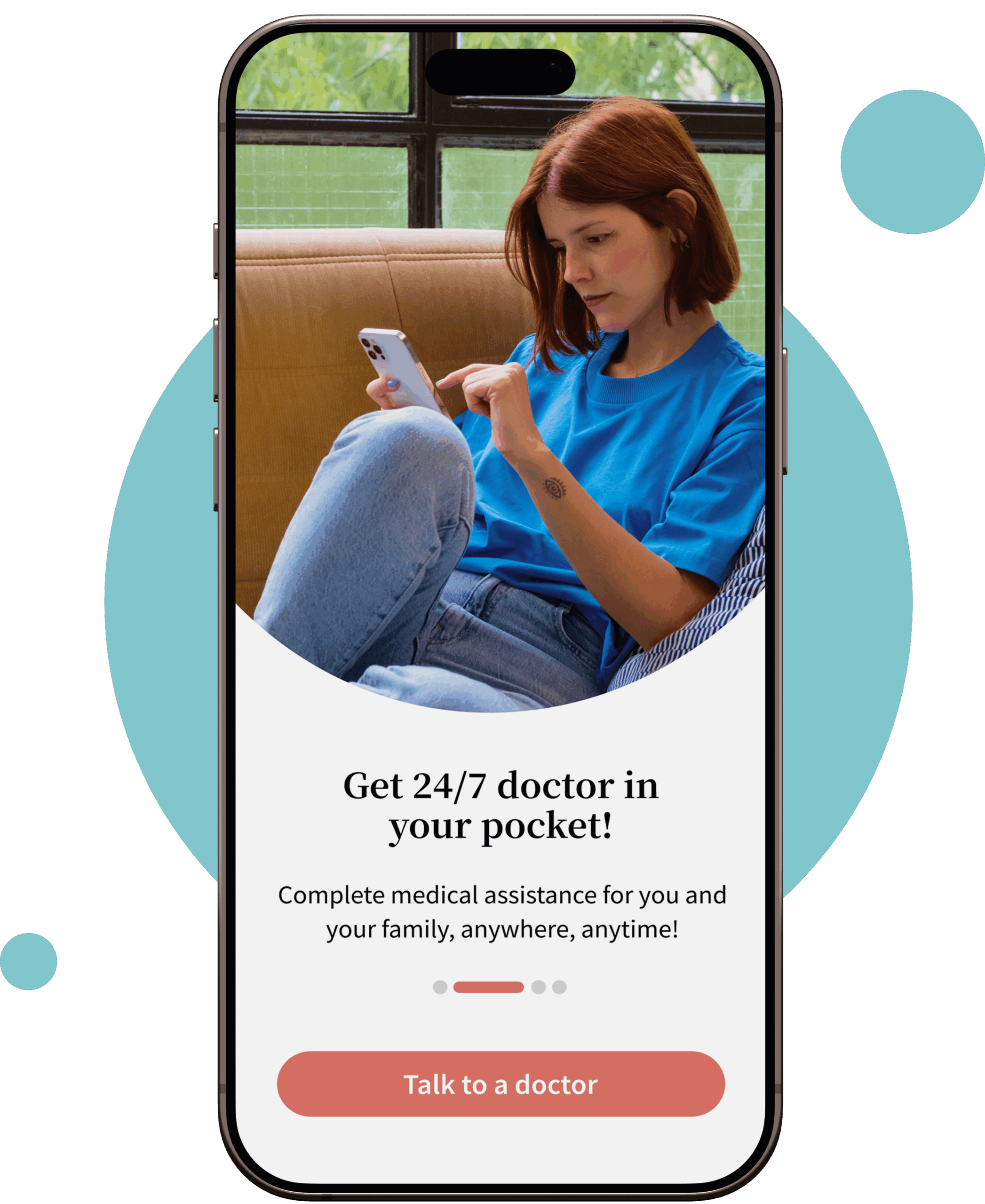
Ready to take the next step with your weight loss? Talk to a board-certified doctor from home 24/7 about prescription weight loss medication. Your doctor can review your BMI, health history, and goals and determine which medication is right for you.
How to get a weight loss prescription online
You do not need an in-person visit to start weight loss treatment. Tell the doctor what you have already tried, share your height, weight, and any health conditions you have, and if a prescription is appropriate, it is sent to the pharmacy you choose.
1
Describe your issue
Download our app, register and tell us about your medical issue to get started.
- Obesity
- STD
- UTI
- Sexual Health
- Skin
- Allergies
2
Chat with a Doctor
Connect with a board-certified doctor. You can chat, send pictures and videos.
Hi I’m Dr. Nicole. How may I help you?

3
Get Prescription
Our online doctors can help you with your medical issues and give you prescriptions.
Prescription
- Liraglutide 0.6mg injection (Refill)
- One injection a day for a week
Send Prescription
What are the treatment options for obesity and weight loss?
There are several ways to treat obesity, and many people benefit from a combination of approaches:
- Healthy eating and physical activity: Weight loss medicines are used along with a reduced-calorie diet and regular physical activity. They do not replace healthy lifestyle changes.
- Prescription weight loss medication: Medicines such as GLP-1s can help with weight loss by reducing appetite and helping you feel full for longer. Your doctor can determine which medication is appropriate for you.
- Treating underlying conditions: Conditions such as an underactive thyroid, PCOS, and sleep apnea can contribute to weight gain. Treating these conditions may also help with weight management.
- Weight loss surgery: Surgery may be an option for people with severe obesity and requires assessment and follow-up with an in-person surgical team.
A doctor can help you decide which approach fits your health, weight, and goals.
What weight loss medications and GLP-1s can we prescribe online?
Not everyone needs the same medication. There are now two GLP-1 tablets as well as the weekly injections, so a needle is no longer the only way to take one. A doctor picks based on your BMI, the other health conditions you have, and how you would rather take it.
Semaglutide, GLP-1 receptor agonist
Learn More
Tirzepatide, GIP and GLP-1 receptor agonist
Learn More Orforglipron, oral GLP-1 receptor agonist
Liraglutide, GLP-1 receptor agonist
Learn More Naltrexone and bupropion
Learn More What is obesity and what causes it?
Obesity is a long-term health condition in which excess body fat can affect your health. A BMI of 30 or higher is generally considered obesity, although BMI does not measure body fat directly. Obesity can develop from a combination of factors, including:
- Genetics: Your genes can affect your appetite, how full you feel, metabolism, and where your body stores fat.
- Health conditions: Conditions such as an underactive thyroid, PCOS, and Cushing’s syndrome can contribute to weight gain.
- Medications: Some medicines, including certain antidepressants, steroids, antipsychotics, insulin, and some blood pressure medicines, can cause weight gain.
- Sleep and stress: Poor sleep and ongoing stress can affect appetite and eating habits.
- Diet and activity: Highly processed foods, frequent snacking, and low physical activity can make weight management more difficult.
Obesity can have more than one cause, and some people may not have a single clear reason for their weight gain.

Who qualifies for GLP-1 weight loss medication?
A GLP-1 weight loss medication can be prescribed if your BMI is 30 or higher, or if your BMI is 27 or higher and you have a health condition linked to your weight, such as high blood pressure, type 2 diabetes, or high cholesterol. You do not need both.
There are also people for whom these medications are not safe, and it is worth knowing before you book:
- A thyroid cancer history rules out the GLP-1s: Wegovy, Zepbound, Foundayo, and Saxenda all say the same thing. You cannot take them if you or a close relative has had medullary thyroid cancer, or if you have Multiple Endocrine Neoplasia syndrome type 2.
- Contrave has its own list: It cannot be used if you have uncontrolled high blood pressure, a seizure disorder, or any history of seizures, bulimia, or anorexia, or if you take opioid painkillers.
- Age matters: Wegovy injection and Saxenda are approved from age 12. Wegovy tablets, Zepbound, and Foundayo are for adults.
Can a dietitian help you lose weight?
Yes, a dietitian can help you create a personalized eating plan based on your weight loss goals, eating habits, food preferences, and daily routine. They can also help you make realistic changes that support weight loss and are easier to maintain over time, whether or not you take weight loss medication. They can:
- Support your treatment: Weight loss medications work best alongside a healthy diet and regular physical activity.
- Manage side effects: A dietitian can recommend foods and meal routines that may be easier to tolerate if medication causes nausea, constipation, or diarrhea.
- Build sustainable habits: A personalized plan can help you develop healthier eating habits that fit your routine and are easier to maintain long-term.
You can book an online dietitian consultation with Your Doctors Online whether or not you are taking weight loss medication.
FAQs about obesity
How fast do you lose weight with medical weight loss?
Slower than the ads suggest, and it depends on the medication. In the trial Wegovy 2.4 mg was approved on, people lost an average of about 15 percent of their body weight over 68 weeks, and around 2 in 3 lost at least 10 percent. Foundayo, the tablet, was closer to 11 percent at its highest dose over 72 weeks. Older options like Contrave and Orlistat do less than that. Your starting weight, your other medications, and how you respond all change the number.
How can I lose weight with an online weight loss doctor?
A board-certified doctor reviews your BMI, your medical history, and everything you have already tried, then works out whether medication is appropriate and which one. If it is, the doctor can send the prescription to the pharmacy you choose. You can come back for dose changes, side effects, and refills without booking another appointment, which is most of what weight loss treatment actually involves.
At what weight will a doctor prescribe weight loss pills?
There is no single weight. It is BMI, which accounts for your height. Weight loss medication is prescribed at a BMI of 30 or higher, or at a BMI of 27 or higher if you also have a condition linked to your weight, such as high blood pressure, type 2 diabetes, or high cholesterol. Below that, a doctor will usually work with you on diet and activity first.
Are medical weight loss programs effective?
Yes, and more so than either half on its own. Every weight loss medication approved in the US is labeled for use with a reduced-calorie diet and more physical activity, and that combination is what the approval trials tested. Medication without any change to food or activity does less, and diet alone rarely holds for long. A 2026 review of 12 randomized trials found that keeping people on medication after the initial weight loss is what prevented the weight coming back.
What type of doctor should I see for weight loss?
For most people, a general practitioner. Weight loss medication is prescribed and monitored by GPs every day, and that is who you speak to at Your Doctors Online. A referral to an endocrinologist or a surgical team is worth having if there is a hormone problem behind the weight or you are considering weight loss surgery, and a doctor can tell you if that applies to you.
How long do I have to take weight loss medications?
Longer than most people expect. These medications treat obesity as a long-term condition, the way blood pressure medication does, and the labels describe them as treatment to reduce weight and maintain the reduction long term. A 2026 review of 12 randomized trials found that staying on medication after the initial weight loss prevented regain, and stopping it usually means some of the weight returns. Your doctor may lower the dose rather than stop it. It is worth deciding how you feel about that before you start.
How long does it take for weight loss medications to work?
Months, not weeks, and that is by design. Every GLP-1 starts on a low dose and steps up on a schedule, roughly every four weeks for the injections and every 30 days for the tablets, to keep the nausea manageable. So you spend the first few months getting to the dose that actually works. The approval trials measured results at 68 to 72 weeks. You will usually notice something in the first couple of months, but the full effect takes about a year.
How Our App Has
Helped Patients
Our 500,000+ Members Love Our Online Doctors 4.5 Rating With 5,000+ Reviews Here Is What They Say


-Phindile Mkhatshwa
-brooke snow
-Okiti Stephanie
-ASIF Khan
-Chelsey
-edith bien aime
-Lesego Thejane
-Stephanie Brown
-kulwinder gill
-Elijah Mark
Get Started Today
Talk to online doctors now and get medical advice, online prescriptions, refills, lab requisitions and medical notes within minutes. On-demand healthcare services at your fingertips.