Overview
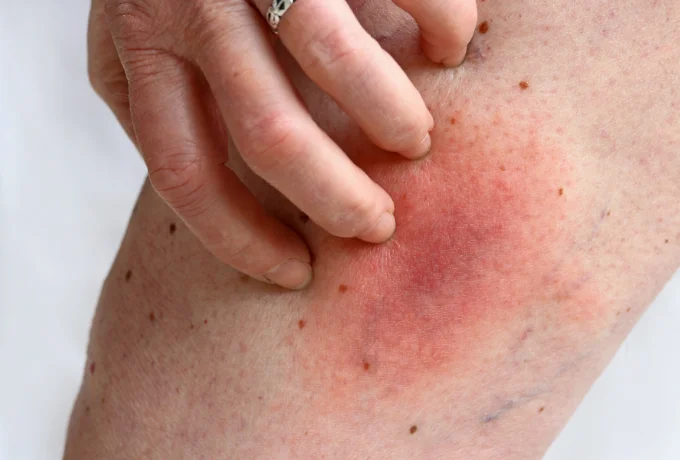
A rash on the inner thigh is a common skin complaint with various causes. The most frequent triggers are friction between the thighs, trapped moisture, heat, or contact with an irritant. In some cases, an inner thigh rash may occur due to a fungal, bacterial, or viral infection, such as an STI.
This blog explores the possible causes of an itchy rash on the inner thigh, what they look like, treatment options, and when to seek medical care.
Why do I have a rash on my inner thigh?
Rash on the inner thighs can occur irrespective of gender, and both males and females can suffer from it. An inner thigh rash can occur for various reasons, from potential skin conditions to hot weather and more. Here are the most common causes of the rash on the inner thighs:
Chafing
Chafing occurs due to the friction from the thighs rubbing together. This friction is more pronounced during hot weather, due to sweating and heat. Tight clothing, such as pantyhose, and strenuous physical activity can also cause chafing. Without relief from heat and friction, symptoms might progress from redness and itching to blistering in some cases. This can even leave a mark on the skin once healed.
Heat rash
Heat rash can occur anywhere on the body due to prolonged exposure to warm temperatures, when moisture is trapped in the skin’s pores, clogging sweat ducts and causing itching and rashes. Its causes are often similar to chafing; however, it does not lead to serious scarring or blistering. Heat rash has three main forms. Miliaria crystallina is the mildest, with small, clear blisters. Miliaria rubra (prickly heat) is the most common and causes red, itchy bumps. Miliaria profunda is rare and occurs in deeper layers of skin. Most cases resolve once the skin cools down.
Read how doctors can help treat your heat rash.
Contact dermatitis
Contact dermatitis is a skin reaction to an allergen or chemical. Some people are allergic to fragrances or certain ingredients in personal care products, such as lotion or soap. It can also occur due to irritants such as bleach, detergents, nickel, latex, and poison ivy. This skin reaction often develops a rash with itching, dryness, hives, or blisters. Read more about contact dermatitis triggers.
Atopic dermatitis
Atopic dermatitis, commonly known as eczema, is one of the most common skin conditions associated with an inner thigh rash. It can cause dry, scaly rashes on the skin, along with itching and inflammation. Eczema affects roughly 10% of the U.S. population and 10-20% of children globally. Many people experience cycles of flare-ups (intense itching, redness, inflammation) followed by periods of remission, where symptoms improve or completely disappear. Dermatologists suggest that people with eczema should always keep their skin moisturized.
Psoriasis (inverse psoriasis)
Psoriasis on the inner thigh most commonly presents as inverse psoriasis, a type that develops specifically in skin folds and areas where skin rubs together, including the groin and inner thighs. It differs from other rashes and usually appears as a smooth, shiny, discolored patch of skin. Inverse psoriasis requires a different approach (e.g., lower-potency topical steroids) than other inner-thigh rashes and should be diagnosed and managed by a doctor or dermatologist.
Hidradenitis suppurativa
Hidradenitis suppurativa, also called acne inversa, is a blackhead or pus-filled, painful, pimple-like chronic inflammatory skin condition that occurs in the skin folds, such as the groin, armpits, and thighs. This pimple-like bump may rupture and discharge pus due to inflammation. While the exact cause remains unknown, researchers connect it to genetics, obesity, diabetes, and smoking.
Hidradenitis suppurativa is more common in females than males and may occur during hormonal imbalance phases like puberty or menopause. Your dermatologist will look at the type of rashes and sores you have and create a personalized treatment plan for your specific needs.
Razor burn
Shaving can often cause razor burns when the razor is not clean, or blades are worn out, or you have been shaving in the opposite direction of the hair growth. These burns, although they go on their own, can cause irritation, itching, and red rashes. Home remedies for razor bumps may help prevent inner thigh rashes.
Jock itch
Jock itch, also called tinea cruris, is a contagious fungal skin infection that may affect men more than women. It causes red, itchy, scaly, and sometimes burning rashes in the groin, inner thighs, or buttocks. One of the main causes of jock itch is moulds that grow on the skin, often triggered by sweating, moisture, friction, and tight clothing. It can be transmitted among individuals through the sharing of towels or clothing.
Treatment of jock itch might include OTC antifungal creams such as clotrimazole, miconazole, or terbinafine. Follow the instructions for the full course (usually 2–4 weeks) even if symptoms improve earlier.
Intertrigo (skin fold rash)
Intertrigo is an inflammatory skin condition caused by friction between skin folds, such as the inner thighs. Friction is worsened by heat and moisture, which cause the skin surfaces to stick together, damage the outer skin layers, and trigger visible inflammation.
Intertrigo may look similar to jock itch, but both have different causes. Jock itch is specifically a fungal infection, while intertrigo is an inflammatory reaction to friction and moisture that may or may not lead to a secondary infection.
Pityriasis rosea
This condition also causes rashes on the inner thighs with small, patchy scales. It is more common in younger females, and the exact cause is unknown. While it is harmless, it takes a few months to fully heal.
Lyme disease rash (erythema migrans)
The erythema migrans rash is common in people with Lyme disease. One characteristic is a bullseye rash, which often appears like a circular, target-like lesion. There are many forms of Lyme disease rashes, and your provider will be better able to find out if that’s the reason behind your inner thigh rash.
Swimmer’s itch
Cercarial dermatitis is commonly called swimmer’s itch, which is an allergic reaction to a parasite that inhabits ponds, lakes, or oceans. It can cause pimples, burning, itching, and blisters, along with red rashes, after swimming in water contaminated with this parasite. Swimmer’s itch is typically contracted in lakes, ponds, or oceans. It does not occur in well-maintained, chlorinated swimming pools.
Can an STI cause a rash on the inner thigh?
Yes. Some inner thigh rash cases are associated with sexually transmitted infections. These are as follows:
Genital herpes
Genital herpes, a viral infection, often causes a rash on the inner thigh. It is contagious and can spread to others along with accompanying symptoms like pain, itch, and blisters on the genital area, inner thigh, and buttocks. While there is no cure for herpes, antiviral medications such as acyclovir or valacyclovir can reduce the frequency and severity of outbreaks and lower the risk of transmission. Consult a doctor for a prescription and management plan.
Read more about genital herpes treatment.
Secondary syphilis
Syphilis is a bacterial STI that progresses in stages. During the secondary stage, it can cause a widespread rash that may appear on the inner thighs, trunk, palms, and soles. The rash is typically non-itchy and may include flat or raised lesions. If you notice a rash alongside sores, swollen lymph nodes in the groin, or flu-like symptoms, see your doctor promptly. Syphilis is diagnosed with a blood test, and early-stage infection is treatable with penicillin. Sexual partners should also be notified and tested.
Learn more about the cure for syphilis in our guide.
Chlamydia
Chlamydia does not usually cause a rash on the inner thigh. However, a rare form of chlamydia infection called lymphogranuloma venereum (LGV) can begin with a small, painless ulcer or papule in the genital area, which often goes unnoticed. LGV characteristically progresses to painful, swollen lymph nodes in the groin within 2–6 weeks. While this swelling can affect nearby areas, it is not typically associated with a visible inner thigh rash.
Most chlamydia infections are asymptomatic, meaning the patient does not realize they are infected. If you’re concerned about a skin rash or any other STI symptoms, you should visit your GP or local sexual health clinic for a proper diagnosis. USPSTF recommends chlamydia screening in all sexually active women aged 24 and younger, and in older women who are at increased risk of infection, including pregnant persons.
Diagnosis
For the diagnosis of inner thigh rash, your provider may:
- Perform a visual examination,
- Check your medical history,
- Rule out signs of inflammation or infection (e.g., fever, pain, persistent pimples)
If needed, they may also take a rash sample and send it for further lab testing. Wood’s lamp and KOH solution are examples of a few diagnostic tests. In some cases, you will be referred to a dermatologist, a skin specialist.
Is your rash serious? Ask a doctor now
Are you concerned about rash symptoms and need a quick medical consultation? Connect virtually with one of our healthcare providers and get your answers right away.
Our US-licensed physicians can provide online prescriptions and lab requisitions so you can get rash treatment from your home.
Our Canadian-licensed physicians can provide online prescriptions and lab requisitions so you can get rash treatment from your home.
How to treat a rash on the inner thigh?
The treatment of inner thigh rash depends on the cause. Once the doctor diagnoses it, they might recommend OTC ointments or creams, corticosteroids, antibiotics, or other prescription medications.
Below is a quick summary table for causes of inner thigh rash and recommended treatment for each:
| Cause | Recommended treatment | OTC or Rx |
| Eczema | Moisturizers (emollients) applied daily; topical corticosteroids (e.g., hydrocortisone 1%) for flares; antihistamines for itch relief | OTC mild cases; Rx for moderate–severe |
| Psoriasis | Topical corticosteroids; vitamin D analogs (e.g., calcipotriol); coal tar preparations; dermatologist referral for persistent cases | Rx |
| Contact dermatitis | Identify and remove the trigger; topical corticosteroids for inflammation; cool compresses for relief | OTC mild cases; Rx for severe reactions |
| Heat rash | Cool the skin; loose breathable clothing; calamine lotion or hydrocortisone cream for itch; avoid further heat exposure | OTC |
| Lyme disease (bullseye rash) | Oral doxycycline (100 mg twice daily for 10–21 days); prompt medical evaluation required | Rx only |
| Chlamydia (LGV) | Oral doxycycline (100 mg twice daily for 21 days); sexual partners must also be tested and treated | Rx only |
| Genital herpes | Antiviral medications: acyclovir, valacyclovir, or famciclovir to reduce outbreak severity and frequency | Rx only |
| Secondary syphilis | Penicillin G (intramuscular injection); doxycycline for penicillin-allergic patients; partner notification required | Rx only |
| Razor burn | Soothe with aloe vera gel or witch hazel; avoid shaving until healed; use a clean, sharp razor going forward | OTC / Home remedy |
| Chafing | Keep the area dry; apply barrier cream or petroleum jelly; wear breathable clothing | OTC / Home remedy |
| Hidradenitis suppurativa | Topical or oral antibiotics; corticosteroids for flares; biologics (e.g., adalimumab) for severe cases; dermatologist referral recommended | Rx only |
| Pityriasis rosea | Usually self-resolving within 6–8 weeks; antihistamines or mild topical steroids for itch; avoid hot showers, which can worsen the rash | OTC; Rx if severe |
| Swimmer’s itch | Antihistamine creams or oral antihistamines; hydrocortisone cream for itch; most cases resolve within a week | OTC |
| Jock itch | Topical antifungals: clotrimazole, miconazole, or terbinafine applied for the full 2–4 week course; keep the area clean and dry | OTC; Rx if persistent |
| Intertrigo | Barrier creams (zinc oxide); keep skin folds dry; antifungal or antibacterial cream if secondary infection is present | OTC mild cases; Rx if infected |
Medications
To treat the rash on your inner thighs, your doctor may recommend medication depending on the cause:
- antifungals for fungal infection,
- antibiotics for bacterial infection,
- antiallergic medications for itching and redness,
- oral or topical steroids for reducing inflammation
Mild symptoms can be treated with over-the-counter medications, while chronic infections may require a high-potency antifungal or antibiotic to treat the rash.
Home remedies
Below are some home remedies that can help you ease the symptoms of an inner thigh rash:
- Oatmeal bath. Oatmeal has anti-inflammatory properties, which can help relieve rash symptoms.
- Topical astringents. Apply witch hazel or calamine lotion to dry up moisture and soothe irritated skin.
- Tea tree oil. It can help relieve skin rashes due to its antiseptic and anti-inflammatory properties. However, it must be diluted with a carrier oil (such as coconut oil) before applying to the skin. Undiluted tea tree oil can cause contact dermatitis and should not be used near the genitals.
- Avoid allergens. If you have any prior allergies, always check product labeling before use.
- Cold compress. Dip a towel in ice-cold water and place it on your rash to reduce redness, inflammation, and itching.
How to prevent inner thigh rash?
Preventing an inner thigh rash often comes down to reducing friction, moisture, and skin irritation. Below are some effective steps that you can follow:
Keep the area dry and clean
Take regular showers, especially after exercise or sweating. Pat dry the inner thigh area with a cotton cloth rather than rubbing.
Choose breathable clothing
Wear loose-fitting clothes during physical activity or warm weather. Tight synthetic fabrics trap heat and sweat, increasing friction and the risk of heat rash, jock itch, and chafing.
Use a barrier cream or anti-chafe product.
Apply petroleum jelly, zinc oxide cream, or a balm to the inner thighs before exercise or long walks to reduce friction.
Shave carefully.
Always use a clean, sharp razor and shave in the direction of hair growth. Replace blades regularly and avoid dry-shaving.
Don’t share personal items.
Towels, clothing, and razors can transfer fungi and bacteria.
Practice safe sex and get tested regularly.
Using condoms reduces the risk of STI-related rashes from infections such as herpes, chlamydia (LGV), and syphilis.
Manage underlying health conditions.
See your doctor regularly if you have obesity, diabetes, and hyperhidrosis (excessive sweating), as these conditions increase your susceptibility to inner thigh rashes.
When to see a doctor for an inner thigh rash?
You should consult a healthcare provider if:
- The rash lasts more than 7–10 days despite OTC treatment or home remedies
- The rash is spreading, particularly toward the genitals, buttocks, or groin lymph nodes
- You notice signs of infection, including pus, yellow crusting, increasing warmth, or swelling around the rash
- You have a fever or feel unwell
- You’ve had unprotected sex and suspect an STI
- The rash is severely painful or is interfering with your daily life
- You have an underlying condition such as diabetes, a weakened immune system, or are pregnant
This blog is meant for educational purposes only. Online doctors cannot treat medical conditions that require in-person care and assessment.
FAQs about rash on inner thigh
Bacterial rashes are typically red, painful, swollen, and often produce pus or yellow crusts. Fungal rashes are itchy, dry, scaly, and ring-shaped, and usually occur in moist, warm areas on your skin. Compared to bacterial rashes, fungal rashes spread slowly. However, only a medical professional can diagnose either form of rash and recommend appropriate treatment, such as antibiotics or antifungal creams.
Yes. Candida (yeast) overgrowth can cause an inner thigh rash, particularly in skin folds, a condition called candidal intertrigo. This is different from jock itch, which is caused by dermatophyte fungi rather than yeast, though both are treated with antifungal creams.
To prevent groin rash, doctors recommend keeping the area dry and clean and avoiding strenuous physical activity that accompanies sweat. Moreover, stay hydrated to maintain the body’s moisture level, avoid exposure to hot water while showering, don’t share personal items like towels, and use clean and new razors. Additionally, avoid smoking, unprotected sex, and improper shaving techniques.