Online Acne Treatment
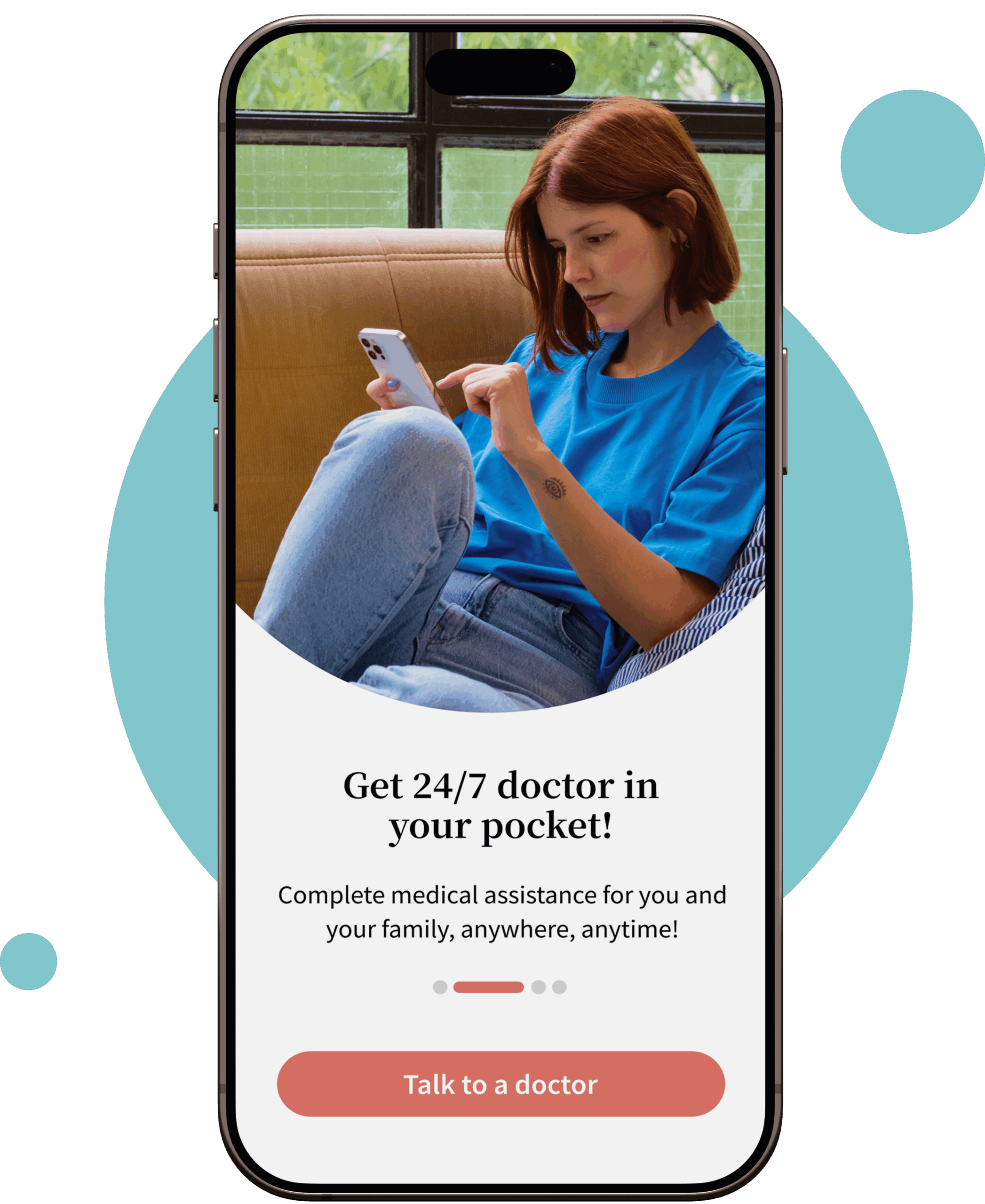
Connect with a licensed doctor 24/7, share photos of your breakouts, and get a diagnosis and online treatment plan for acne in minutes.
If your acne needs prescription creams or antibiotics, the prescription reaches your pharmacy within 30 to 60 minutes. No clinic visit, no referral.
How to connect with a doctor for acne
Getting acne treatment through telehealth is simple. Connect with a licensed doctor in just three easy steps.
Describe your issue
Download our app, register, and tell us about your medical issue to get started.
- Acne
- Anemia
- STD
- UTI
- Skin
- Covid
Chat with a doctor
Connect with a board-certified doctor. You can chat, send pictures, and videos.
Hey Dr. Nicole, I have pus-filled pimples on my face. I have tried everything, can you help me?

Get an online prescription
Our online doctors can help you with your medical issues and give you prescriptions.
Prescription
- Benzoyl peroxide 2.5% gel, apply once daily for 8 weeks.
- Clindamycin cream, apply twice daily for 8 weeks
Send Prescription
What are the virtual treatment options for acne?
Virtual acne treatment covers everything a doctor can diagnose and prescribe over chat or video. Based on the type and severity of your acne, your doctor may prescribe:
- Topical treatments: Benzoyl peroxide, retinoids such as Tretinoin, salicylic acid, or topical antibiotics such as Clindamycin
- Oral medications: Antibiotics such as Doxycycline, hormonal treatments, or Isotretinoin (Accutane) for severe cases
- Combination plans: A topical plus an oral medication, adjusted at your follow-up
- Lifestyle guidance: Skincare routine, diet changes, and stress management
What medications can we prescribe online for acne?
keratolytic agents
Learn More
Antimicrobial
Learn More retinoids
Learn More What is acne?
Acne is a common skin condition that develops when hair follicles become clogged with oil (sebum) and dead skin cells. The trapped oil allows Cutibacterium acnes bacteria, which normally live on the skin, to multiply, triggering inflammation and causing blackheads, whiteheads, pimples, and, in more severe cases, painful cysts.
Acne most often affects the face, chest, back, and shoulders because these areas have the highest concentration of oil glands. It is especially common during puberty, when hormonal changes increase oil production, but it can occur at any age. Between 15 and 30 out of every 100 teenagers have a form severe enough to need medical treatment.
Symptoms of acne
Acne shows up as more than pimples. You likely have acne if you notice:
- Breakouts that keep returning in the same areas
- Pus-filled bumps (pustules) or tender lumps deeper under the skin (cysts)
- Redness and inflammation around the bumps
- Itching or irritation of the affected skin
Mild breakouts often respond to over-the-counter products. If yours keep coming back or start leaving marks, it’s time to talk to a doctor.
What causes acne?
Hormones cause most acne. Androgen levels rise during puberty, which is why acne usually settles in the early twenties. Not every teenager gets it, so genetics and immune response matter too. What makes acne more likely or worse:
- Hormonal shifts during puberty, menstruation, and pregnancy
- Medications that contain or affect hormones, such as corticosteroids, anabolic steroids, and some epilepsy drugs
- Comedogenic skincare, makeup, and heavy creams that block pores
- Squeezing or scrubbing, which raises your risk of scarring
- Stress
- Family history
Washing badly does not cause acne. And studies have mostly found no link between acne and specific foods such as chocolate, meat, or dairy. High-glycemic carbohydrates such as sugary foods, white bread, and potatoes may play a role, but that remains unsettled.
FAQS about acne treatment online
What is the best acne spot treatment?
Salicylic acid, Benzoyl peroxide, sulfur, and topical retinoids are the most effective spot treatments. Salicylic acid and Benzoyl peroxide act fastest on individual pimples, while retinoids help stop the next one from forming.
What are the types of acne scars?
Acne scars fall into three types: atrophic (depressed) scars, hypertrophic (raised) scars, and keloid scars, which grow beyond the original breakout.
Can I get an acne prescription at Your Doctors Online?
Yes. Download our app and describe your acne to a licensed doctor. Our online prescription service allows eligible patients to receive an acne prescription and have it sent to their local pharmacy, often within minutes.
Why is my acne getting worse with treatment?
For severe, scarring, or treatment-resistant acne, isotretinoin (Accutane) can offer long-lasting results when other treatments haven't worked, although acne can return after a course. The main drawback is the need for medical supervision. Isotretinoin can cause severe birth defects, so patients who can become pregnant must follow strict pregnancy-testing and prevention requirements. In the US, treatment also requires enrollment in the FDA's iPLEDGE safety program. Your doctor will also monitor your liver function and blood fat levels during treatment.
When to see a doctor for acne?
See a doctor for acne if you experience scars getting darker, pimples under the skin getting bigger (cysts), or acne bleeding. In these conditions, you need a proper consultation and personalized treatment plan to control your acne immediately with medications and management. However, if you are not feeling well and need someone to watch out for you online, we offer online treatment for acute conditions, and chronic conditions.
What is the best treatment for hormonal acne?
Hormonal acne responds best to oral contraceptives, Spironolactone, oral antibiotics, topical retinoids, and Isotretinoin (Accutane) for severe cases. Winlevi (clascoterone 1% cream) is a newer topical option that blocks androgens directly at the skin.
What is the new FDA-approved treatment for acne?
Cabtreo, approved by the FDA in October 2023, is the newest acne treatment - the first gel to combine Clindamycin, Adapalene, and Benzoyl peroxide in a single fixed dose. For hormonal acne, Winlevi (clascoterone 1% cream) remains the newest option with a genuinely new mechanism.
What pills clear up acne fast?
Oral antibiotics work fastest, although they may still take weeks: tetracyclines such as Doxycycline, or macrolides such as Erythromycin, when tetracyclines don't suit your age or pregnancy status. Your doctor confirms the right one for your case before prescribing.
Is it worth taking Accutane?
For severe acne, Accutane (isotretinoin) can be worth considering. It can clear acne for a long time after one course of treatment, and many people see lasting results. The important thing to know is that Accutane requires close medical monitoring. It can cause serious birth defects, so people who can become pregnant need regular pregnancy testing and must follow the required safety precautions. Your doctor may also order blood tests to check your liver and cholesterol levels during treatment. Accutane is prescription-only and should only be taken under a doctor's care. Your doctor will first decide whether it is appropriate for your acne and whether you can take it safely.
How do I know if my acne is bacterial or hormonal?
Most acne involves both hormones and bacteria, so it’s not always easy to tell them apart. Hormones increase oil production, while C. acnes bacteria contribute to inflammation and breakouts. Where and when you break out can offer clues. Acne along your jawline that flares around your period may have a stronger hormonal component. Inflamed spots on your forehead, nose, and chin may also be linked to excess oil and bacteria. These patterns can overlap, so a doctor can help identify the likely causes and recommend the right treatment, whether that’s a topical medication, antibiotics, hormonal treatment, or a combination.
Get started today
Talk to online doctors now and get medical advice, online prescriptions, and referrals within minutes. On-demand healthcare services at your fingertips.