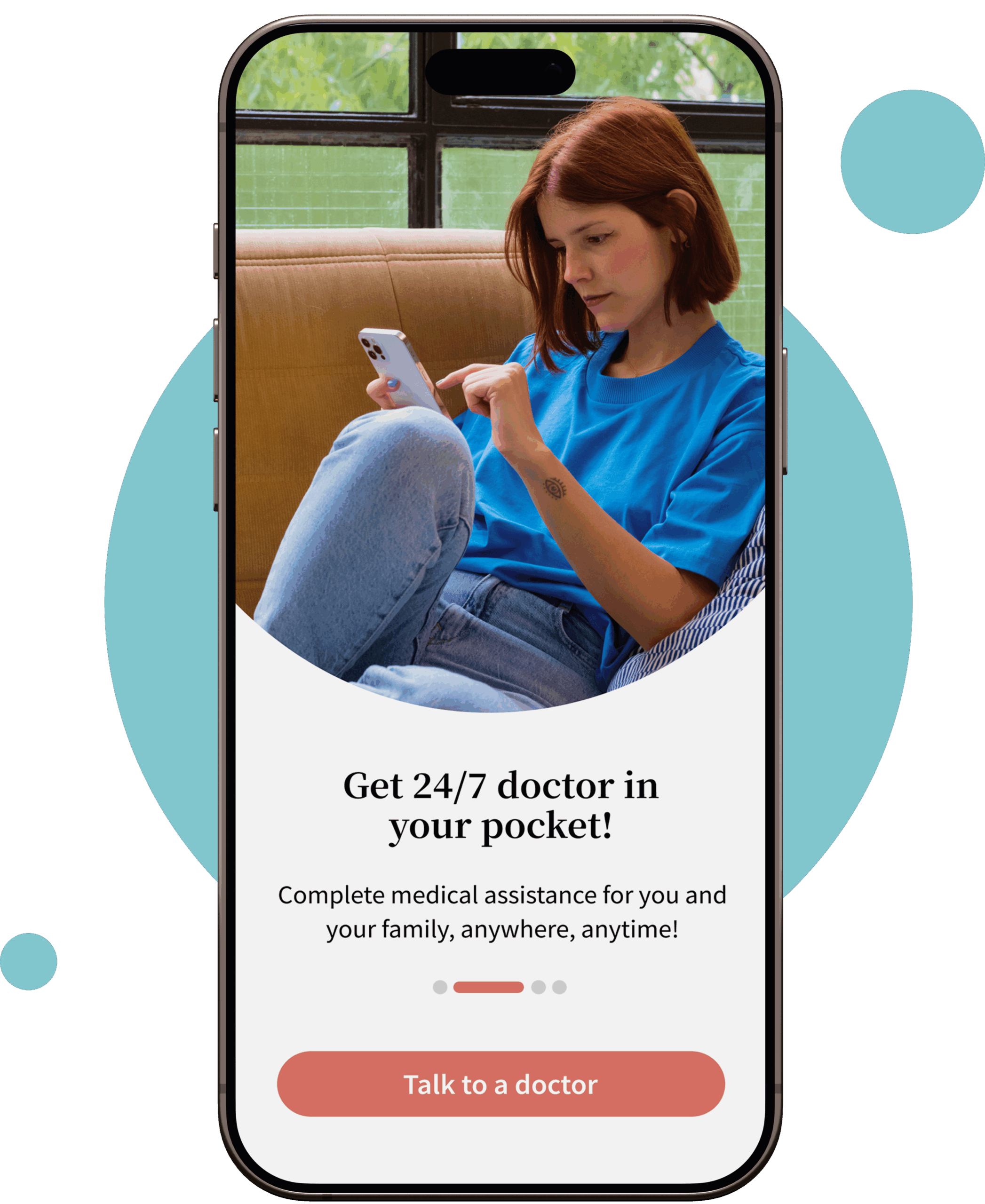
Virtual care is the means of receiving remote diagnosis and treatment for medical conditions from your home, office, or anywhere you have internet access. You can book a virtual appointment and instantly get connected to a licensed provider for primary or urgent care. Virtual healthcare provides:
- Faster access to care, often within minutes instead of days or weeks
- No waiting rooms or travel, saving time, gas, and time off work
- Lower overall costs compared to many in-person clinic visits
- Convenient treatment for common conditions, prescriptions, and follow-ups
However, virtual care isn’t always the right solution. Some conditions still require hands-on exams, procedures, or emergency care, which must be handled in person.
What is virtual care?
Virtual primary care means receiving your family doctor services online. Instead of visiting a clinic, you book a virtual appointment and connect with a licensed primary care provider through secure video, phone, or chat. You still see the same qualified doctors and nurse practitioners you would meet in person, but remotely, from the comfort of your home. Like traditional primary care, virtual doctor services focus on prevention, early detection, chronic condition management, and coordination with specialists.
Why are so many patients switching to it?
The use of virtual care has surged from 72.6% to 86.9% over the past few years. Here are a few reasons people are transitioning to virtual care:
- Better outcomes for chronic conditions that require regular monitoring and follow-up
- High patient and clinician satisfaction with no meaningful drop in care quality
- Faster access to care, especially when in-person appointments can take 20–26 days
- Fewer delays in treatment, reducing the risk of skipped or postponed care
- Earlier intervention helps prevent minor issues from becoming more serious
- Major time savings, by avoiding travel, parking, and time away from work or family
How does virtual care work from your first message to treatment?
The entire process of the care happens online and often within the same day, without visiting a clinic or waiting weeks for an appointment. Here is how the virtual visit works:
First Step: Sign up and share your health
You start by signing up on the virtual care platform or opening the app. You’ll either choose a primary care provider or be matched with one, then answer a short questionnaire about your symptoms, medical history, and allergies, similar to a clinic intake form.
Second step: Connect with a virtual primary care doctor
Next, you connect with a licensed virtual primary care provider through secure video, phone, or chat. Depending on the service, visits may be scheduled or available on demand, often 24/7. During the consultation, the provider reviews your information, asks detailed questions, and may guide you through simple self-checks or visual exams when needed.
Third step: Get a treatment plan
Your care provider will then provide a diagnosis, explain possible causes, and recommend next steps. This may include issuing an online prescription, online doctor’s note, or lab requisition, depending on your condition.
Fourth step: Follow-up
Virtual care doesn’t end after one visit when you have an ongoing condition. In this case, your provider may schedule follow-up appointments, monitor chronic conditions, adjust medications, and remind you about preventive care such as screenings or vaccinations via the telehealth app.
Who are virtual care providers, and what can they actually treat online?
Virtual care providers are licensed healthcare professionals authorized to practice in your state. Most virtual care platforms work with the same qualified physicians and nurse practitioners you’d see in person, including providers trained in:
- Family medicine
- Internal medicine
- Pediatrics
- Gynaecology
- Urgent care
While virtual doctors can’t perform hands-on physical exams, they specialize in treating conditions that can be safely managed through telehealth. In many cases, you wouldn’t need any in-person follow-up. Virtual doctors can treat many acute and ongoing conditions that don’t require an in-clinic exam, such as:
- Migraines and headaches
- Skin conditions
- Ear infection
- Diabetes management
- Erectile dysfunction
- Hypoactive sexual desire disorder (HSDD)
- Depression
- Anxiety
- Colds and flu
- Urinary tract infection (UTI)
Don’t see your condition listed? Many virtual care platforms, including Your Doctors Online, support most ongoing and preventive care needs. You can connect with an online doctor in minutes and get personalized care without waiting for an in-person appointment.
When should you book a virtual primary or urgent care visit instead of waiting it out?
You can book a virtual appointment for medical emergencies and everyday health needs when in-person care isn’t practical or timely. Virtual visits are useful when you want healthcare without long waits, travel, or taking time off work. You can see a doctor online when:
- It’s late at night or early morning, and you need quick advice or treatment.
- You want to avoid clinic wait times or an ER visit for non-emergency issues.
- You can’t miss work or school.
- You’re feeling under the weather
- Your family doctor’s office is closed or fully booked.
- You’re traveling or away from home and need medical advice that doesn’t require a hands-on examination.
- You want a quick check-in for follow-ups, prescription refills, or minor chronic care questions without an in-person appointment.
Virtual care doesn’t replace emergency services if you’re experiencing severe chest pain, altered mental state, excessive bleeding, stroke, or other life-threatening symptoms. Call 911 or go to the nearest emergency department immediately.
When is a 24-hour virtual primary or urgent care an effective way to get medical help?
24-hour virtual urgent care is often the fastest option when you need medical help right away, but the situation isn’t life-threatening. It fills the gap when clinics are closed, schedules are packed, or getting to care simply isn’t practical. 24/7 virtual urgent care is usually the best choice when:
- It’s late at night or early morning
Sudden symptoms like fever, ear pain, migraines, or UTIs don’t wait for office hours. You can often connect with a doctor in minutes and start treatment right away. - It’s a weekend or holiday
When clinics are closed and urgent care centers have limited hours, virtual care is often faster than waiting hours in an ER for non-emergency issues. - You live far from healthcare, or are traveling
Virtual urgent care removes distance, letting you see a doctor immediately instead of driving long distances or waiting days for an appointment. - You can’t leave home, or you shouldn’t be driving
If you’re sick, caring for kids, lack transportation, or feel too unwell to travel, virtual care lets you get help without the stress of going out. - You need answers now, not tomorrow
Late-night health worries can feel overwhelming. A virtual doctor can quickly assess your symptoms, provide reassurance, or guide next steps.
In many cases, virtual urgent care is faster than in-person options. Virtual visits can take minutes, while in-person urgent care or ER visits for non-urgent issues can take hours.
Can virtual urgent care replace in-person clinics for common conditions?
For many everyday health issues, virtual urgent care can safely replace an in-person clinic visit. Here is what the research shows:
- Studies consistently find that most virtual urgent care visits do not require in-person follow-up
- Diagnostic accuracy for common conditions closely matches in-clinic evaluations
- Treatment outcomes for infections, mental health, and routine illnesses are comparable to in-person care
- Large-scale data (tens of millions of visits) show virtual care often resolves issues end-to-end
However, virtual urgent care is not a replacement for hands-on exams or immediate procedures that are required. This includes:
- Suspected fractures, appendicitis, or severe abdominal pain
- Very young children with ear infections need direct ear exams
- Conditions requiring immediate lab tests or cultures
- Complex neurological or orthopedic exams
- Other medical emergencies
Is virtual care the right choice for you right now?
Virtual care is a great fit for everyday health conditions, but it depends on what you need and how quickly you need it. Virtual care is likely right for you if:
- You have a non-emergency issue (colds, rashes, UTIs, medication refills, mental health care, chronic condition check-ins)
- You need care quickly and don’t want to wait days or weeks for an in-person appointment
- You want to avoid travel, time off work, or long clinic waits
- You’re comfortable using a phone, tablet, or computer for a visit
- Your family doctor is out of town
- You need care in the middle of the night, or on weekends
You can get virtual care with Your Doctors Online. We offer both on-demand urgent care and primary care, making it easier to get care now and build continuity over time.
Frequently asked questions
How do virtual care options save time, money, and stress compared to clinics?
Virtual care saves time by eliminating travel, parking, and long waits in the doctor’s office, allowing you to see a doctor from home. Telemedicine can also lower costs, as virtual visits are typically cheaper than in-person clinic visits and reduce time off work. By making care faster and more accessible, virtual care reduces stress and helps patients seek treatment sooner.
What’s the difference between virtual primary care and virtual urgent care?
Virtual primary care is designed for ongoing, preventive, and long-term health needs with a dedicated doctor who gets to know your medical history over time. Whereas, virtual urgent care is for immediate, short-term issues and connects you with the next available provider, often 24/7, without an ongoing relationship. In short, virtual primary care supports long-term health management, while virtual urgent care offers fast treatment for non-emergency problems that can’t wait.
When should you see a virtual primary care doctor for ongoing health needs?
You should see a virtual primary care doctor for ongoing or non-urgent health needs that benefit from follow-up. This includes:
- Chronic condition management
- Medication refills
- Preventive care
- Routine check-ins
- New symptoms that aren’t urgent
Virtual primary care is ideal when you want a consistent provider who can manage your health over time without in-person visits.
What does a virtual primary care physician handle that urgent care doesn’t?
A virtual primary care physician manages long-term and preventive health needs, including chronic condition management, medication oversight, routine checkups, and care coordination with specialists. Unlike urgent care, they build an ongoing relationship with you and focus on your overall health over time, not just one-time issues. Urgent care treats immediate concerns, while primary care provides continuous, comprehensive care.