Get a Hydroquinone Prescription Online for Dark Spots & Melasma
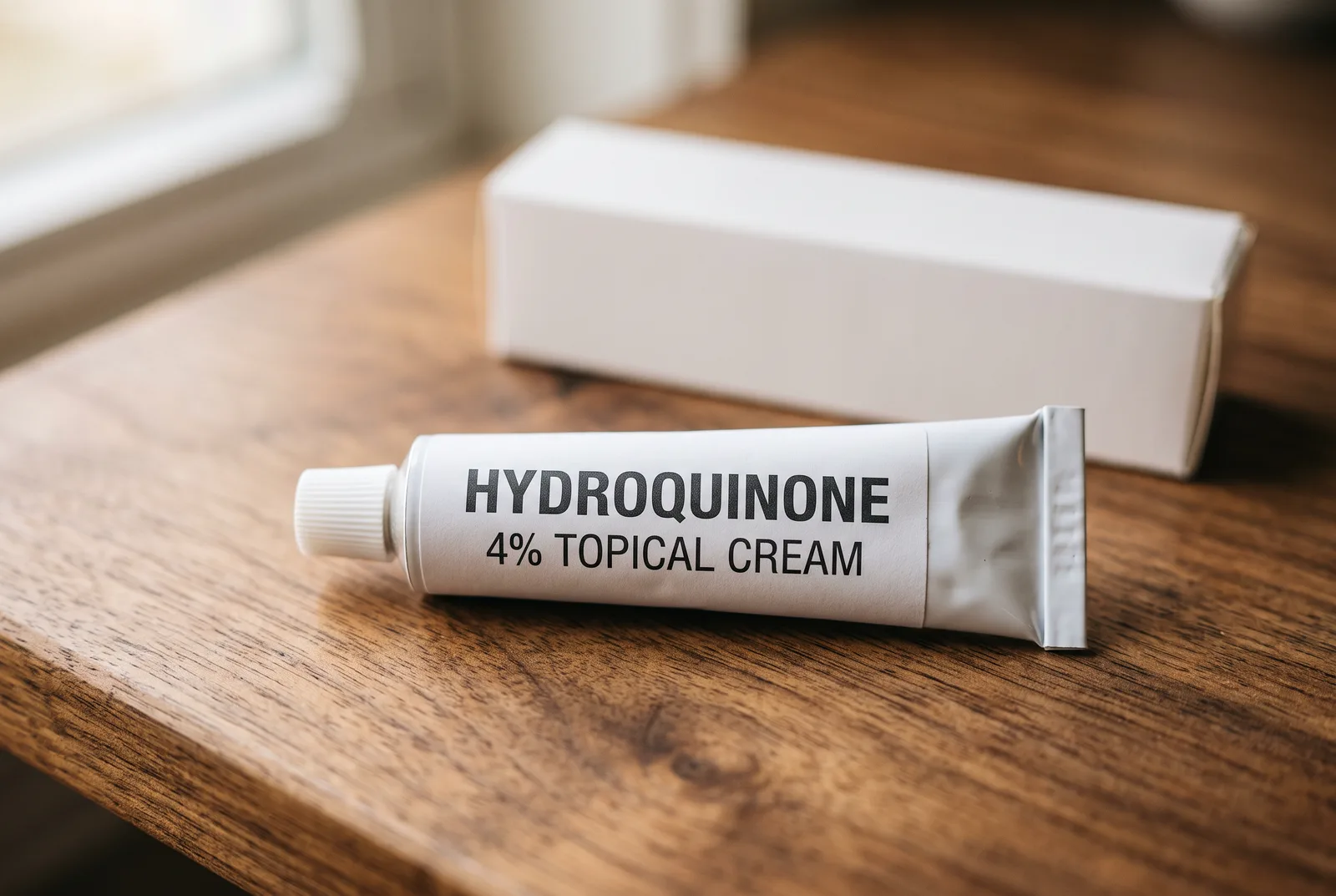
Hydroquinone is a prescription skin-lightening treatment used for melasma, dark spots, and hyperpigmentation. Since 2020, every strength of hydroquinone has required a prescription in the U.S., leaving no over-the-counter option. Talk to a licensed doctor online, share photos of your skin concern, and if hydroquinone is appropriate, get a prescription sent to your pharmacy.
- Prescription-only in the U.S. at every strength since 2020
- Share photos of your skin concern with a licensed doctor
- Chat, audio, or video consultation, 24/7
- Sent to the pharmacy of your choice, often same-day pickup
Trusted by millions for instant online care
Over 1 million patients
5-star Doctor Ratings
4.8 Rating
20k+ App Reviews
4.6 Rating
1k+ Trustpilot Reviews
Why patients choose Your Doctors Online for skin care
Over 1 million patients
Over 1 million patients have used Your Doctors Online for skin concerns and prescription care without booking an in-person dermatology appointment.
Licensed and board-certified
Our doctors are licensed and board-certified, available 24/7.
Most connect within 5 minutes
Most patients connect within 5 minutes.
Rated 4.8 across 20,000+ reviews
We're rated 4.8 stars across 20,000+ app reviews and 4.6 stars on Trustpilot.
How to get hydroquinone online in 3 steps
Getting a hydroquinone prescription online with Your Doctors Online takes three simple steps.
Describe your skin concern
Register on our app and tell us about your hyperpigmentation, melasma, or dark spots. Sharing a clear photo helps your doctor assess your skin.

Talk to a licensed doctor
A board-certified provider reviews your photos and skin history over chat, audio, or video, 24/7.

Get your e-prescription
If hydroquinone is appropriate, your doctor sends the prescription electronically to the pharmacy of your choice, often with same-day pickup available.

Prescription 4% hydroquinone cream vs over-the-counter
There is no over-the-counter hydroquinone available in the U.S. today, at any strength. Lower-strength (2%) hydroquinone used to be sold on drugstore shelves, but that changed in 2020: a provision in the CARES Act reformed how the FDA regulates over-the-counter drugs, and hydroquinone, including 2% formulations, no longer met the requirements to be sold without a prescription. As of September 2020, every hydroquinone product in the U.S. requires a doctor's prescription.
4% hydroquinone is the concentration most commonly prescribed for moderate to severe hyperpigmentation and melasma, and it's the strength found in Tri-Luma, currently the only FDA-approved hydroquinone product on the market. Other hydroquinone products, whether manufactured generics or pharmacy-compounded formulations, are not themselves FDA-approved, but doctors can still prescribe them based on your specific needs
If you've used an over-the-counter fade cream in the past and are wondering why you can't find one anymore, this regulatory change is why, and it's also why a doctor's evaluation is now the starting point for any hydroquinone treatment, not just the stronger formulations.
Talk to a DoctorHydroquinone
Topical · Tri-Luma (brand)Hydroquinone for melasma
Melasma is a common skin condition that causes brown or grayish-brown patches, usually on the face, often triggered or worsened by sun exposure, hormonal changes, and pregnancy. It's notoriously difficult to treat because the pigment sits deep in the skin, and it tends to recur even after successful treatment.
Hydroquinone is considered a first-line treatment for melasma by dermatology guidelines, including those from the American Academy of Dermatology (AAD). It works by inhibiting tyrosinase, an enzyme your skin needs to produce melanin, gradually fading hyperpigmented patches over weeks to months with consistent use. For moderate to severe melasma, hydroquinone is sometimes combined with a retinoid and a mild corticosteroid, a triple-combination approach that several studies show outperforms hydroquinone alone.
Because melasma is prone to rebound with sun exposure, daily broad-spectrum SPF 30+ isn't optional; it's part of the treatment, not an afterthought. A doctor can evaluate your specific pattern of melasma, discuss realistic expectations, and prescribe hydroquinone if it's an appropriate fit for your skin.
Hydroquinone for dark spots and hyperpigmentation
Dark spots and hyperpigmentation can come from several sources: sun damage (age spots or sunspots), post-inflammatory marks left behind after acne heals, or general uneven skin tone that develops over time. Unlike melasma, these forms of pigmentation are often more responsive to treatment and less prone to stubborn recurrence.
Hydroquinone treats these by slowing melanin production in the affected skin cells, gradually evening out tone over several weeks of consistent use. It's typically applied once or twice daily, mostly at night, directly to the darkened areas rather than the whole face. Results are gradual; most people see initial improvement within 4 to 8 weeks, with continued fading over a few months.
As with melasma, protecting treated skin from UV exposure is essential; without daily sunscreen, hydroquinone's results can be undone quickly. A doctor can help determine whether hydroquinone, or a combination approach, is right for the type of pigmentation you're dealing with.
Can you buy hydroquinone cream online without a prescription?
No. Since hydroquinone became fully prescription-only in the U.S. in 2020, no legitimate retailer, online or in person, can legally sell it without a valid prescription. Be cautious of websites or overseas sellers offering hydroquinone cream without one; products from unverified sources may be mislabeled, contain unsafe concentrations, or be counterfeit entirely, which is a real concern with an ingredient that carries its own risks (like ochronosis) even when used correctly.
The legitimate way to get hydroquinone online is a medical evaluation first. With Your Doctors Online, you connect with a licensed doctor, share photos and details about your skin concern, and if hydroquinone is appropriate, they send a prescription directly to your chosen pharmacy.
How to use hydroquinone cream and what to expect
Apply hydroquinone cream to clean, dry skin, using a thin layer over the hyperpigmented area only, avoid spreading it onto surrounding healthy skin, since it can lighten normal skin tone too. Most doctors recommend applying it once or twice daily, usually at night, though your prescribed regimen may differ depending on your skin and the condition being treated.
Expect gradual results rather than a quick fix: most people notice initial fading within 4 to 8 weeks, with continued improvement over a few months of consistent use. Hydroquinone is generally intended for short-term use, typically no more than 3 to 6 months at a time, because prolonged, unsupervised use raises the risk of side effects. Daily broad-spectrum SPF 30+ is essential throughout treatment, since sun exposure can undo progress and worsen the pigmentation you're treating.
Hydroquinone side effects and safety
Common side effects of hydroquinone include mild stinging or burning on application, skin dryness or peeling, and temporary redness or irritation.
With prolonged or unsupervised use, hydroquinone can also cause ochronosis, a rare, blue-black skin discoloration that can be difficult to reverse. This risk is one of the main reasons hydroquinone is prescription-only and intended for short-term use (generally 3 to 6 months) under a doctor's guidance rather than continuous long-term use.
Common, mild effects
Less common, more serious
Avoid applying hydroquinone near the eyes, inside the nose, or on broken or irritated skin, and always pair it with daily sunscreen.
Talk to a DoctorWhat does an online hydroquinone prescription cost?
Your Doctors Online charges $20 for a monthly plan that includes unlimited doctor consultations, there's no separate fee for the prescription itself. The cost of the medication depends on your pharmacy, whether it's the FDA-approved Tri-Luma or a compounded formulation, and your insurance coverage, and is paid directly to your pharmacy.
Meet our online doctors in the United States
Dr. Stotland Mitchell is a board-certified Occupational Medicine physician with 5+ years of experience. He provides virtual care across all U.S. states and D.C., blending allopathic medicine with public health insights. His approach focuses on rapid symptom relief and long-term prevention, often resulting in faster recovery and improved health outcomes for his patients.

Dr. Richard Honaker is a board-certified physician with more than 40 years of experience in family and emergency medicine. He serves as Chief Medical Advisor at Your Doctors Online and is affiliated with Medical City Plano in Texas. Recognized multiple times by D Magazine and Texas Monthly, Dr. Honaker provides evidence-based care across a wide range of conditions including diabetes, hypertension, and injury care.

Dr. Monique Rainford is an OB/GYN expert and Assistant Clinical Professor at Yale School of Medicine. With 25+ years of experience, she’s led OB/GYN departments at Yale Health and Baltimore Medical System. Her clinical interests include pregnancy, menstrual health, chronic pelvic conditions, and lifestyle medicine. Dr. Rainford advocates for maternal health equity, especially in underserved communities.

Dr. Candice Fraser is an OB/GYN practitioner and founder of Trinity Medical Care. With over a decade of experience, she focuses on reproductive care, menstrual health, and menopause management. Along with medical training and residency, she also holds an MBA in healthcare management, blending business insight with clinical excellence.
Dr. Danielle DonDiego is a double board-certified Family and Obesity Medicine physician, business mentor, and author of Self-Care Rx. She focuses on helping patients manage weight, improve nutrition, and adopt sustainable lifestyle changes. A graduate of the Virginia College of Osteopathic Medicine with an MBA from Virginia Tech, she combines her medical expertise with a passion for patient education and long-term wellness.
Dr. Amber Robins is a double board-certified Family and Lifestyle Medicine physician with a strong focus on women’s health, preventive care, and patient advocacy. She earned her MD from the University of Rochester and an MBA from LSU-Shreveport. A published author and media contributor, she blends clinical expertise with a passion for empowering patients to make informed health decisions.
Dr. Nina Carroll is a retired OB/GYN with decades of experience serving women in the U.S. and abroad. She specialized in menopause care, sexual health, and trauma-informed women’s health. Today, she continues her work through medical writing, focusing on sexual minority women’s health and care for survivors of trauma.
Dr. Nerissa Bauer is a behavioral pediatrician specializing in ADHD, parenting strategies, and mental health in children. A former academic and AAP spokesperson, she is the creator of the TEACH Me ADHD program, helping families better understand and manage ADHD. She brings warmth, creativity, and evidence-based guidance to her work with patients and parents.
How we've helped our patients feel better
Frequently Asked Questions
Can hydroquinone be prescribed online?
Yes. A licensed doctor can review your skin concern, often using photos you share during a telehealth consultation, and prescribe hydroquinone if it's appropriate, sending it to your pharmacy.
Is hydroquinone 4% available over the counter?
No, and neither is any other strength. Since 2020, all hydroquinone products have required a prescription in the U.S., including formulations that were once sold over the counter at lower concentrations.
Does hydroquinone work for melasma?
Yes. Hydroquinone is considered by many dermatologists a first-line, dermatologist-recommended treatment for melasma, and is often combined with a retinoid and a tinted, mineral sunscreen containing iron oxide, since visible light, not just UV rays, can trigger melasma pigmentation. It typically takes several weeks to see initial improvement.
How long can I use hydroquinone?
Most doctors recommend using hydroquinone for a limited period, typically 3 to 6 months, due to the risk of side effects like ochronosis with prolonged use. Your doctor may recommend a break or a different treatment afterward.
Get your prescription now
Talk to a licensed doctor about your hydroquinone prescription
Talk to a Doctor Now