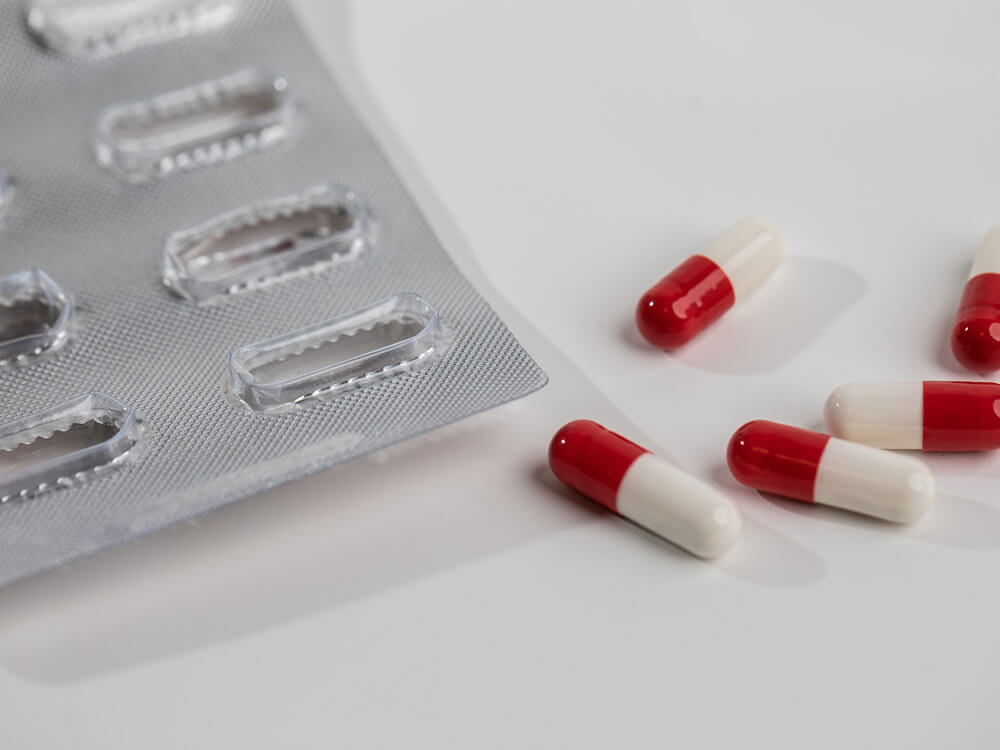
Doxycycline for chlamydia is a 7-day course of 100 mg taken twice a day. Doxycycline has been the first-line of treatment for chlamydia since 2021. It clears the infection in over 95% of people who finish the full course.
The course only works when you take every dose on time. Cutting it short, missing doses, taking it within 2 hours of dairy, or having sex before the week is up can each lower the cure rate or pass the infection back to your partner. Learn what to expect day by day, how to handle side effects, and what to do if your symptoms do not clear. Once your test is positive, you can get a Doxycycline prescription online and pick it up at your pharmacy the same day.
How does Doxycycline treat chlamydia?
Chlamydia is a bacterial infection caused by Chlamydia trachomatis, a microorganism that lives inside the cells of your cervix, urethra, rectum, throat, or eye. Most bacteria live outside cells in tissue and blood, where the immune system can find them. C. trachomatis hides inside your own cells to grow and multiply, which lets the infection sit quietly for months without symptoms. When symptoms do show up, they usually appear at the site of infection:
- Unusual discharge
- Burning during urination
- Pelvic or testicular pain
- Bleeding between periods or after sex in women
- Rectal pain or discharge after receptive anal sex
- A sore throat after oral sex
- Chlamydial infection in eye
Treating it requires an antibiotic that can cross your cell walls and reach the bacteria where they live. Doxycycline does that. Once you swallow a pill, it passes through your gut, throat, and rectum into your bloodstream, then enters your cells, where it prevents bacteria from making the proteins they need to survive. Without those proteins, the bacteria cannot multiply, and the infection clears within a week.
Recommended dosage and duration
The standard course of Doxycycline for Chlamydia is 100 mg twice a day for 7 days. This treatment duration helps clear infections of the genitals, rectum, and throat. Shorter treatments have been tested, but there is not enough evidence yet to replace the standard 7-day course.
Standard 7-day regimen: How to take Doxycycline for Chlamydia
Your prescription may vary depending on your symptoms, medical history, allergies, pregnancy status, or whether another infection is present. However, the following instructions apply to most adults taking Doxycycline for Chlamydia, including both men and women:
- Take one 100 mg pill every 12 hours for 7 days.
- Continue the medication for the full course, even if symptoms improve earlier.
- Swallow each pill with a full glass of water.
- Stay upright for at least 30 minutes after taking it to help prevent throat irritation.
- You can take Doxycycline with food if it causes nausea or stomach upset.
- Avoid dairy products, antacids, or supplements containing calcium, iron, or magnesium for 2 hours before and after each dose, as they can reduce the amount of Doxycycline your body absorbs.
- If you miss a dose, take it as soon as you remember unless your next dose is less than 4 hours away.
- Do not take two doses at the same time.
Doxycycline hyclate vs monohydrate
Your chlamydia treatment pills will be one of three forms: Doxycycline hyclate, Doxycycline monohydrate, or a delayed-release version, depending on pharmacy availability and your insurance. Both hyclate and monohydrate contain the same strength of Doxycycline and work equally well for treating Chlamydia. They are also similarly priced under most insurance plans. The main difference is how the medication is tolerated by the body.
The third option, a delayed-release tablet, is a once-a-day formulation that slowly releases the drug in the small intestine.
| Form | Dose | What is different | Tolerability |
| Doxycycline hyclate | 100 mg twice daily for 7 days | Dissolves quickly | More likely to cause nausea and esophageal irritation |
| Doxycycline monohydrate | 100 mg twice daily for 7 days | Dissolves slowly | Gentler on the stomach |
| Doxycycline delayed-release | 200 mg once daily for 7 days | Released gradually in the small intestine | As effective as twice-daily with fewer GI side effects, but more expensive |
If you have taken Doxycycline before and remember feeling nauseous, ask your pharmacist about switching to monohydrate or the delayed-release tablet.
Will 3 days of Doxycycline cure chlamydia?
Maybe, but doctors still recommend taking Doxycycline for the full 7 days. Right now, a 3-day doxycycline for chlamydia treatment is not considered standard care.
One study looked at 77 women with uncomplicated Chlamydia and found very similar cure rates between the two treatments: about 94% for the 3-day course compared with 95% for the 7-day course. However, because the study included only 77 patients, the researchers could not confirm that the shorter treatment is equally effective for everyone.
A larger clinical trial is now underway and is expected to include 596 patients with genital and rectal Chlamydia infections. The goal is to see whether a 3-day course can truly match the effectiveness of the standard 7-day treatment. Until those results are available, the CDC, IDSA, and WHO all remain at 7 days. Stopping at day 3 because symptoms have cleared increases the risk of the infection coming back, since the bacteria can still be alive even when the discharge or burning is gone.
How effective is Doxycycline for chlamydia?
Doxycycline clears the chlamydia infection in almost everyone who finishes the course. The strongest piece of evidence is a 2015 NEJM trial by Geisler and colleagues, in which every dose was observed in person. In that setting, Doxycycline cured about 95% to 100% of genital Chlamydia cases. In the real world, cure rates range from 95% to 97%, largely because patients miss doses or stop early.
The numbers stay strong at other infection sites as well. A 2021 study found a 97-100% cure with Doxycycline for rectal chlamydia in men who have sex with men. Doxycycline also appears to work better for chlamydia of the throat, although research there is more limited.
Another treatment used for Chlamydia is Azithromycin, which is taken as a single dose. It is still used in pregnancy or when there is concern about missing doses.
Doxycycline vs Azithromycin for chlamydia
Doxycycline and Azithromycin are the two main chlamydia treatment pills used. 1 g Azithromycin is the older one-pill option. However, it does not work as well for rectal or throat infections as Doxycycline does. Doxycycline takes 14 pills over 7 days. The single dose is easier to finish, but it does not reach the rectum or the throat. This is why the CDC recommends doxycycline ahead of a single dose of azithromycin for chlamydia.
| Feature | Doxycycline | Azithromycin |
| CDC 2021 status | First-line | Alternative |
| Dose | 100 mg twice daily for 7 days | 1 g single dose |
| Cure rate (genital chlamydia) | 95–100% | 95–97% |
| Cure rate (rectal chlamydia) | 97-100% | 60-85% |
| Pregnancy use | Not safe in the 2nd or 3rd trimester | First-line in pregnancy |
| Adherence required | Yes (14 doses) | No (single dose) |
| Common side effects | Nausea, sun sensitivity, throat irritation | Nausea, diarrhea, abdominal cramps |
Azithromycin still has a role. The CDC recommends it for pregnant patients, and for cases where finishing 7 days is a real concern, since the single dose can be given on the spot in a clinic. For everyone else, Doxycycline brings a higher cure rate and wider site coverage.
Not sure whether Azithromycin or Doxycycline is right for you?
See a doctor online and get a prescription in minutes.
Download our telehealth app and describe your symptoms. A licensed doctor will review your case and prescribe either Doxycycline or Azithromycin if appropriate for your needs.
Download our app, share your medical history and symptoms. You’ll be connected with a Canadian-licensed doctor who will evaluate your condition and prescribe the most suitable treatment, such as Azithromycin or Doxycycline.
Side effects and how to manage them
Most people get through the 7-day course without much trouble. The side effects you are most likely to notice are:
- Nausea or stomach upset. Usually mild and eased by taking the pill with food.
- Sun sensitivity. Use SPF 30 or higher, wear long sleeves when you can, and skip tanning beds for the whole week.
- Yeast infections in women. Doxycycline can disrupt the vaginal yeast balance, leading to itching, burning, or unusual discharge.
- Throat or esophagus irritation. Happens when a pill sits high in your throat without enough water. Take each dose with a full glass of water and stay upright for 30 minutes afterward.
- Severe rash from sunlight. Less common, looks like a sunburn that does not fade. Talk to your doctor about chlamydia side effects if it appears.
Beyond what you might feel, two outside factors change how Doxycycline works inside you: alcohol and the foods you take alongside it.
Alcohol and Doxycycline
Alcohol does not stop Doxycycline from working in the short term, but heavy drinking speeds up how fast your liver clears the drug, which lowers the blood levels and reduces effectiveness. It also makes nausea worse. A drink or two during the 7 days will not derail treatment. Daily heavy drinking will. If you have liver disease or take other liver-processed medications, ask your doctor before mixing alcohol with the course.
Food and drug interactions
Doxycycline binds to certain minerals in the gut, preventing proper absorption. Avoid taking it within 2 hours of:
- Dairy (milk, yogurt, cheese)
- Calcium or magnesium supplements
- Iron supplements or multivitamins containing iron
- Antacids such as Tums or Maalox
- Bismuth subsalicylate (Pepto-Bismol)
Plain food with water is fine and helps with nausea.
What to expect after treatment
Symptoms start improving within 2 to 3 days, though full clearance takes 7 days. Discharge thins, burning eases, and pelvic discomfort fades during the first half of the course. The infection is generally cleared by the end of treatment. What happens next depends on whether you and your partner both completed the course.
When can you have sex again?
Wait 7 days after starting Doxycycline before having any kind of sex. The CDC recommends abstaining until you have completed the 7-day course and any symptoms have cleared. The same rule applies to your partner. Anyone you had sex with in the 60 days before your diagnosis needs to be treated too, whether or not they have symptoms, because chlamydia is often silent. Both of you have to finish the full course before sex is safe again.
Do you need a test of cure?
For most people, no. The CDC does not recommend a test of cure for non-pregnant adults treated with Doxycycline unless you missed doses, symptoms have not cleared, or you suspect reinfection. Testing within 4 weeks can yield a false positive because dead bacterial DNA can persist and show up on NAAT testing.
What is recommended for everyone is a 3-month retest. Retesting at 3 months catches reinfections from untreated partners or new exposures.
What if Doxycycline doesn’t work?
Doxycycline works in most cases when you take every dose on time, abstain from sex during the 7 days, and your partner is treated too. The rare cases where a follow-up test for Chlamydia still comes back positive are almost always about reinfection, not the drug failing. The most common reasons are an untreated partner, a new exposure, or missed doses during the week.
The next step depends on the reason. If your partner was not treated, both of you start over with a fresh 7-day course. If doses were missed, you repeat the same course under closer supervision. If treatment failure is suspected, your doctor may switch you to Azithromycin or Levofloxacin and order testing of the rectum or throat to check for an infection that was missed the first time.
If you develop a high fever, severe pelvic or testicular pain, vomiting, or signs of pelvic inflammatory disease (PID), go to an emergency room. Untreated chlamydia can lead to PID, infertility, or chlamydial conjunctivitis.
How to get Doxycycline for chlamydia online
You can get Doxycycline prescribed online once chlamydia is confirmed by a lab test, and the process at Your Doctors Online takes minutes.
You start by sharing your symptoms or recent test results with a licensed doctor in chat. If you do not have a confirmed diagnosis, the doctor can provide a lab requisition for a urine or swab test through a partner lab to help confirm the cause of your symptoms.
You start by sharing your symptoms or recent test results with a licensed doctor in chat. If you do not have a confirmed diagnosis, the doctor can provide a lab requisition for a urine or swab test through a partner lab to help confirm the cause of your symptoms. Once results come back positive, the doctor reviews your medical history, allergies, and pregnancy status, then sends a 7-day Doxycycline prescription to the pharmacy of your choice for same-day pickup.
We are open 24/7, which means you can get chlamydia treatment online at any time, day or night.
Frequently asked questions
Doxycycline starts killing the bacteria within hours of the first dose, but symptom relief takes 2 to 3 days. Discharge thins, burning eases, and pelvic discomfort fades during the first half of the course. The infection is fully cleared in most people by day 7. If symptoms have not improved by day 4, contact your doctor.
No, not in the second or third trimester. Doxycycline can cross the placenta, causing permanent tooth discoloration and slowed bone growth in the fetus. Instead, you may be prescribed single-dose Azithromycin 1 g, with Amoxicillin 500 mg three times a day for 7 days as an alternative.
Take the missed dose as soon as you remember, unless your next dose is within 4 hours. If it is closer, skip the missed one and continue on schedule. Do not double up. Set a phone reminder for both daily doses to keep adherence on track.
Yes, you can get reinfected after the treatment. Doxycycline treats the current infection but does not prevent future ones. The most common cause of a positive test after treatment is reinfection from an untreated partner, not antibiotic failure. Studies show 14% to 26% of people retested at 3 months are positive again, which is why the CDC recommends a 3-month retest regardless of partner status.
Anyone you had sex with in the 60 days before your diagnosis should be tested and treated, even without symptoms. If your partner cannot get to a clinic, they can still get chlamydia treatment without going to a doctor. Your doctor may prescribe expedited partner therapy where state law allows. Both of you should abstain from sex for 7 days after starting treatment.
Doxycycline treats chlamydia but is not first-line for gonorrhea. A single 500 mg intramuscular injection of Ceftriaxone is recommended for gonorrhea. If you have both infections, treatment may involve both Ceftriaxone for gonorrhea and Doxycycline 100 mg twice daily for 7 days for chlamydia. The injection cannot be given online, but the prescription can be written by a telehealth doctor.