Online Toenail Fungus and Nail Infection Treatment
Get toenail fungus treatment from home with Your Doctors Online. Speak with a licensed doctor 24/7, share photos of your toenail, and get the right antifungal treatment when medically appropriate. Your prescription can be sent to the pharmacy you choose.
How to get toenail fungus treatment online
Connect with an online doctor and get a prescription online.
Describe your Issue
Download our app, register and tell us about your medical issue to get started.
- Nail Infections
- Sexual Health
- Obesity
- STD
- UTI
- Allergies
Chat with a Doctor
Connect with a board-certified doctor. You can chat, send pictures and videos.
Hi I’m Dr. Nicole. How may I help you?
Hi Dr. Nicole, I have a toenail infection that has discolored my nail. What should I do?

Get Prescription
Our online doctors can help you with your medical issues and give you prescriptions.
Prescription
- Terbinafine (Lamisil) 250 mg tablet
- Take one tablet once a day for 12 weeks
Send Prescription
What are the treatment options for nail fungus?
Nail fungus is usually treated with prescription antifungal medicine. The best option depends on how many nails are affected, how much of the nail is infected, and your health history. Here are a few treatment options that can help clear infection:
- Antifungal tablets: These are often the most effective option for toenail fungus because they work through the bloodstream to reach the nail.
- Prescription nail treatments: These are applied directly to the infected nail. They can be useful when you want to avoid tablets, but treatment usually takes longer.
- Trimming and filing: Keeping the nail trimmed and thinning thick areas can make it more comfortable and help treatment reach the infected nail.
- Nail removal: A badly damaged nail may sometimes need to be removed so treatment can reach the nail bed.
What antifungal medications can we prescribe online?
Over-the-counter antifungal creams usually do not clear nail fungus because they do not penetrate the nail well. Your doctor can recommend the right treatment and review your health history before prescribing, especially if an oral antifungal is being considered.
Oral antifungal
Learn More
Oral antifungal
Learn More Topical antifungal
Learn More Topical antifungal
Learn More What causes toenail fungus and nail infections?
Toenail fungus is an infection that develops in and under the nail. It often starts as athlete’s foot and spreads to the toenail, causing the nail to become thick, discolored, or brittle. Common risk factors include:
- Warm, sweaty feet: Closed shoes and socks create an environment where fungus can grow.
- Walking barefoot in shared wet areas: Locker rooms, public showers, and pool areas can expose your feet to the fungus.
- Nail injuries: A cracked or damaged nail gives the fungus an easier way in.
- Age: Toenails grow more slowly as you get older, making infections more likely to persist.
- Diabetes or a weakened immune system: These can increase the risk of developing nail fungus and make it more likely to come back.
Not every thick or discolored toenail is caused by fungus. Nail injuries and conditions such as psoriasis can look similar, so a doctor may recommend testing before starting treatment.
What are the symptoms of a nail infection?
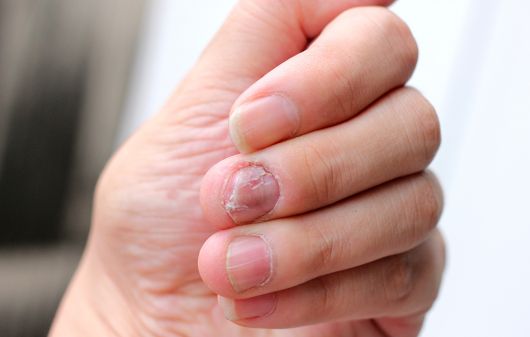
Nail fungus usually shows up in how the nail looks. It can affect one nail or several, and toenails far more often than fingernails. Common symptoms include:
- Discoloration: White or yellow streaks, or a brown patch, usually starting at the tip or the side of the nail.
- Thickening: The nail becomes hard to trim and can press against your shoe.
- Crumbling edges: The outer edge of the nail breaks up or flakes away.
- Lifting from the nail bed: The nail loosens and debris collects underneath.
- Loss of shine and shape: The surface turns dull and the nail bends or curls.
Pain, redness, and swelling in the skin beside the nail, or pus, usually points to a bacterial infection called paronychia instead. That is treated differently, so it is worth having it checked.

How long does toenail fungus treatment take?
Toenail fungus treatment can take several months because the damaged nail has to grow out before the nail looks normal again.
- Antifungal tablets: Treatment for toenails usually lasts about 12 weeks. Fingernail infections often need about 6 weeks of treatment.
- Prescription nail treatments: These are applied daily and may need to be used for up to 48 weeks.
- Growing out the damaged nail: Toenails grow slowly, so it can take 9 to 12 months for the damaged nail to fully grow out.
Finish the full treatment even if the nail still looks abnormal. The medicine clears the fungus, but the damaged part of the nail needs time to grow out.
FAQs About Nail Infections
How to get rid of toenail fungus?
To eliminate toenail fungus, you can start on antifungal tablets. Nail infection caused by a fungus usually takes at least three months to cure if taking regular antifungal medication. Antifungal medicine also has side effects so it is important to consult a doctor. You can see a doctor at Your Doctors Online, and get an online prescription if medically appropriate, from your home.
What is the most effective treatment for toenail fungus?
Antifungal tablets are the most effective treatment for toenail fungus. In pooled trial data, oral terbinafine clears the fungus in about 76 out of 100 people, compared with 63 for pulsed Itraconazole and 36 for topical Ciclopirox. None of them is fast. Even when the medicine works, the nail needs months to grow out. Your doctor will review your health history and the other medicines you take before prescribing an oral antifungal.
How to cure fingernail fungus fast?
There is no fast cure for fingernail fungus. It is usually treated with antifungal tablets for about 6 weeks, and a prescription nail treatment is an option for milder cases. Fingernails grow faster than toenails, so they look normal sooner, but the nail still has to grow out before the damage clears.
What is the best over-the-counter toenail fungus treatment?
There is no over-the-counter product that reliably clears nail fungus. Over-the-counter creams and ointments usually do not help a fungal nail infection, because they do not get through the nail to the nail bed. Products such as Clotrimazole, Miconazole, and Tolnaftate are labeled for skin infections like athlete’s foot and ringworm, not for nails, and the Miconazole label says not to use it on nails. Treating athlete’s foot on your skin is still worth doing, because that is often where the nail infection started. For the nail itself, talk to a doctor about a prescription.
How to get rid of toenail fungus naturally?
Home remedies have not been shown to reliably clear nail fungus. Vicks VapoRub, tea tree oil, and vinegar soaks are the ones people try most, and a 2025 review found the evidence for Vicks VapoRub in nail fungus limited and inconclusive. Nail infections also do not usually clear on their own, and left untreated they can spread to the skin. Keeping your feet clean and dry, treating athlete’s foot, and filing down the thick part of the nail all help, but the fungus itself needs prescription antifungal medicine.
What is the infected fingernail treatment?
Treatment depends on what is causing the infection. A fungal nail infection is treated with prescription antifungal tablets or a prescription nail treatment. A bacterial infection of the skin around the nail, called paronychia, is treated with warm water soaks a few times a day and antibiotics, and a doctor may need to drain it if there is pus. The two look different up close, so it is worth having it checked before you treat it. Finish the full course of whatever you are prescribed, because stopping early is a common reason these infections come back.
How to get rid of green nail fungus?
Green usually means bacteria, not fungus. A green or blue-green stain under the nail is normally green nail syndrome, caused by Pseudomonas aeruginosa, a bacterium that grows in the damp space under a nail that has lifted off the nail bed. It is treated by keeping the nail dry, trimming back the lifted part, and using a topical antibiotic or antiseptic soak. A fungal nail infection is a different problem, treated with an oral antifungal such as Terbinafine, so getting the right diagnosis first saves months.
What kind of doctor treats toenail fungus?
Primary care doctors, dermatologists, and podiatrists all treat toenail fungus. Other nail problems look the same, so testing first helps make sure you get the right treatment. At Your Doctors Online, a board-certified doctor can review photos of the nail and your medical history and send an antifungal prescription to the pharmacy you choose when medically appropriate.
What are the pros and cons of laser treatment for toenail fungus?
Laser treatment can sometimes get rid of the fungus in the nail, but it is less effective than antifungal medicine. The nail still has to grow out afterwards. The pro is that it avoids tablets, which matters if you have a liver problem or take a medicine that clashes with an oral antifungal. For most people a prescription antifungal is the better first step.
Should I go to the doctor for an infected fingernail?
Yes, especially if there is pus. Pain, redness, and swelling in the skin beside the nail with pus points to paronychia, a bacterial infection, which is treated with antibiotics and sometimes needs draining. Go to an emergency room if you get a fever or chills, red streaks running up from the nail, or you start to feel generally unwell, because that means the infection is spreading. If you have diabetes or poor circulation, get any infected nail looked at early rather than waiting.
How Our App Has
Helped Patients
Our 500,000+ Members Love Our Online Doctors 5 Star Rating With 1600+ Reviews Here Is What They Say


-Phindile Mkhatshwa
-brooke snow
-Okiti Stephanie
-ASIF Khan
-Chelsey
-edith bien aime
-Lesego Thejane
-Stephanie Brown
-kulwinder gill
-Elijah Mark
Get Started Today
Talk to online doctors now and get medical advice, online prescriptions, refills, lab requisitions and medical notes within minutes. On-demand healthcare services at your fingertips.