Online Epilepsy Treatment
Refill your anti-seizure medication online, with no appointment and no waiting room. A board-certified doctor reviews your seizure history and your current prescription, and the refill reaches your pharmacy the same day when treatment is medically appropriate. Available 24/7 for refills, dose questions, and side effect checks.

- Prescription refills sent to your pharmacy
- 24/7 online doctor consultations
- Medication reviews and side effect checks
Trusted by millions for online doctor diagnosis
Over 1 million patients
5-star Doctor Ratings
4.8 Rating
20k+ App Reviews
4.6 Rating
1k+ Trustpilot Reviews
Why choose Your Doctors Online?
We are available 24/7 to serve you, so you don’t have to worry about any paperwork at all.
Personalized treatment plans
We evaluate your symptoms and provide treatment based on your condition.
Same-day prescriptions
The prescription is sent to the pharmacy within 30 minutes, so you can pick it up the same day.
Real-time prescription tracking
Track your virtual doctor visit and prescription arrival status through our application.
How to get epilepsy medication refills online
Getting an epilepsy medication refill online takes three steps:
Become a member
Sign up, pay securely, and describe your symptoms or medication needs.

Chat with a doctor
A licensed physician will assess your condition and recommend a treatment plan

Buy medication from the pharmacy.
Prescription refills are sent to your chosen pharmacy for same-day pickup.
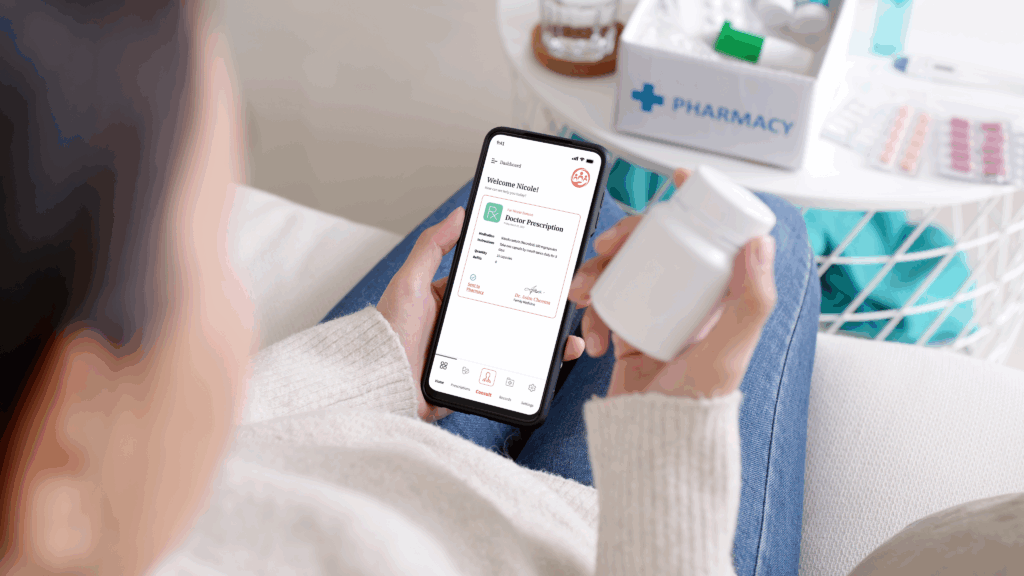
How does virtual care for epilepsy work?
During an online visit for epilepsy, you can expect the doctor to ask the following:
- Your medication bottles or a list of your medicines and doses
- Notes about your most recent seizures, including when they happened, how long they lasted, and any possible triggers
- The name of your preferred pharmacy
- A photo ID, if needed to confirm your identity
- A quiet, private place where you can speak freely with the doctor
During the visit, the doctor can:
- Ask about your seizures: When they happen, how often they occur, and how long they last.
- Review your medication: Check your current anti-seizure medicine, missed doses, side effects, and how well it is working.
- Refill your medication: If appropriate, your doctor can send an online prescription to your preferred pharmacy.
- Order blood tests: Some anti-seizure medicines require blood tests to check medication levels or monitor your liver and blood cells.
- Arrange in-person care: If you have had your first seizure, your seizures have changed, or your medication is no longer working, you may need to see a neurologist or another healthcare provider in person.
A first diagnosis of epilepsy requires an in-person assessment and testing, so online visits are mainly useful for managing treatment you are already receiving. Anti-seizure medication controls seizures in about 70% of people with epilepsy, which is why staying on your prescription matters more than anything else you can do.

What anti-seizure medications can we prescribe online?
Here are some of the anti-seizure medications a doctor may prescribe or refill for epilepsy.
Topiramate
Anticonvulsant
Lamictal
Anticonvulsant
Divalproex
Anticonvulsant
Gabapentin
Anticonvulsant

What is epilepsy?
Epilepsy is a brain disorder in which a person has repeated seizures over time. A seizure occurs when electrical activity in the brain becomes disordered for a short time, which can affect awareness, behavior, sensation, or movement.
Doctors diagnose epilepsy after recurrent unprovoked seizures, meaning seizures that are not set off by a temporary cause such as low blood sugar, alcohol withdrawal, or a high fever. There is no cure for epilepsy, but medicines control seizures for most people, and surgery, implanted devices such as vagus nerve stimulators, or a special diet can help when medicines are not working well.
Epilepsy treatment options
Treatment usually pairs medication with steps that lower your chance of another seizure:
- Anti-seizure medication, the first treatment for most types of epilepsy
- Epilepsy surgery, when seizures start in one area of the brain and medication has not worked
- Implanted devices such as a vagus nerve stimulator
- A supervised ketogenic diet, which helps some children
- A consistent sleep schedule
- Stress reduction, such as yoga or meditation
- Avoiding your known triggers, such as alcohol, flashing lights, or missed doses
Always talk to your doctor before trying supplements or alternative therapies.
What are the symptoms of epilepsy?
Symptoms vary from person to person and depend on which part of the brain is affected. Some people have simple staring spells, while others have violent shaking and a loss of alertness. Many people notice a strange sensation just before a seizure, called an aura. Because seizure symptoms can look like other medical conditions, an accurate diagnosis needs a doctor.
- Staring spells or rapid blinking with a brief loss of awareness
- Shaking or stiffening of the whole body, with loss of alertness
- Symptoms in one part of the body only, sometimes with awareness kept
- An aura first, such as tingling, an odor that is not really there, or a sudden change in emotion
- Loss of bladder or bowel control during a seizure
- Confusion, tiredness, or being unresponsive after the seizure ends
What causes epilepsy?
Epilepsy has many possible causes, and in many cases no cause is ever found. Anything that damages the brain or changes how it is wired can lead to repeated seizures. Common causes include:
- Stroke or a transient ischemic attack (TIA)
- Traumatic brain injury
- Dementia, including Alzheimer disease
- Brain infections such as meningitis, encephalitis, or a brain abscess
- Brain defects present at birth, or brain injury around the time of birth
- Brain tumors and abnormal blood vessels in the brain
- Metabolic disorders a child can be born with, such as phenylketonuria
- Hereditary seizure disorders that run in families
Not every seizure means epilepsy. Low blood sugar, low sodium, alcohol or benzodiazepine withdrawal, a high fever, sleep deprivation, and missed doses of anti-seizure medication can all provoke a seizure in someone who does not have epilepsy. Epilepsy is the diagnosis when the seizures keep coming back without a cause like these behind them.
When is a seizure a medical emergency?
Most seizures stop on their own within a couple of minutes. A seizure becomes an emergency when it does not stop, or when seizures come one after another without the person waking up in between. Call 911 or go to the nearest emergency room if:
- A seizure lasts 5 minutes or longer, or seizures repeat without the person regaining consciousness in between. This is status epilepticus, a neurological emergency.
- It is the first seizure the person has ever had
- The seizure is longer than the seizures you normally have, or there is an unusual number of them
- Seizures repeat over a few minutes
Call 911 first. An online visit is the wrong place for a seizure that is happening now, and Your Doctors Online cannot treat one. Once the person is safe, an online doctor can review the medication, adjust the plan alongside your neurologist, and send a refill to your pharmacy.
Get virtual care from board-certified physicians
Dr. Stotland Mitchell is a board-certified Occupational Medicine physician with 5+ years of experience. He provides virtual care across all U.S. states and D.C., blending allopathic medicine with public health insights. His approach focuses on rapid symptom relief and long-term prevention, often resulting in faster recovery and improved health outcomes for his patients.

Dr. Richard Honaker is a board-certified physician with more than 40 years of experience in family and emergency medicine. He serves as Chief Medical Advisor at Your Doctors Online and is affiliated with Medical City Plano in Texas. Recognized multiple times by D Magazine and Texas Monthly, Dr. Honaker provides evidence-based care across a wide range of conditions including diabetes, hypertension, and injury care.

Dr. Monique Rainford is an OB/GYN expert and Assistant Clinical Professor at Yale School of Medicine. With 25+ years of experience, she’s led OB/GYN departments at Yale Health and Baltimore Medical System. Her clinical interests include pregnancy, menstrual health, chronic pelvic conditions, and lifestyle medicine. Dr. Rainford advocates for maternal health equity, especially in underserved communities.

Dr. Candice Fraser is an OB/GYN practitioner and founder of Trinity Medical Care. With over a decade of experience, she focuses on reproductive care, menstrual health, and menopause management. Along with medical training and residency, she also holds an MBA in healthcare management, blending business insight with clinical excellence.
Dr. Danielle DonDiego is a double board-certified Family and Obesity Medicine physician, business mentor, and author of Self-Care Rx. She focuses on helping patients manage weight, improve nutrition, and adopt sustainable lifestyle changes. A graduate of the Virginia College of Osteopathic Medicine with an MBA from Virginia Tech, she combines her medical expertise with a passion for patient education and long-term wellness.
Dr. Amber Robins is a double board-certified Family and Lifestyle Medicine physician with a strong focus on women’s health, preventive care, and patient advocacy. She earned her MD from the University of Rochester and an MBA from LSU-Shreveport. A published author and media contributor, she blends clinical expertise with a passion for empowering patients to make informed health decisions.
Dr. Nina Carroll is a retired OB/GYN with decades of experience serving women in the U.S. and abroad. She specialized in menopause care, sexual health, and trauma-informed women’s health. Today, she continues her work through medical writing, focusing on sexual minority women’s health and care for survivors of trauma.
Dr. Nerissa Bauer is a behavioral pediatrician specializing in ADHD, parenting strategies, and mental health in children. A former academic and AAP spokesperson, she is the creator of the TEACH Me ADHD program, helping families better understand and manage ADHD. She brings warmth, creativity, and evidence-based guidance to her work with patients and parents.


Frequently asked questions
How can I prevent seizures?
Preventing seizures involves taking your medication on time, sleeping 7 to 9 hours per night, managing stress, and avoiding known triggers like flashing lights or alcohol.
What if medications don’t work for me?
If you’ve tried two appropriate medications without seizure control, you may have treatment-resistant epilepsy. Advanced therapies like surgery or neurostimulators may help.
How do I talk to my doctor about epilepsy treatment?
Keep a seizure diary, note down your triggers, and share any concerns about the medication. Ask about side effects, newer therapies, and how to improve your seizure control.
How to stop a seizure from happening without going to the doctor?
Once a seizure has started there is no way to stop it at home, so the safest thing is to keep the person from getting hurt and let it run its course. What does lower your chance of the next one is taking your anti-seizure medication exactly as prescribed, sleeping regular hours, and avoiding your own triggers. Call 911 if a seizure lasts 5 minutes or longer, or if seizures repeat without the person waking up in between.
Are there any natural remedies for managing epilepsy and seizures?
There is no herbal or alternative remedy shown to control seizures. What helps alongside medication is regular sleep, stress management, avoiding your triggers, and in some children a ketogenic diet supervised by a doctor. Never swap your medication for a supplement, and tell your doctor about anything you are taking, because some supplements interact with anti-seizure medication.
What are the options for managing epilepsy in children?
Children with epilepsy are usually treated with anti-seizure medication chosen for their seizure type and age. When medication does not control the seizures, the options include epilepsy surgery, a vagus nerve stimulator, responsive neurostimulation, or a ketogenic diet supervised by a specialist team. Pediatric epilepsy is managed by a specialist, so ask for a referral to a pediatric neurologist.
What are the risks of treatments?
Anti-seizure medications can cause side effects like fatigue, dizziness, mood changes, or weight gain. In rare cases, serious reactions may occur. Surgical or device-based treatments also carry risks like infection or complications. Always discuss potential risks and benefits with your doctor.
When can I stop medication?
You should only stop epilepsy medication under medical supervision. If you’ve been seizure-free for 2 or more years, your doctor may consider gradually tapering off the medication, depending on your seizure type and history.
What do people with epilepsy need the most?
People with epilepsy need consistent medical care, reliable access to medication, emotional support, and a safe environment that minimizes seizure triggers.
What is the number one trigger for someone with epilepsy?
Lack of sleep is one of the most common seizure triggers. Other triggers include stress, missed medications, alcohol, flashing lights, and illness.
What foods are not good for epilepsy?
Highly processed foods, excess sugar, and alcohol may affect seizure control in some people. Those on a ketogenic diet must avoid high-carb foods. Always follow your doctor’s dietary recommendations.
What activities are good for people with seizures?
Low-risk activities like walking, swimming with supervision, yoga, and light aerobic exercise can be beneficial. Always consult a doctor before starting new activities.
What should I do if I see someone having a seizure?
Stay calm, time the seizure, keep them safe from injury, and gently roll them onto their side once the seizure ends. Don’t put anything in their mouth. Call emergency services if the seizure lasts more than 5 minutes.